Who is a washer-dryer suitable for?

Workers without space to dry clothes

If you wash everyday workwear that’s suitable for tumble drying at home, but don’t have room for a clothes airer or two appliances, start by checking the load size for a complete wash-and-dry cycle. The Verbraucherzentrale notes that a washer-dryer’s drying capacity is lower than its washing capacity.

Workers with heavily soiled clothing

For everyday workwear, the level of soiling, fabric care instructions and programme choice all need to be taken into account. For personal protective equipment, you must also follow the manufacturer’s instructions and workplace requirements, as explained by the German Social Accident Insurance (DGUV) and the Federal Institute for Occupational Safety and Health (BAuA).

Workers with delicate workwear

If garments have different washing or drying symbols, you still need to follow the care instructions for each item, even when using a delicate programme. GINETEX Germany explains that care symbols indicate whether a garment can be washed at home.

What should you look for when buying?

Consideration What to check Who is this especially important to?
Drying space and load size Check the dimensions, including the door opening, as well as the separate capacities for washing and for a wash-and-dry cycle. If I don’t have room for a clothes airer or two appliances, the most important thing is how much laundry can be dried in one continuous cycle. Around 31% of consumers prioritise this.
Fabric care Check the washing and drying symbols on every garment. For protective clothing, also check the manufacturer’s instructions and workplace requirements. If my workwear has different care instructions, I want to find an approved washing and drying method for each item. Around 25% of consumers prioritise fabric care.
Cleaning everyday workwear Match the type of soiling, permitted washing temperature and suitable programmes. If my everyday workwear is stained, I want to choose a programme that suits both the fabric and the type of stain. Around 25% of consumers prioritise cleaning performance.
Energy and water consumption Compare the kWh and litres for complete wash-and-dry cycles using the same label basis, rather than looking only at washing figures. If I regularly tumble-dry laundry, I want to include the consumption for a complete cycle in my running costs. Around 19% of consumers prioritise operating costs.

Common buying and care mistakes

  • Looking only at washing capacity

    The maximum load for washing and drying is lower than the washing capacity alone. For example, Bosch lists the WNG24442 as having a 9 kg washing capacity and a 6 kg capacity for a complete wash-and-dry cycle.

    Plan full loads around the stated wash-and-dry capacity, not the larger washing capacity.

    If the load exceeds the drying capacity, you may need extra drying cycles or still have to use a clothes airer.

  • Confusing washability with tumble-dryer suitability or approval for PPE

    Washing and drying symbols give different care instructions. Personal protective equipment must retain its protective properties; a machine programme does not prove that the cleaning method is approved for it. The German Social Accident Insurance and the Federal Institute for Occupational Safety and Health highlight this point.

    Check the garment label and, where applicable, the manufacturer’s instructions. For protective clothing, you must also follow your workplace’s cleaning requirements.

    Incorrect care can damage clothing or compromise the protective properties of protective clothing.

  • Taking the washing-only efficiency rating as the overall consumption

    The EU energy label lists figures separately for the washing cycle and the complete wash-and-dry cycle. So the washing-only figure doesn’t tell you what to expect from regular combined use.

    Compare the kWh and water figures for complete cycles on the same label basis. If you have enough space, consider separate appliances too.

    If you tumble-dry regularly, overlooking electricity and water figures can give you a misleading picture of ongoing running costs.

Brands to consider

AEG

According to AEG Germany, the L9WEF80690 is a heat pump washer-dryer with a stated washing capacity of 9 kg and a wash-and-dry capacity of 6 kg.

  • AEG gives this model an energy efficiency rating of C and a consumption of 252 kWh per 100 wash-and-dry cycles.
  • These specifications apply to this model only, not automatically to other AEG appliances. A heat pump does not mean a garment is approved for tumble drying.

LG

LG lists the W4WR7096YB as a 9/6 kg washer-dryer with Steam and TurboWash 360°.

  • These features make it easier to compare the model’s specific programmes and features with your needs.
  • According to LG, the advertised fast wash applies to a half load; it isn’t a time estimate for a complete wash-and-dry cycle. Manufacturer claims about fabric care apply only under the specific conditions stated.

Bosch

According to the German product sheet, the Bosch WNG24442 has a washing capacity of 9 kg and a wash-and-dry capacity of 6 kg.

  • Bosch lists Auto Dry and an automatic stain programme for four common types of stain.
  • Bosch gives it an energy efficiency rating of D for combined operation. The stain programme doesn’t prove that it will remove every type of work-related soiling.

Siemens

According to the German product sheet, the Siemens WN54C2A40 has a washing capacity of 10.5 kg and a wash-and-dry capacity of 6 kg.

  • Siemens lists i-Dos and autoDry as features of this model.
  • The larger washing capacity doesn’t increase the 6 kg limit for a complete wash-and-dry cycle. The stated appliance dimensions are 848 × 598 × 622 mm.

Samsung

According to the German model page, the WD90DB7B85GWU2 is a washer-dryer with a washing capacity of 9 kg and a wash-and-dry capacity of 6 kg.

  • The model page lists dimensions of 600 × 850 × 600 mm.
  • The AI Energy Mode savings described there are based on an internal test of a different washing machine model under specific conditions. They don’t demonstrate lower consumption for this washer-dryer over a complete wash-and-dry cycle.

Washer-dryers at Joybuy

The selection below includes freestanding and built-in washer-dryers with different washing and drying capacities. As well as making sure the appliance suits your space, pay particular attention to the load size for a complete wash-and-dry cycle.

LG WT1210WWF front-loading washer-dryer

LG WT1210WWF front-loading washer-dryer

For households looking to combine washing and drying in one appliance.

12 kg washing capacity and 10 kg drying capacity; Dual Inverter Heat Pump, AI DD, TurboWash 360°, Steam function and Wi-Fi ThinQ app, according to the product name.

View at Joybuy

Roborock Zeo Lite Grey washer-dryer

Roborock Zeo Lite Grey washer-dryer

An option if you want to wash and dry clothes in one appliance.

10 kg washing capacity and 6 kg drying capacity; Zeo-cycle drying technology, automatic dosing and energy efficiency rating E, according to the product name.

View at Joybuy

Beko BM3DT4944W washer-dryer

Beko BM3DT4944W washer-dryer

For households looking for an appliance with both washing and drying functions.

9 kg washing capacity, 6 kg drying capacity, 1,400 rpm, SteamCure, ProSmart Inverter Motor and energy efficiency rating D, according to the product name.

View at Joybuy
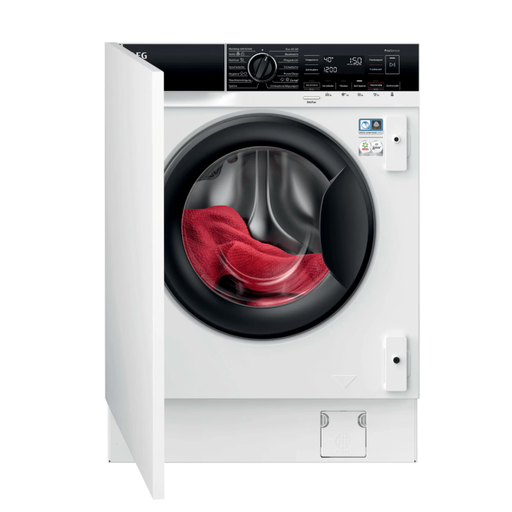
AEG LWR8WI7680 8000 PowerCare built-in washer-dryer

AEG LWR8WI7680 8000 PowerCare built-in washer-dryer

For a suitable built-in space when you want washing and drying functions in one integrated appliance.

8 kg washing capacity, 4 kg drying capacity, 1,600 rpm, Wi-Fi, ProSense, ProSteam and DualSense, according to the product name. The stated drying capacity is limited to 4 kg.

View at Joybuy
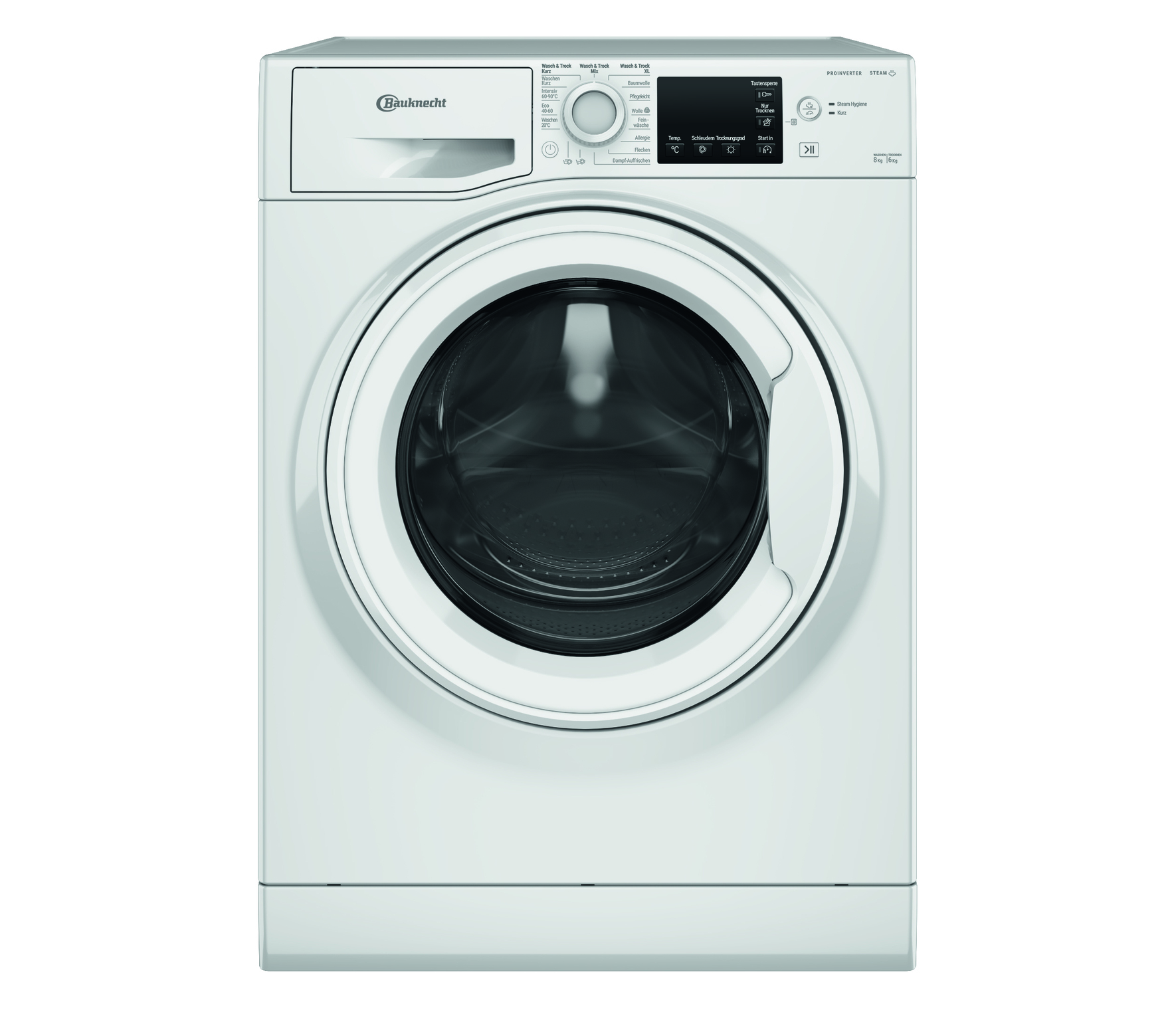
Bauknecht WD Eco Shield 8614 D washer-dryer

Bauknecht WD Eco Shield 8614 D washer-dryer

An option for everyday workwear if you need washing and drying functions in one appliance.

8 kg washing capacity, 6 kg drying capacity, 1,400 rpm, Stains 40°, Steam Refresh, Dynamic Inverter Motor and energy efficiency rating D, according to the product name. Stains 40° doesn’t prove that every type of work-related soiling will be removed.

View at Joybuy

Frequently asked questions

Can all washable workwear go in the tumble dryer after washing?

No. Check the washing symbol and the tumble-drying symbol separately. A crossed-out tumble-dryer symbol means the garment must not be tumble-dried. For protective clothing, you must also follow the manufacturer’s instructions and workplace requirements. GINETEX Germany explains what the care symbols mean.

Can I wash protective clothing or workwear contaminated with hazardous substances at home?

Not as a general rule. Employers must ensure that personal protective equipment remains fully functional and hygienically sound, and cleaning must follow the manufacturer’s instructions. This is set out in Section 2 of the Personal Protective Equipment Use Regulations (PSA-BV) and guidance from the German Social Accident Insurance. If clothing is contaminated with hazardous substances or other dangerous materials, first check the workplace requirements for the specific situation.

What should I check before installing a washer-dryer?

Measure the space where the appliance will go, the route it needs to be carried along and the clearance needed to open the door, using the dimensions of the specific model. Also check that the water supply, drain and electrical connection are suitable for the installation space, and confirm in advance which connection services are included with your order.

How can I compare running costs without being misled by the energy efficiency rating?

For the same use case, compare the separate EU label figures for kWh and water per 100 washing cycles, or per 100 complete wash-and-dry cycles. The European Commission explains the EU energy label for washing machines and washer-dryers. The washing-only figure doesn’t answer the question of running costs if you tumble-dry regularly.

Who should I contact if the appliance breaks, and what should I do with the old one?

For statutory claims relating to defects, contact the retailer. A voluntary manufacturer’s warranty is separate, as the Verbraucherzentrale explains. Old electrical appliances are collected separately and can generally be handed in free of charge at local authority collection points, according to the German Environment Agency. Check separately whether collection, installation or removal of your old appliance is included with a particular order.