Washing aprons in a narrow alcove
If width is the main constraint and there’s room above the machine, a top-loader may fit. Remember to measure the depth, check the connections and allow for the height needed to open the lid.


Measure the width, depth and height, as well as the space needed to open and connect the machine. If width is tight, a top-loader may fit; if height or floor space is limited, a compact model could be a better choice. Choose the capacity and programmes to suit the full wash load, care label and level of soiling. For workwear in commercial catering, the Federal Institute for Risk Assessment sets out additional hygiene requirements.
If width is the main constraint and there’s room above the machine, a top-loader may fit. Remember to measure the depth, check the connections and allow for the height needed to open the lid.
If height or depth is also limited and you usually wash smaller loads, compare the full dimensions of compact machines. With a front-loader, you’ll also need to leave enough room for the door and access.
If you regularly wash larger mixed loads, choose a drum that can take the full load. Also check the programmes and consumption figures against the way you actually plan to use the machine.
May suit you if: The alcove is particularly narrow and the lid can open upwards.
Bear in mind: The lid needs clearance above the machine, and a narrow width doesn’t necessarily mean it’s shallow.
May suit you if: Height or floor space is limited and your usual apron loads fit in a smaller drum.
Bear in mind: Larger loads may need to be split across several cycles, and you’ll need to leave room for the door.
May suit you if: There’s enough room for the machine and its open door, and you regularly wash other laundry with your aprons.
Bear in mind: A larger rated capacity won’t solve a lack of space, and it doesn’t tell you how much the machine uses for smaller loads.
| What matters | What to check before buying | Who it matters most to |
|---|---|---|
| Alcove width and access | Measure the width, depth and height, including connections; check that the lid or door can open fully. | If my alcove is narrow, the machine needs to fit and still be easy to use. Around 31% of consumers put a narrow alcove first. |
| Height and floor space | Compare the full dimensions of the model with the available space; allow for the door area with a front-loader. | If height or depth is limited as well as width, I need a machine that fits the entire available space. Around 25% of consumers prioritise these space constraints. |
| Apron care and load size | Check the care label, the programmes you need and the permitted load; for commercial use, check your workplace’s hygiene requirements. | If fabric, stains or a larger apron load are key considerations, I want to check the capacity and suitable programmes together. Around 25% of consumers put washing aprons first. |
| Energy use, noise and water protection | Compare kWh per 100 Eco cycles, litres per Eco cycle, spin noise and water protection for each model. | If the machine is near a living area, or energy use and water protection are important, I want to compare these details for each model. Around 19% of consumers prioritise running costs and comfort at home. |
The Verbraucherzentrale explains that the figures on the energy label are based on the Eco programme. They’re therefore not a measure of every apron wash. You should also check the spin noise and water protection for the specific model.
A particular top-loader may still need plenty of depth and height, despite being narrow. You also need to allow for connections and space to open the machine.
Measure the width, depth and height where the machine will go, then compare them with the dimensions of the specific model. Allow for pipes, skirting boards and the door or lid opening.
On the machines described by Electrolux, the temperature for this programme is set and can’t be adjusted. The programme name alone doesn’t tell you whether it’s suitable for the care label or a particular type of soiling.
Check the care label and the programme description for the specific machine if you need a particular temperature or wash programme.
A smaller drum may mean extra wash cycles for larger loads. On the other hand, a high rated capacity alone doesn’t tell you how the machine performs with small loads of aprons.
Compare your usual total load with the Eco label figures on the same basis. Don’t use them to calculate the exact consumption of every apron programme; the Verbraucherzentrale lists label figures for Eco cycles.
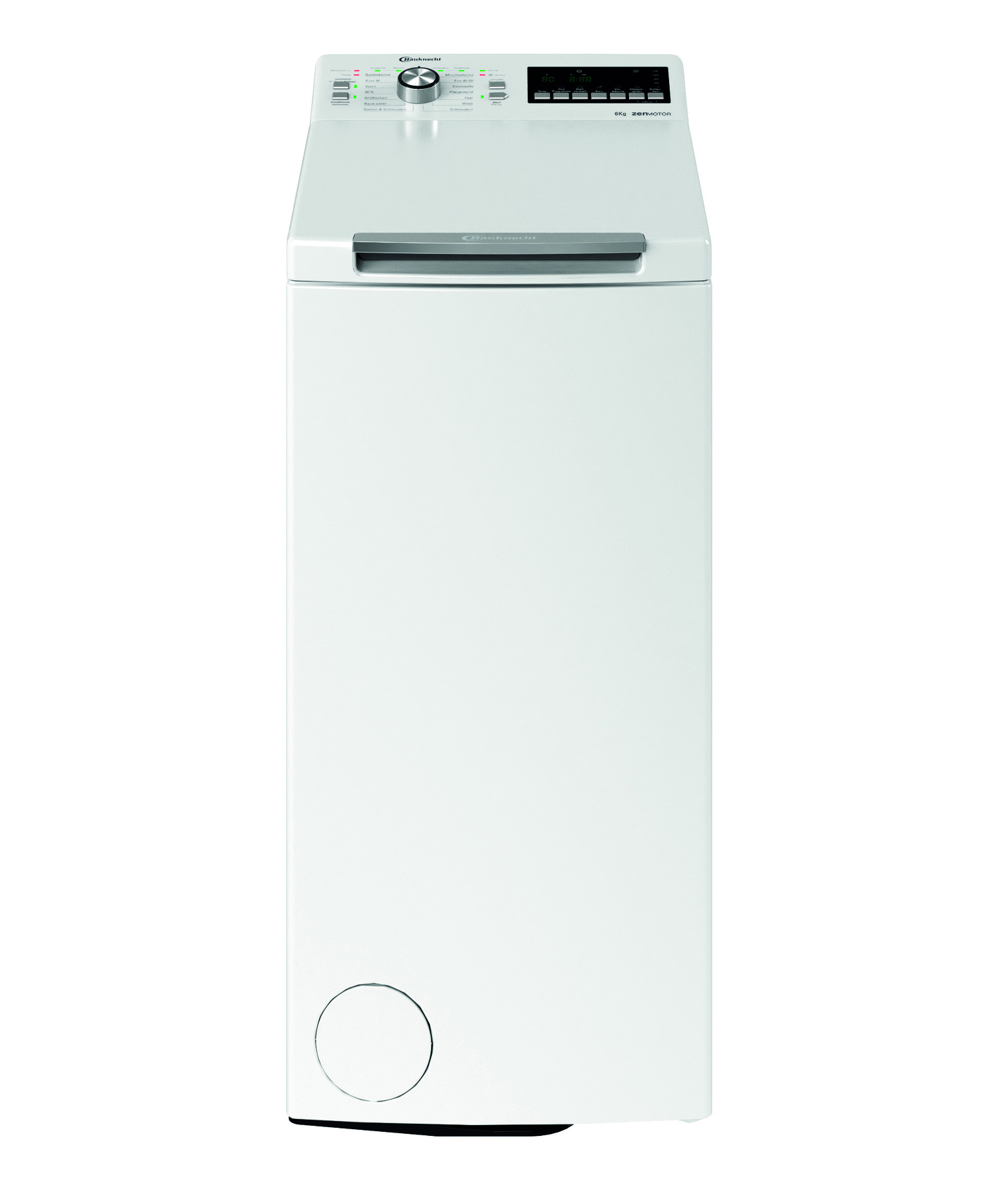
A specific top-loader is a useful comparison if a narrow alcove is your main concern. Bauknecht lists the DTL 6B BK W FF as 40 cm wide, 60 cm deep and with a 6 kg capacity.
A Mini Washer and other front-loaders are worth comparing if you mainly wash small loads or need to keep the height down. Haier lists the HW50-BP12307AU1 as having a 5 kg capacity and measuring 510 × 488 × 700 mm.
A standard-width front-loader is an option to compare if you have enough space and regularly wash larger loads. Bosch lists the WUU28T49 as a 9 kg front-loader suitable for installation under a worktop.
Freestanding front-loaders are another option to compare if you have room for a standard-width machine. Beko lists the WML71465S as having a 7 kg capacity and a width of 60 cm.
The selection includes top-loaders for narrow alcoves, as well as compact and standard-width front-loaders for different load sizes. Check the dimensions and clearance needed to open each model individually.
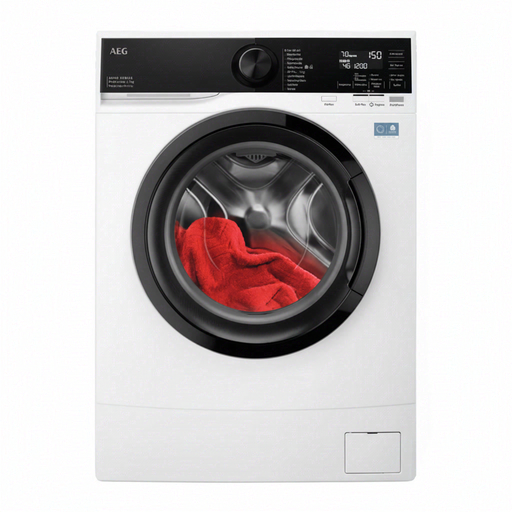 No image available
Worth considering if you wash other suitable laundry with your aprons and need a choice of fabric-care programmes.
AEG’s product details list a 7 kg capacity, a width of 595 mm and a depth of 487 mm. They also list 45 kWh per 100 cycles, AquaStop and programmes including cottons, delicates and silk.
As a front-loader, it needs space in front of the door. Check the full dimensions and connections against your alcove.
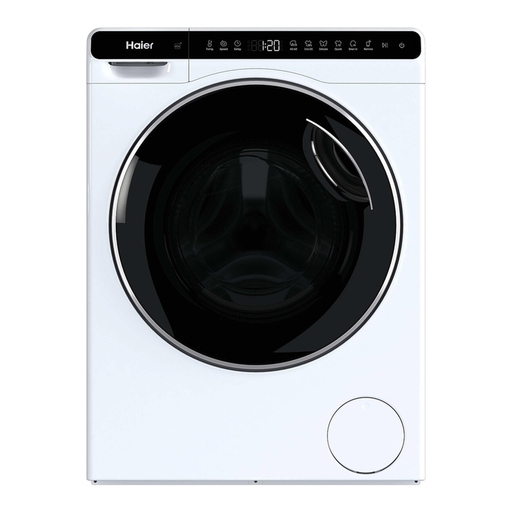 No image available
May be worth comparing if floor space is limited and you usually wash smaller loads of aprons.
Haier’s product details list a 5 kg capacity, 6 programmes and dimensions of 51 cm wide, 49 cm deep and 70 cm high. They also list energy class A and AquaStop.
Bear the capacity in mind if you wash larger loads. The door and connections need additional space.
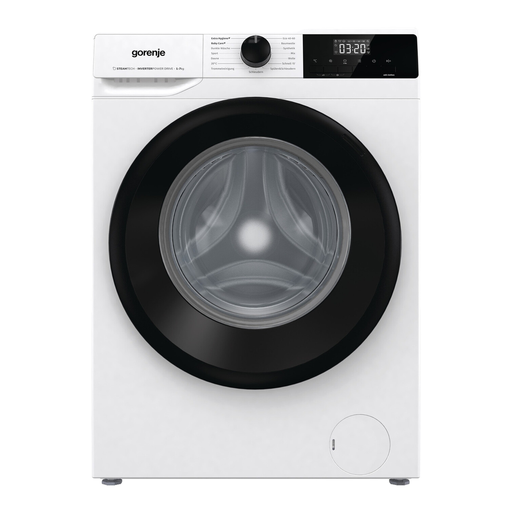 No image available
May be suitable if you have room for a front door and wash other suitable laundry with your aprons.
Gorenje’s product details list a 7 kg capacity, a width of 59.6 cm, a depth of 46.5 cm and a spin speed of 1400 rpm. They also list energy class A, AquaStop and 15 programmes, including steam, quick wash and delicates options.
Remember to measure the space in front of the door and around the connections.
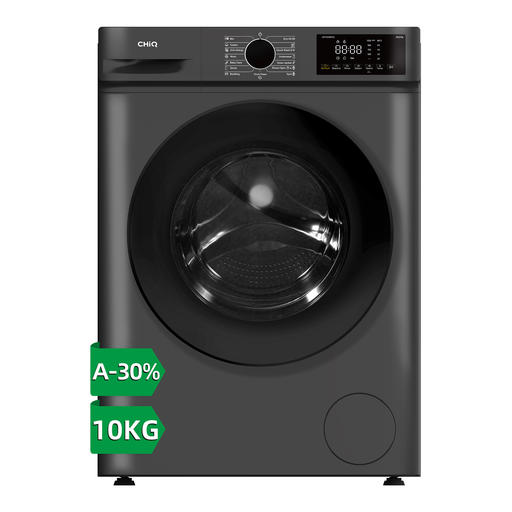 No image available
Could be worth considering for larger loads, provided there’s enough space in the alcove for the door and connections.
CHiQ’s product details list a 10 kg capacity, a spin speed of 1400 rpm and a width of 465 mm. They also list steam washing, a 15-minute quick wash and a 1-Touch Smart function.
The stated width doesn’t replace checking the machine’s full dimensions and the clearance needed to open it.
 No image available
May be worth considering if the alcove is particularly narrow and there’s room above the machine to open the lid.
Bauknecht’s product details list a 6 kg capacity, a width of 40 cm, a depth of 60 cm and a height of 90 cm. They also list 48 kWh per 100 cycles, a spin noise level of 72 dB(A), an anti-stain programme and energy class B.
The lid needs clearance above the machine. Check that the aprons are suitable for your chosen programme according to their care labels.
No. The programme name doesn’t mean you can select 60 °C. On the machines described by Electrolux, the temperature for this programme is set. If you need a specific temperature, check the care label and the programmes on the model you’re considering.
Measure the width, depth and height, and allow for pipes, skirting boards and connections. Also check that the door or lid can open fully. Follow the instructions for your chosen machine when planning the installation.
Don’t leave wet laundry in the drum for long. After washing, dry the seal and detergent drawer, and leave the machine open to air-dry. The Verbraucherzentrale also recommends cleaning the filter regularly, if your model has one.
Compare the stated kWh per 100 Eco cycles and litres per Eco cycle on the same label basis. The Verbraucherzentrale notes that these figures describe the Eco programme and don’t predict the consumption of every individual apron wash.
Not necessarily. For commercial catering, the Federal Institute for Risk Assessment recommends clean workwear that is stored separately from personal clothing and changed daily. If the machine is for workplace use, you should also follow the relevant hygiene requirements. This doesn’t mean there’s one set washing temperature for every domestic apron.