When choosing a washing machine for bath mats, start with the mat’s care label and the space available. Then choose a capacity that suits the regular laundry for your whole house share. Spin noise and the EU energy label are also worth comparing, but the Eco 40–60 label rating doesn’t promise the same consumption for every mat-washing programme.
Who this choice matters to
House shares with a shared laundry pile
If you wash bath mats alongside your everyday clothes, choose a drum size to suit the regular total load – not just one mat. The consumer advice centre recommends choosing a machine size to suit your household.
House shares with limited laundry space
When space is tight, the machine’s actual dimensions and design matter. Bosch explicitly states that certain models are suitable for installation under a worktop; this doesn’t automatically apply to every front-loader.
House shares where noise could disturb others
If spin noise could be disruptive in living or study areas, compare the stated noise levels and make sure the machine is level. Miele explains that an unbalanced load can cause the spin speed to be reduced.
What to look for when buying
First check that the specific machine suits the care label and the space where it will go. Then compare capacity, spin noise and consumption figures.
Freestanding front-loader
A good fit if: there’s enough space and room to open the door, and you regularly wash everyday clothes for your house share too.
Bear in mind: A higher stated capacity only helps if it suits your usual total load; it won’t solve problems caused by a single mat that isn’t evenly distributed.
Front-loader suitable for installation under a worktop
A good fit if: the space available specifically requires a machine that can be installed under a worktop.
Bear in mind: ‘Front-loader’ doesn’t automatically mean ‘suitable for installation under a worktop’. Check the design and installation dimensions of the specific model.
| What matters |
What to check before buying |
Who will find it useful? |
| Washing mats correctly |
Check the care label and match it to the permitted programme, temperature and spin setting. |
If I want to wash the mat gently according to its care instructions and avoid an unbalanced load, choosing the right programme setting is essential. Around 30% of consumers put mat care first. |
| Shared laundry load |
Compare the rated capacity in kg with your regular house-share laundry load, and check the load limits for each programme. |
If I wash mats with our usual house-share laundry, I want the drum to suit the combined load. Around 30% of consumers prioritise washing a shared load. |
| Space and spin noise |
Measure the machine’s height, width and depth; check its design and spin noise in dB(A). |
If space is tight or nearby living areas need to stay quiet, I’ll check that the dimensions fit and look at the stated noise level. Around 20% of consumers see space or spin noise as a top priority. |
| Buying and running costs |
Compare EU label figures on a like-for-like basis and check what delivery and installation services are included. |
When weighing up the cost of a shared machine, I want to consider not just the purchase price but also ongoing consumption and any services related to installation. Around 20% of consumers put total costs first. |
EU energy label figures are based on the Eco 40–60 programme. The European Commission includes figures such as electricity consumption per 100 cycles and water consumption per cycle; these don’t automatically describe every other programme.
Common buying mistakes
-
Assuming a quick wash is suitable for every bath mat
Programmes and their load limits can vary: Beko states that its 14-minute Xpress programme on the BM3WFU4841N can take a maximum of 2 kg, even though the machine’s rated capacity is 8 kg.
Check the mat’s care label, the programme description and its load limit together.
Depending on the mat, you may need to run another suitable wash.
-
Assuming Eco label figures apply to every mat-wash cycle
The consumption figures shown on the EU label are based on Eco 40–60. Other permitted programmes may use different amounts.
Compare machines using the same label basis, and don’t use these figures to estimate consumption for another programme.
-
Checking only the width and machine type
Specific models can differ in depth, design and the services on offer. A front-loader isn’t automatically suitable for installation under a worktop.
Measure the space, including room for the necessary connections, and check which delivery and installation services are included in the specific offer.
Depending on the offer, installation and other delivery services may need to be considered separately.
Key brands at a glance
Bosch
The WAN28271 and WUU28T71 models show different installation options for front-loaders.
- Bosch lists an 8 kg capacity and a maximum spin speed of 1,400 rpm for both models; the WUU28T71 is explicitly stated to be suitable for installation under a worktop.
- These specifications don’t demonstrate any particular cleaning benefit for bath mats; not all front-loaders are suitable for installation under a worktop.
Beko
The freestanding BM3WFU4841N is a specific example of an 8 kg front-loader.
- Beko lists a depth of 54,6 cm and a spin noise level of 76 dB(A) for this model. Its Xpress programme takes 14 minutes and is limited to a maximum load of 2 kg.
- The programme specifications don’t tell you whether the quick wash is suitable for the care label on a particular mat.
Bauknecht
The B WM 8A7 BS is an example of an 8 kg front-loader with an installation package available separately.
- Bauknecht lists a machine depth of 55 cm for this model.
- The manufacturer’s claims about stain removal don’t prove that a programme is suitable for bath mats; check installation services separately.
Miele
The WWA120 WCS 8kg Active is another example of a front-loader with documented service options.
- Miele lists AddLoad and free collection of an old appliance for this model.
- Installation and other services should be considered separately; these features don’t prove a general advantage in durability or cleaning performance.
Joybuy products for shared-house laundry
These models are freestanding front-loaders, with different rated capacities for laundry shared across a house. Match your chosen capacity to your usual load, and always check the bath mat’s care label before washing it.
 No image available
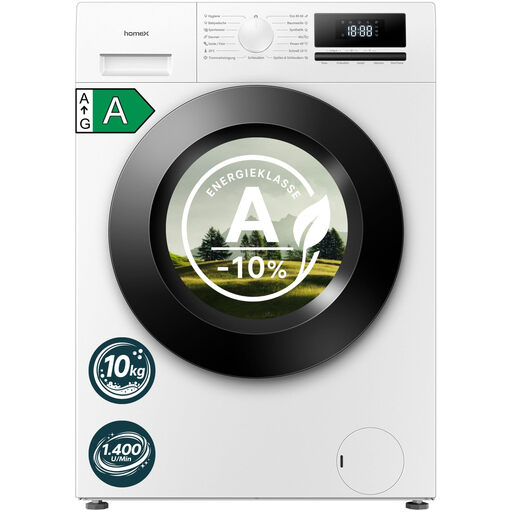
homeX WF1014H1A-W, 10 kg
The stated rated capacity gives you a point of comparison for your house share’s regular total laundry load.
Front-loader; 10 kg; maximum 1,400 rpm; 15 wash programmes; energy class A.
View at Joybuy
 No image available
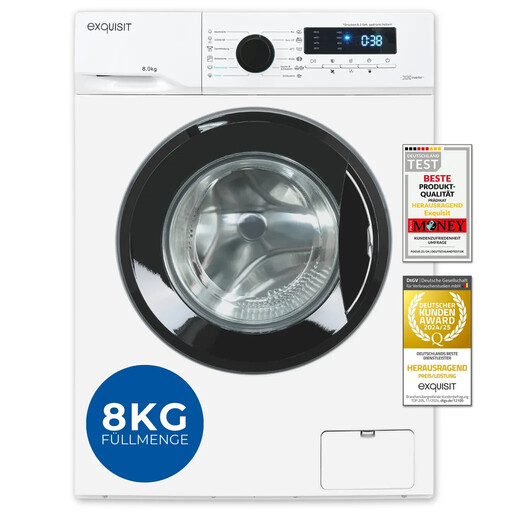
Exquisit WA58014-020A, 8 kg
The 8 kg rated capacity gives you a comparison point for your usual house-share laundry load.
Freestanding front-loader; energy class A; maximum 1,400 rpm; 13 programmes.
View at Joybuy
 No image available
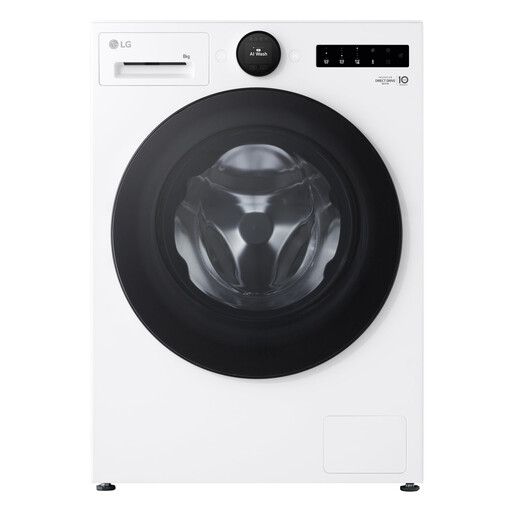
LG F4WX808YC, 8 kg
Compare the stated capacity with the typical amount of laundry shared across your house.
Freestanding front-loader; 8 kg; 1,350 rpm; energy class A-20%; 16 programmes.
View at Joybuy
 No image available
LG F4WR5035, 13 kg
The 13 kg rated capacity is worth comparing if you regularly have larger shared laundry loads.
Front-loader; 13 kg; 1,360 rpm; energy class A-20%.
View at Joybuy
 No image available
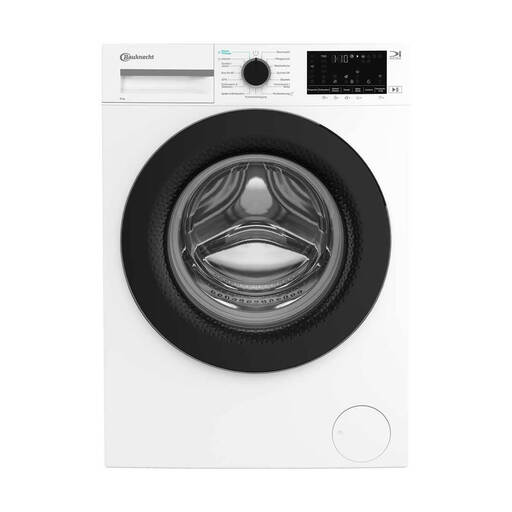
Bauknecht BW 8A10 BS, 8 kg
Check that the freestanding design and rated capacity suit your house share and the space available.
8 kg; maximum 1,400 rpm; energy class A.
View at Joybuy
Frequently asked questions
Can I wash any washable bath mat at 60 °C?
No. Always follow the care label for the specific mat. For example, IKEA lists a maximum temperature of 40 °C for coloured washes on its BACKMÅRA and FINTSEN models; this doesn’t set a general temperature limit for other mats.
Why is a single bath mat still wet after spinning?
One possible cause is an unbalanced load: Miele explains that the machine may reduce the spin speed in this case. Redistribute suitable items according to the machine’s instructions and check that it’s level.
What should our house share check before installation?
Measure the space and check the design of the specific machine, including whether it’s explicitly suitable for installation under a worktop if you need this. Before ordering, also check which delivery and installation services are included in the offer.
What do the EU energy label and consumption figures tell me?
The EU label shows details including capacity, electricity consumption per 100 Eco cycles, water consumption per Eco cycle and spin noise. The consumption figures are based on Eco 40–60 and aren’t a promise for every other programme.
What should I do with an old washing machine?
Waste electrical equipment must be collected separately. The German Environment Agency lists local collection points as a generally free way to return it. Retailers’ take-back services are subject to the applicable legal requirements, particularly when replacing a larger old appliance.


