First, measure the space, connections and room needed to open the machine. Then choose a drum that suits your usual bath towel load. A slimline front-loader may work if depth is limited, while a top-loader could be a better fit if width is tight – but both need enough room for their respective doors to open. If you regularly wash larger loads, a bigger front-loader may be worth considering, provided you have space for it. Drying, spin noise and the figures for the programmes you actually use are all separate points to check.
Which option suits you?
If space is tight
If you’re short on depth or width, compare the exact appliance dimensions with the connections, the route into your home and the room needed to open the door or lid. AEG lists the LSR6FA75470 front-loader as having a maximum depth of 487 mm; according to the manufacturer, the Bauknecht WAT Eco 712 B3 top-loader is 40 cm wide.
For households with lots of bath towels
If you wash several bulky towels at once, check that your usual load is suitable for the programme you want to use. The Verbraucherzentrale recommends choosing an appliance size to suit your household; Bosch lists the WUU28T71 with a rated capacity of 8 kg.
If you don’t have a separate place to dry laundry
Before buying, think about where wet towels can dry and how you’ll deal with the moisture in your flat. The Verbraucherzentrale points out that washer-dryers cannot dry a full wash load straight away.
What to look for when buying
Slimline front-loader
A good fit if: depth is your main constraint and there’s enough room in front for the door to open.
Consider: ‘Slimline’ may mean less depth, not less width. AEG lists the LSR6FA75470 as 595 mm wide and up to 487 mm deep.
Top-loader
A good fit if: you have little room at the sides but enough space above to open the lid.
Consider: According to the manufacturer, the Bauknecht WAT Eco 712 B3 is 40 cm wide and 90 cm high. The lid may be awkward to open beneath a continuous worktop. Its stated energy efficiency class is D.
Front-loader with a larger drum
A good fit if: you regularly wash larger loads of towels and have enough room for a bigger machine.
Consider: Bosch says the WUU28T71 can be installed under a worktop and has an 8 kg capacity. Make sure its dimensions of 845 × 598 × 590 mm fit your space.
Small washing machine or washer-dryer
A good fit if: a small drum suits the amount of laundry you actually wash, or there’s very little space to dry clothes in your flat.
Consider: The Haier HW50-BP12307AU1 has a stated capacity of 5 kg, so larger loads may need extra wash cycles. According to the Verbraucherzentrale, washer-dryers use more electricity and water than separate appliances and cannot dry a full wash load in one go.
| Buying priority |
What to look for |
Who it matters most to |
| Fit and access |
Compare the space, route into your home, connections and opening clearance with the dimension drawing for the exact model. |
If space is tight, I want to know whether the machine, connections and door will all fit. Around 28% of consumers put fit first. |
| Drum size |
Compare your usual towel load with the maximum load for your chosen programme. |
If I’m washing several bulky bath towels, I need to know whether my usual load is suitable for the programmes available. Around 22% of consumers put load capacity first. |
| Drying and moisture |
Check that you have somewhere to dry laundry and can ventilate the room; for washer-dryers, consider wash and dry capacities separately. |
Without a separate drying space, I need a practical way to dry wet towels and get rid of the moisture. Drying is the top priority for around 22% of consumers. |
| Spin noise |
Compare the noise level and noise emission class for the exact model, and follow the installation guidance. |
If the machine is near my living area, I want to know its spin noise level. Quiet operation is the top priority for around 17% of consumers. |
| Consumption and water protection |
Compare consumption figures on the same Eco 40–60 label basis, and check the water protection features and installation requirements. |
Alongside the purchase price, I want to check the actual consumption and water protection for my home. Around 11% of consumers prioritise running costs and the risk of water damage. |
Common buying mistakes
-
Checking only the width or depth
A machine may fit in the space but still be awkward to use if the door or lid can’t open properly. Connections and the route into your home need room too.
Check the full dimension drawing for the exact model and measure the clearance at the intended spot.
-
Assuming the kilogram rating works for every towel load
The rated capacity alone doesn’t tell you whether a particular combination of bulky towels is suitable for every programme.
Compare your usual load with the maximum load for the programme you want to use.
A smaller drum may mean extra wash cycles for larger towel loads, adding time and increasing consumption.
-
Assuming a washer-dryer is automatically the most space-saving option
A washer-dryer can’t dry a full wash load straight away. The Verbraucherzentrale also notes that these appliances use more electricity and water than separate machines.
First, check your drying space and ventilation options. If you’re considering a washer-dryer, compare its wash and dry capacities separately.
-
Assuming a high energy efficiency class means lower costs on every programme
The label figures are based on the Eco 40–60 programme and can’t automatically be applied to other programmes.
Compare appliances on the same label basis, and don’t assume they’ll save you money on other programmes without checking.
Brands to consider
AEG
AEG offers examples for different space constraints. According to AEG, the LSR6FA75470 front-loader has a 7 kg capacity and a maximum depth of 487 mm; the LTR7E71379 top-loader has a 7 kg capacity and is 397 mm wide.
- The different designs may be useful when depth or width is limited.
- With a front-loader, check the space in front of the door; with a top-loader, check the clearance above the machine. ProSense and Hygiene features are manufacturer claims and don’t provide independent evidence of washing performance on bath towels.
Bauknecht
According to Bauknecht, the WAT Eco 712 B3 top-loader has a 7 kg capacity and measures 40 × 90 × 60 cm.
- Its stated width may make it worth considering if space is limited at the sides.
- Bauknecht lists the model as energy efficiency class D. Its advertised stain removal claim is based on a manufacturer test using the anti-stain programme, not an independent assessment of how it washes bath towels.
Bosch
According to Bosch, the WUU28T71 can be installed under a worktop, has an 8 kg capacity and measures 845 × 598 × 590 mm.
- Bosch lists AquaStop for this exact model.
- Before buying, check the space, installation requirements and the terms that apply to the specific features.
Haier
According to Haier, the HW50-BP12307AU1 mini washer has a 5 kg capacity and external dimensions of 510 × 488 × 700 mm.
- Its dimensions and rated capacity give you a specific point of comparison if space is particularly limited.
- The key question is whether your usual towel load will fit in the 5 kg drum. The advertised automatic and hygiene features are manufacturer claims.
Miele
According to Miele, the WWA120 WCS 8kg Active front-loader has an 8 kg capacity and a spin speed of 1400 rpm.
- Its rated capacity and spin speed give you specific figures to compare for this model.
- Check the dimensions, space required and service terms that apply to the exact appliance. A manufacturer’s description of durability testing isn’t a guarantee of how long an individual machine will last.
Washing machines at Joybuy
The Joybuy products below are washing machines with different rated capacities. For each model, compare its load details and check the dimensions and opening clearance for your chosen spot.
 No image available
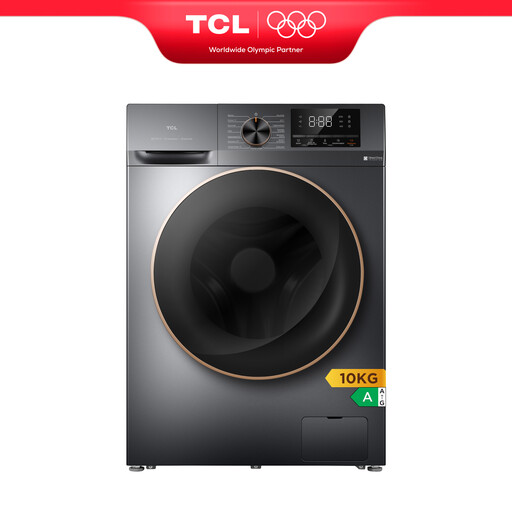
TCL FP2210SA0AMDE washing machine, 10 kg
The stated capacity may be useful when comparing machines for regularly larger loads of laundry.
10 kg; Smart-DD motor; Steam Wash; 15-minute quick wash; child lock; energy efficiency class A.
View at Joybuy
 No image available
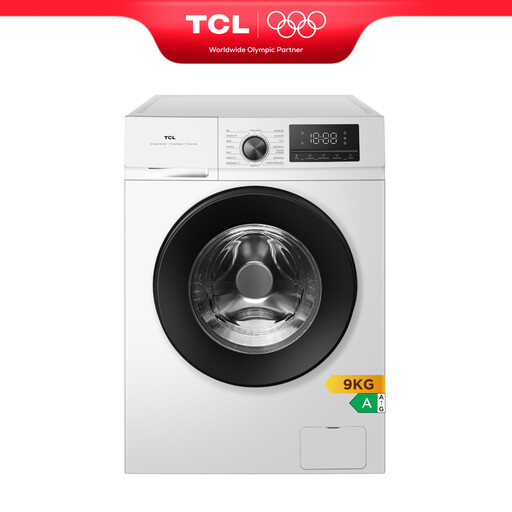
TCL FF0109WA2AMDE washing machine, 9 kg
The rated capacity is a useful guide when comparing your usual towel load with the maximum load for the programme.
9 kg; BLDC motor; Steam Wash; 15-minute quick wash; child lock; energy efficiency class A.
View at Joybuy
 No image available
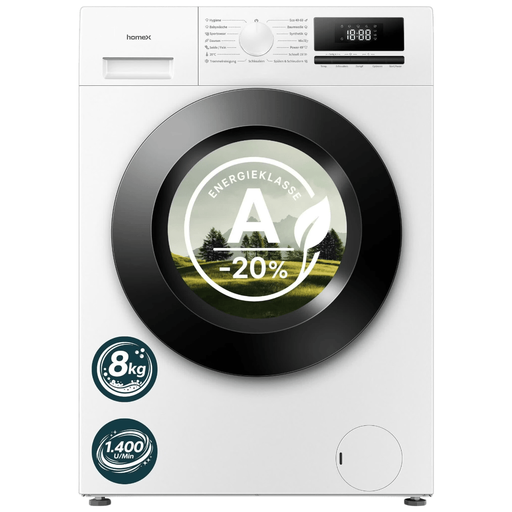
homeX WF814H1A-W front-loader, 8 kg
A front-loader could be a good option if there’s enough room in front of the machine to open the door.
8 kg; 1400 rpm; steam function; inverter; AquaStop; energy efficiency class A.
View at Joybuy
 No image available
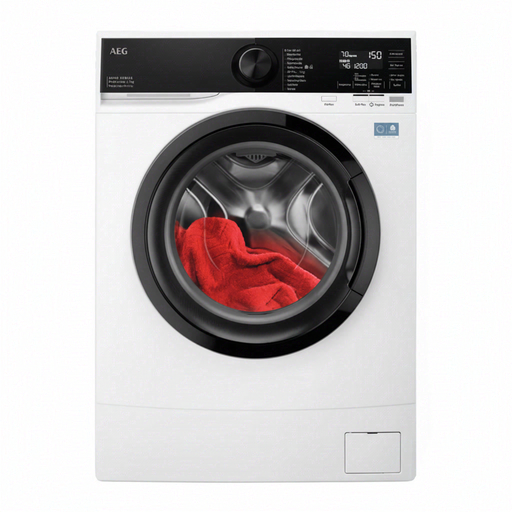
AEG LSR6FA75470 front-loader, 7 kg
The shallower depth may be useful if space is limited mainly in this direction; make sure there’s also enough room for the door and connections.
AEG lists this model as having a 7 kg capacity, a width of 595 mm and a maximum depth of 487 mm.
View at Joybuy
 No image available
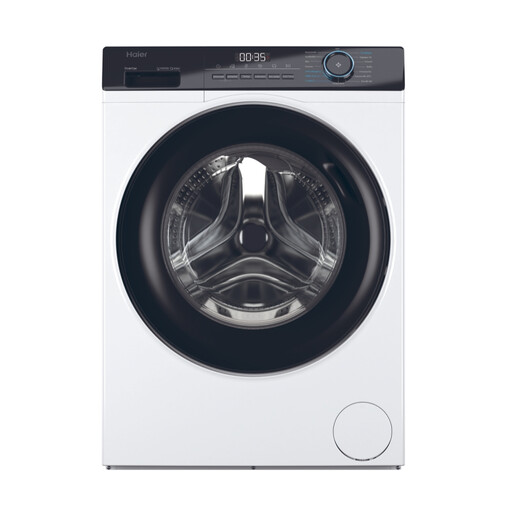
Haier I-PRO SERIES 3 front-loader, 9 kg
The rated capacity may be worth comparing if you regularly wash larger loads. Also check that you’ll be able to open the machine in its intended spot.
9 kg; maximum spin speed 1400 rpm; steam function; inverter motor; AquaStop hose; energy efficiency class A.
View at Joybuy
Frequently asked questions
Do bath towels always need to be washed at 60 °C?
No. For hygiene, the Umweltbundesamt recommends washing towels at 40 or 60 °C. Follow the care label and take any specific health circumstances into account. The Umweltbundesamt does not consider extra laundry disinfection necessary for healthy members of the household and normally soiled laundry.
Can I dry large towels in a small flat?
It depends on whether you have a suitable place to dry them. If you dry laundry indoors, regular ventilation is needed to remove the extra moisture. The Umweltbundesamt advises paying particular attention to ventilation when there are sources of moisture such as wet laundry.
Do I need permission to have a washing machine in a rented flat?
According to the Verbraucherzentrale, tenants are generally allowed to have a washing machine in their home. Even so, make sure the location, connections and protection against water damage are suitable for your home. This doesn’t cover every possible tenancy agreement or connection arrangement.
What does the EU energy label tell me about consumption?
Among other things, the EU energy label shows electricity consumption per 100 wash cycles and water consumption per cycle for Eco 40–60. The European Commission describes washing machine energy efficiency classes on a scale from A to G; the Verbraucherzentrale recommends comparing consumption figures on the same programme basis. The label figures aren’t a direct forecast of costs for other programmes or your individual electricity and water rates.


