Households with a narrow laundry nook
When space is tight, the appliance dimensions, connections and room to open the machine all need to work together. Haier and AEG advise checking the opening clearance and the actual installation space, too.


The key is to measure the usable width, depth and height, including space for connections and opening the machine, then choose a drum capacity to suit your usual bath towel load. A top-loader may work when width is tight, while a slim front-loader may be better if depth is limited. Check that the lid or door can open fully on the model you choose. If you also lack space to dry clothes, a washer-dryer could be an option, although its drying capacity may be lower than its washing capacity. The Consumer Advice Centre also notes that combined appliances use more electricity and water than separate machines.
When space is tight, the appliance dimensions, connections and room to open the machine all need to work together. Haier and AEG advise checking the opening clearance and the actual installation space, too.
If you wash bath towels often, compare your usual load with the stated capacity, and check care labels and suitable programmes. The Consumer Advice Centre recommends following the care instructions on textiles.
If there’s no suitable space to dry clothes alongside your washing machine, a washer-dryer can combine both functions. Make sure you check its drying capacity separately. The Consumer Advice Centre notes that combined appliances use more electricity and water than separate machines.
A good fit if: Width is the main constraint. The Bauknecht WMT 612 B6 is listed as 40 cm wide, while the AEG LTR6N40260 is 397 mm wide; both have a 6 kg capacity (Bauknecht Germany; AEG Germany).
Bear in mind: The models listed are around 60 cm deep, and the lid needs room to open upwards.
A good fit if: Depth or, in addition, height is more restricted. Haier lists the HW70-BP14637T as 468 mm deep with a 7 kg capacity; the HW50-BP12307AU1 is listed with a 5 kg capacity and dimensions of 51 × 48,8 × 70 cm (Haier Germany).
Bear in mind: A front-loader needs room for its door and connections. With a 5 kg capacity, a larger bath towel load may need to be split across several washes.
A good fit if: You also lack a separate place to dry clothes, and your load is within the drying capacity. The LG V6WD85S2 is listed with an 8 kg washing capacity and a 5 kg drying capacity (LG Germany).
Bear in mind: The Consumer Advice Centre notes that washer-dryers use more electricity and water than separate appliances.
| What matters when buying | What to look for | Who is this important to? |
|---|---|---|
| Fit and access | Measure the space, route into the home, connections and clearance for the door or lid on the specific model. | If my laundry nook is tight, the machine needs to fit with its connections and open easily for loading. Around 36% of consumers put fit first. |
| Bath towel load and programme | Compare your usual dry towel load with the capacity; check care labels and available programmes. | If I wash bath towels regularly, I want to fit my usual load into a manageable number of washes. Around 29% of consumers prioritise capacity and a suitable wash programme. |
| Drying in a small space | Consider washing and drying capacities separately, and compare figures for the complete wash-and-dry cycle. | If there’s no suitable space to dry clothes, I need a solution that includes drying. Around 21% of consumers put a lack of drying space first. |
| Running costs | Compare electricity and water figures for the same programme; for washer-dryers, also check figures for the complete cycle. | If I wash regularly, I want to compare consumption figures for the programmes I use. Around 14% of consumers prioritise running costs. |
Hoses, protruding parts and the open door or lid need room, too. This can make a machine impractical for its intended spot even if its body fits.
Measure the floor space, route into the home and connection area, then check in advance that the door or lid can open fully where you plan to put the machine.
The LG V6WD85S2 has an 8 kg washing capacity but a drying capacity of 5 kg. So a load that fits in the wash may not necessarily fit in the drying cycle.
Compare the two capacities separately and check the consumption figures for the complete wash-and-dry cycle.
Label figures are based on the Eco 40–60 programme and don’t automatically describe every towel wash you choose. The European Commission links the relevant requirements to the Eco 40–60 programme.
Compare label figures on the same programme basis and consider which programmes you’re likely to use.
The WMT 612 B6 top-loader is an option for laundry nooks where width is limited.
The 6 kg LTR6N40260 top-loader is designed for a narrow installation space.
The models listed address different space constraints: the HW70-BP14637T is shallower, while the HW50-BP12307AU1 has a smaller overall design.
The V6WD85S2 washer-dryer is an option if there’s no room for a separate drying area in your laundry nook.
The models below include slim front-loaders, a mini washing machine and a compact washer-dryer to suit different space and load requirements.
 No image available
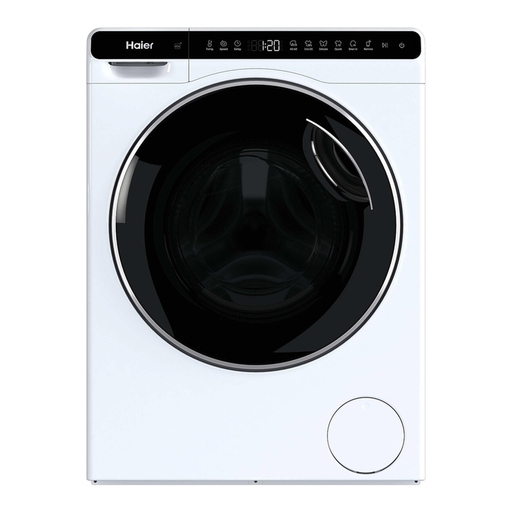
This front-loader is designed for bath towel loads up to its stated washing capacity and is described as a Slim-Fit model.
Washing capacity: 9 kg. Spin speed: 1200 rpm. Stated depth: 53,5 cm.
 No image available
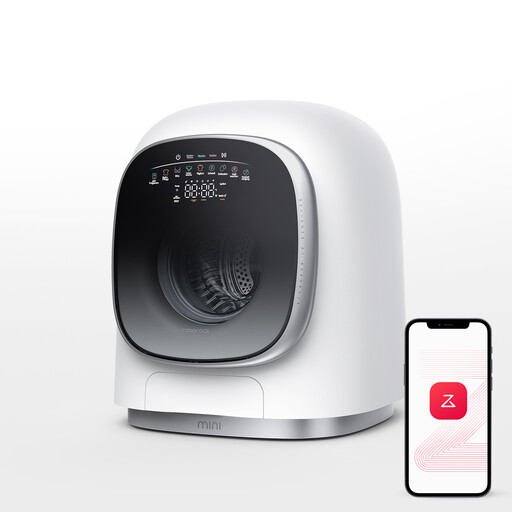
This mini washing machine may suit you if a smaller design matters more than washing a large towel load in one go.
Washing capacity: 5 kg. Stated dimensions: 70 × 51 × 49 cm (H × W × D).
 No image available
This combined appliance is designed for very small laundry loads when you need to wash and dry clothes in a tight space.
Washing capacity: 1 kg. Drying capacity: 0,5 kg.
 No image available
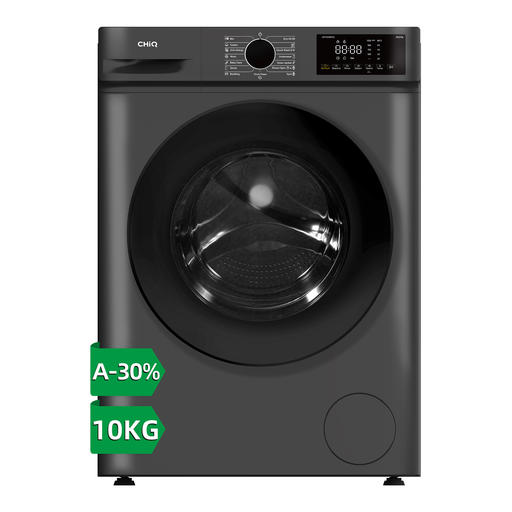
This front-loader offers a higher stated washing capacity. Before buying, check that its width will fit in your laundry nook.
Washing capacity: 10 kg. Stated width: 465 mm. Spin speed: 1400 rpm.
 No image available
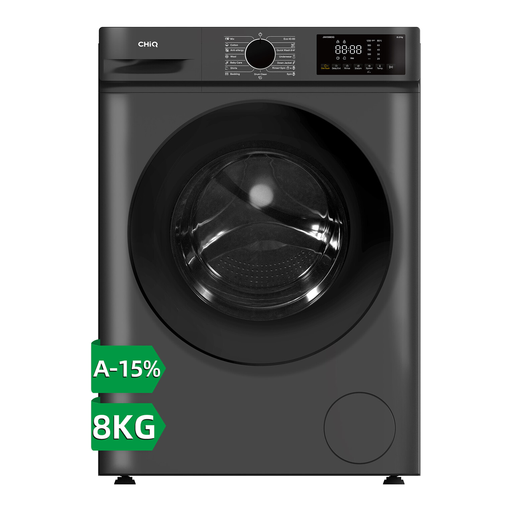
This front-loader may suit your usual bath towel load if its dimensions and open door fit the available space.
Washing capacity: 8 kg. Stated width: 465 mm. Stated depth: 52 cm. Spin speed: 1400 rpm.
No, not in every case. The Eco 40–60 programme is designed for normally soiled cotton that, according to its care label, can be washed at 40 °C or 60 °C. The Consumer Advice Centre says that 40 °C is also enough for healthy households and recommends washing towels occasionally at 60 °C with a heavy-duty detergent. Always follow the care label.
Measure more than just the width, depth and height of the space. Check the route into the home, the connection area and the clearance needed to open the door or lid. Haier’s guidance on washing machine dimensions also advises checking the clearance for the porthole door.
For washing machines, compare electricity use per 100 Eco wash cycles and water use per cycle on the same programme basis. For washer-dryers, look separately at figures for washing alone and for the complete wash-and-dry cycle, and consider how you’ll actually use the appliance.
A washer-dryer may be a good fit if you also lack a suitable place to dry clothes and its drying capacity is enough for your load. The LG V6WD85S2, for example, is listed with an 8 kg washing capacity and a 5 kg drying capacity. The Consumer Advice Centre also notes that combined appliances use more electricity and water than separate machines.
Check the space, opening clearance and connections, and discuss installation and the risk of water damage with your landlord. The Consumer Advice Centre recommends doing so; this doesn’t mean washing machines are automatically prohibited in rented homes.