Who should take care when choosing?

Households with lots of bath towels

If you regularly wash several absorbent bath towels together, choose a drum capacity that suits your usual load. The consumer advice centre recommends choosing a washing machine size that is right for your household.

Households with greater hygiene needs

For towels, it’s important to check the care label and choose the right wash programme. For hygiene reasons, Germany’s Federal Environment Agency recommends washing towels at 40 or 60°C. Specific circumstances, such as an infectious illness, may call for further consideration.

Households with limited space

If width or depth is limited, you’ll need to consider the door opening, connections and clearance for installation as well as the appliance dimensions. The Consumer Advice Centre of North Rhine-Westphalia outlines typical widths for front- and top-loading machines, but the dimensions of the specific model are what matter.

What should you look for when buying?

What matters What to check before buying Who is this particularly important to?
Capacity for bath towels Your usual combined load and the rated capacity; also check the maximum load for your chosen programme. If I regularly wash several absorbent bath towels together, I want a drum that suits my typical load without being unnecessarily large for smaller loads. Around 29% of consumers put getting the right capacity first.
Wash programmes and hygiene Care labels and available temperature programmes; if there are specific health concerns, find out which approach is appropriate. If my hygiene needs are more specific, I need to choose a suitable programme that’s also right for the fabric. Around 23% of consumers prioritise wash programmes and hygiene.
Energy and water consumption Compare consumption figures for the same programme and consider which programmes you’re likely to use. If the machine runs regularly, I want comparable consumption figures for the programmes I’ll actually use. Around 18% of consumers focus primarily on running costs.
Fit in the utility room Check the full appliance dimensions, door or lid opening, and water and electricity connections at the intended location. If space is tight in my utility room, the appliance needs to fit along with its connections and the space required to open it. Around 18% of consumers put getting the right fit first.
Water protection Check the protection system on the specific model, connection requirements and insurance cover separately. If I need to take potential water damage particularly seriously, I want to understand the protection system and how to connect the appliance correctly. Around 12% of consumers prioritise water protection and the risk of damage.

Common buying pitfalls

  • Assuming Eco 40–60 guarantees a 60°C hygiene wash

    The EU Eco 40–60 programme is intended for normally soiled cotton laundry that can be washed on this programme. Its name doesn’t mean every load is treated like a separate 60°C wash.

    Choose a wash programme based on the care label and your specific hygiene needs—not just the programme name.

  • Comparing only the capacity in kilograms

    The rated capacity needs to suit your usual towel load and the space available. A higher figure isn’t automatically better if your everyday loads are small or the appliance is too deep.

    Estimate the typical number of towels you wash together, and measure the space, opening clearance and connections.

  • Assuming the energy label figures apply to every wash programme

    The stated consumption figures refer to the standardised Eco 40–60 cycle. Other programmes, particularly those using different temperatures, may have different figures.

    Compare models using the same programme as a reference, and consider which programmes you’re likely to use in practice.

  • Assuming water protection is a comprehensive guarantee against damage

    A stated protection system is no substitute for a proper connection or for checking warranty and insurance terms. The consumer advice centre points out that insurance policies generally won’t cover water damage if a washing machine is left running unattended for a long time.

    Check the protection system, connection requirements, warranty terms and insurance cover separately.

Brands to consider

Bosch

The WGG244F40 front-loader has a stated capacity of 9 kg, making it a useful benchmark for larger towel loads.

  • Bosch lists AquaStop and an appliance depth of 590 mm for this model.
  • Depth alone doesn’t tell you whether there’s enough extra space for connections and installation.

AEG

The LR6F65488 is an 8 kg front-loader with load adjustment as described by the manufacturer.

  • AEG lists a maximum depth of 602 mm and Aqua Control for this model.
  • Information about load adjustment and consumption comes from the manufacturer; these aren’t independently measured savings.

LG

The F2V7SLIM9B front-loader is listed by the manufacturer as having a 9 kg capacity and a depth of 53.5 cm.

  • The stated depth can help when planning where to fit an appliance in a tight space.
  • You’ll still need to allow extra room for connections and opening the appliance; the depth alone doesn’t confirm that it will fit.

Miele

The W1 WWB360 WPS is an 8 kg front-loader, listed by Miele with a 1400 rpm spin speed and additional convenience features.

  • The model page lists features including QuickPowerWash, Miele@home and CapDosing.
  • Check the relevant terms for optional services and separate delivery charges.

Siemens

The iQ300 WM14N271 is an 8 kg front-loader with model-specific information on dimensions and water protection.

  • Siemens lists dimensions of 845 × 598 × 590 mm and aquaStop for this model.
  • Manufacturer claims about quiet or quick programmes aren’t an independent measure of how well the machine handles full loads of bath towels.

Washing machines at Joybuy

The models below include front-loaders for larger and varied towel loads, slimline appliances and a washer-dryer. Check the dimensions and features of the specific version before choosing.

LG F4WR5035 front-loading washing machine, 13 kg

LG F4WR5035, front-loader, 13 kg

The stated 13 kg washing capacity is designed for consistently large loads; the maximum load for your chosen programme is what matters.

The product description lists 1360 rpm, A-20% energy class, AI DD, 6 Motion Drum, Allergy Care Steam, AquaLock and LoadSense.

View at Joybuy
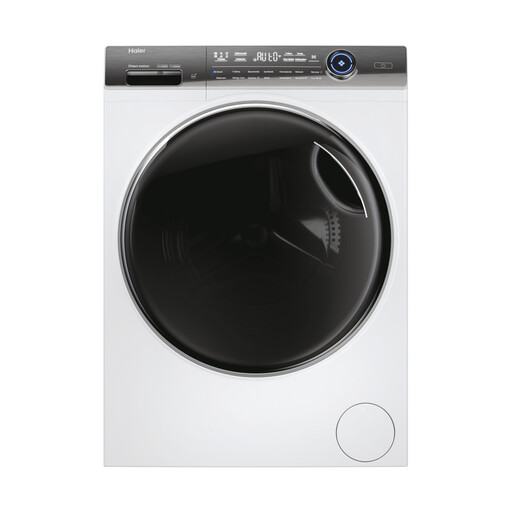
Haier I-Pro 7 Plus HW80-BD14979EU1, 8 kg

Haier I-Pro 7 Plus HW80-BD14979EU1, 8 kg

The stated 8 kg capacity and load-sensing feature are useful for households with varying load sizes.

The product information lists 1400 rpm, A-20% energy class, an appliance depth of 50 cm and LoadSense.

View at Joybuy
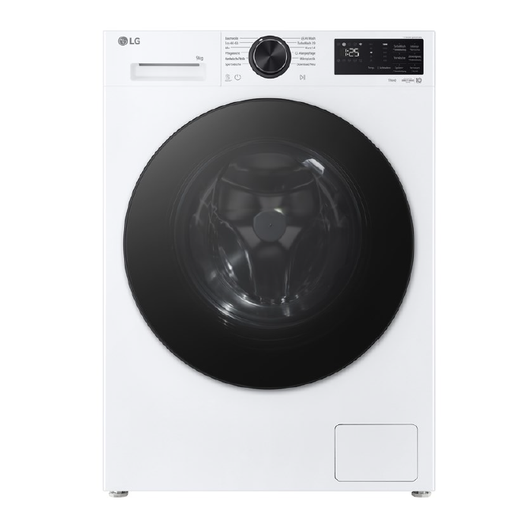
LG F2X7SLIM9W slim-fit washing machine, 9 kg

LG F2X7SLIM9W, Slim Fit, 9 kg

The product description specifies a Slim Fit design and a 9 kg washing capacity. Check the full dimensions and the space needed for connections at the intended location.

Listed features include 1200 rpm, A energy class, AI DD, Steam, Allergy Care, TurboWash 360° and ThinQ.

View at Joybuy

Samsung washer-dryer, 9 kg washing and 6 kg drying capacity

Samsung washer-dryer, 9 kg wash / 6 kg dry

This washer-dryer is worth considering if you need a drying function as well as a washing machine. Its stated drying capacity of 6 kg is lower than its 9 kg washing capacity.

The product description lists 1400 rpm, AI EcoBubble, A energy class for washing and D overall, Wi-Fi, Add Laundry and Leak Protection.

View at Joybuy
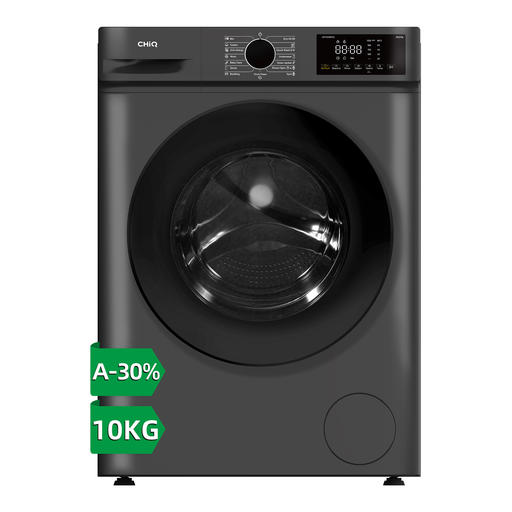
CHiQ JW105883G front-loader, 10 kg, 465 mm wide

CHiQ JW105883G, front-loader, 10 kg

The product description lists a width of 465 mm and a 10 kg washing capacity. Check that the depth, connections and opening clearance also suit the intended location.

Listed features include a 530 mm drum diameter, 1400 rpm, Steam Wash and A-30% energy class.

View at Joybuy

Frequently asked questions

Do bath towels always need to be washed at 60°C?

No, not as a rule. For hygiene reasons, Germany’s Federal Environment Agency recommends washing towels at 40 or 60°C. An infectious illness may call for special measures. Follow the care label and seek medical advice about health concerns if needed.

What should I do before the first wash in the utility room?

Check the installation instructions for your specific model. Bosch lists removing the transit bolts, levelling the appliance, and connecting it to the electricity and water supplies as separate steps. The available space and connections must also suit the room.

How can I prevent smells in my washing machine?

Remove wet laundry promptly, dry the door seal and detergent drawer, and leave these areas open until they’re dry. The consumer advice centre also recommends cleaning the fluff filter regularly, if your model has one.

Which costs and rights should I distinguish between after buying?

Compare running costs using relevant consumption figures and your expected usage, and check delivery and installation services separately. Your statutory rights against the seller are not the same as a voluntary guarantee. The terms and conditions explain what the guarantee covers.

What labelling applies to new appliances in Germany, and where should an old appliance go?

New household washing machines must meet EU ecodesign and energy labelling requirements; the current energy label uses a scale from A to G. An old appliance should go to a designated separate collection point or take-back scheme, not in household rubbish. Check whether collection is included with delivery in the specific offer.