What shared houses should look for
First, work out how large your usual bedding loads are. Then compare consumption and noise figures, as well as the space available and water protection, in light of your washing routine.
| What matters when buying |
What to look for |
Who it matters most to |
| Space for bedding |
Compare the size of your usual load with the rated capacity, and check the load limit for the programme you choose. |
If you wash bedding together but don’t want an unnecessarily large drum, focus on the space your actual load needs. Around 33% of consumers put suitable capacity for bedding first. |
| Running costs |
Compare kWh per 100 Eco cycles and litres per Eco cycle on a like-for-like basis, and factor in how often you use the machine. |
If you’re weighing up the purchase price and longer-term running costs together, check the actual label figures rather than relying on the energy efficiency class alone. Around 27% of consumers prioritise overall costs. |
| Spin noise |
Check the spin noise in dB(A) and the noise emission class on the EU label. |
If the machine is near living or sleeping areas, spin noise can affect everyday life in a shared house. Around 20% of consumers put quiet operation first. |
| Installation and water protection |
Check the appliance and door-opening dimensions, connections, and the type and extent of water protection on the specific model. |
If space is limited or there’s a water connection in your home, suitable dimensions and protection against water damage are important points to consider. Around 20% of consumers focus on installation and water protection. |
EU energy label figures are based on the standardised Eco 40–60 programme and can’t automatically be applied to other programmes. So also check which programme you plan to use for your bedding.
Joybuy models for shared houses and bedding
This selection includes freestanding front-loading machines with a rated capacity of 8 or 9 kg, for shared houses comparing bedding loads by drum capacity as well as the listed consumption, noise and installation features.
 No image available
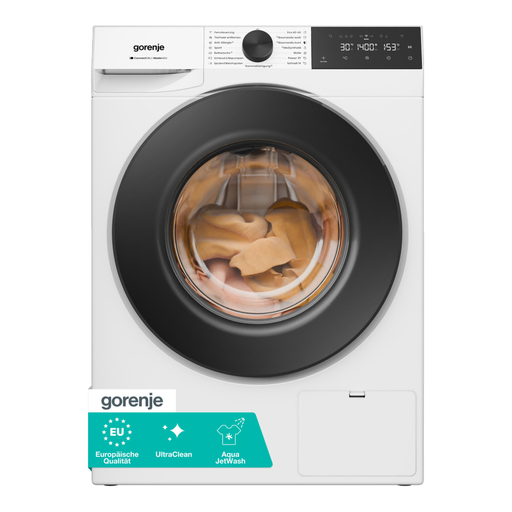
Gorenje W5G4S84AP2 washing machine, 8 kg
The rated capacity of 8 kg is a useful comparison point for shared houses planning bedding loads of this size.
Listed features include cotton and Eco 40–60 programmes, 43 kWh per 100 cycles, 41 litres per cycle and a spin noise level of 72 dB. The model also lists AquaStop and a depth of 460 mm.
Joybuy
 No image available
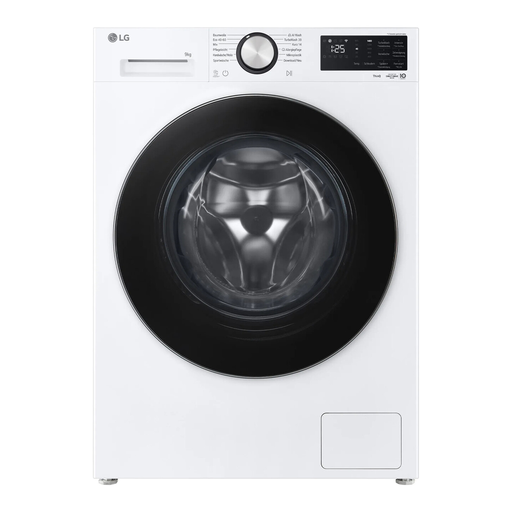
LG F4WX7092W washing machine, 9 kg
The rated capacity of 9 kg provides a useful comparison for shared houses that regularly have larger loads to wash together.
Product details list cotton and Eco 40–60 programmes, a spin speed of 1400 U/min, a spin noise level of 71 dB and water consumption of 46 litres per cycle. AquaLock is listed as a water protection feature.
Joybuy
 No image available
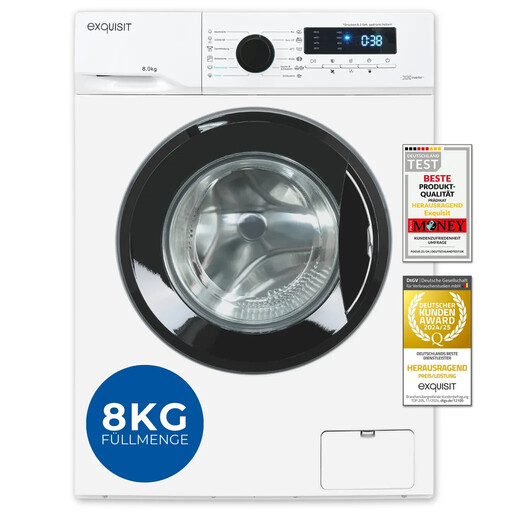
Exquisit WA58014-020A washing machine, 8 kg
The rated capacity of 8 kg is worth considering if you’re matching the space available to the size of your usual bedding loads.
Listed features include Cotton Care and ECO programmes, a maximum spin speed of 1400 U/min, 47 kWh per 100 cycles and 50 litres per cycle. The model also lists Aquastop and dimensions of 84,5 × 59,5 × 52,5 cm.
Joybuy
 No image available
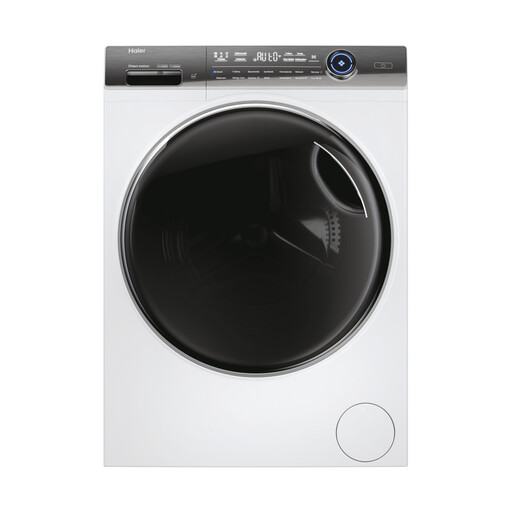
Haier HW80-BD14979EU1 washing machine, 8 kg
With a rated capacity of 8 kg, this model is a useful comparison for shared houses considering their usual loads alongside the space available.
Product details list 14 programmes, a drum volume of 63 litres, water consumption of 44 litres per Eco 40–60 cycle and a spin noise level of 65 dB. AquaStop and dimensions of 85 × 60 × 50 cm are also listed.
Joybuy
 No image available
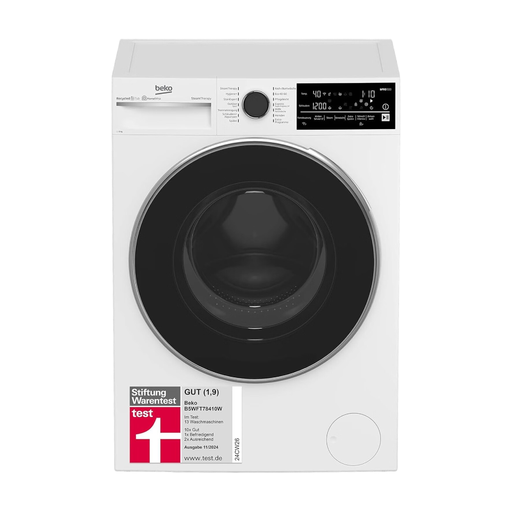
Beko B5WFT78410W washing machine, 8 kg
The rated capacity of 8 kg provides a useful comparison for bedding loads of this size; also check the load limit for the programme you plan to use.
This model is listed with energy class A, a spin speed of 1400 U/min and an Eco 40–60 programme. Beko lists a spin noise level of 72 dB(A) for this model.
Joybuy
Frequently asked questions
Does cotton bedding always need a 60-degree programme?
No, not necessarily. The German Environment Agency says that lower temperatures are often sufficient for everyday household laundry. Higher temperatures may be part of additional hygiene measures when someone has a contagious illness. Follow the care label and distinguish this situation from normally soiled bedding.
What does Eco 40–60 mean for cotton bedding?
According to the European Commission, Eco 40–60 is intended for normally soiled cotton that can be washed at 40 °C or 60 °C according to its care label. The energy label assesses the standardised operation of this programme; its consumption figures can’t automatically be applied to other programmes.
What should we check before installing a machine in a rented shared house?
Check the appliance and door-opening dimensions, connections and water protection, and discuss the installation location with your landlord. The German Consumer Advice Centre highlights the risk of water damage; this doesn’t mean that having your own washing machine is generally prohibited.
How can we look after a shared washing machine to stop it smelling unpleasant?
Remove damp laundry promptly, dry the seal and detergent drawer, and leave them open. The German Consumer Advice Centre also recommends cleaning the lint filter as instructed and running a suitable 60-degree wash for whites with powdered detergent about once a month.
Can an old washing machine go in household rubbish, and does the retailer have to take it back?
No. Waste electrical equipment must not go in household rubbish; it has to be taken separately to an authorised collection point. Under certain conditions, § 17 ElektroG provides for the free take-back of an old appliance of the same type when you buy a new one. Additional requirements apply to collections from private households, including information at the time the contract is made. Check the take-back option with the retailer you’re buying from.


