Homes with a narrow laundry nook
If you want to wash cotton bedding at home, the machine’s width isn’t the only thing to consider. You’ll also need enough clearance for the door or lid to open, and room to access the space.


Start by measuring the floor space, access route and clearance needed to open the machine. A slim top-loading washing machine may fit where width is limited, while a front-loading model can work under a worktop if it is explicitly designed for under-counter installation and there is enough room in front of the door. Then compare the size of your bedding load with the maximum load for the cotton programme. A washer-dryer saves space by doing away with a separate appliance, but the Verbraucherzentrale (German consumer advice centre) says it uses more electricity and water, and you’ll also need to factor in its separate drying capacity.
If you want to wash cotton bedding at home, the machine’s width isn’t the only thing to consider. You’ll also need enough clearance for the door or lid to open, and room to access the space.
If you want to wash several cotton sheets together, check the capacity of the relevant wash programme—not just the size of your household or the machine’s maximum load.
If there’s little room for an airer or separate tumble dryer, a washer-dryer could be an option. Weigh the space saved against energy and water use, as well as drying capacity.
A good fit if: width is limited and there’s enough clearance to open the lid fully.
Things to consider: you’ll need to leave space above the machine for the lid to open. This type is generally unsuitable under a fixed worktop.
A good fit if: there’s enough room for the machine and space in front of the door. If you plan to install it under a worktop, check that the specific model is explicitly designed for this.
Things to consider: the door, connections and installation dimensions all need to fit in your laundry nook.
A good fit if: there’s no practical space to hang your bedding or for a separate tumble dryer.
Things to consider: the Verbraucherzentrale says washer-dryers use more electricity and water than separate appliances. Check the washing and drying capacities separately.
The EU energy label for washing machines has used classes A to G since 1 March 2021. The European Commission says it includes information such as electricity use per 100 Eco cycles and water use per Eco cycle.
| What matters when buying | What to check | Who is this important to? |
|---|---|---|
| Fit and opening clearance | Measure the floor space, height, depth and access route. Check there’s enough room for the lid or door to open and for the connections. | If my laundry nook is narrow, the machine’s width isn’t the only thing that matters—I also need room to open it. Around 31% of consumers would make fit their top buying priority. |
| Bedding load | Check the care labels and the manual for the maximum load for your chosen cotton programme. Bosch recommends a Cottons or Coloureds programme for cotton. | If I want to wash several cotton sheets together, the programme’s load capacity needs to suit the amount of laundry I actually have. Around 25% of consumers would put load size first. |
| Energy and water use | Compare the electricity and water figures on the EU label. For a washer-dryer, also check the figures for the full wash-and-dry cycle. | If I do laundry regularly, I want to understand the ongoing electricity and water costs, rather than focus only on the purchase price. Around 19% of consumers would give running costs the most weight. |
| Spin noise | Compare the noise level in dB(A) and follow the installation instructions for positioning the machine on a suitable floor. | If the machine is near living areas, I want to keep spin noise and avoidable vibration to a minimum. Around 13% of consumers would put noise at the top of their list. |
| Drying your laundry | Check whether you can hang your bedding up to dry. For a washer-dryer, compare washing and drying capacities, as well as the energy and water use of the full cycle. | If I don’t have space to dry laundry, I need to know whether the machine can also dry the bedding load I want to wash. Around 12% of consumers would put lack of drying space first. |
Having the right external dimensions isn’t enough if the top-loader’s lid or the front-loader’s door can’t open. You’ll also need to consider the access route, connections and the specific installation dimensions.
Measure the space and opening clearance, then check both against the model documentation before you order.
If the machine doesn’t fit, you may need to arrange extra transport or rethink your setup.
A washer-dryer may have different capacities for washing and drying, so a full wash load won’t necessarily dry completely in one cycle.
Check both capacities and the energy and water use for a complete wash-and-dry cycle before relying on it to handle a particular amount of laundry.
The Verbraucherzentrale’s 2019 checklist still refers to the previous classes. Since 1 March 2021, the current EU energy label for washing machines has run from A to G.
Compare current models using today’s label and their specific energy and water figures.
Top-loaders for narrow spaces. The LTR6E60378 model is listed with a 7 kg capacity and a width of 397 mm.
Top-loaders for limited-width spaces. Bauknecht lists the WAT Eco 712 B3 as 40 cm wide, with a capacity of up to 7 kg.
Front-loaders with models explicitly designed for under-counter installation. The WUU28T71 is an 8 kg example.
A standard-width front-loader to consider if a machine around 60 cm wide will fit in your laundry nook. The WML71465S is listed with a 7 kg capacity.
A front-loader option, represented by the documented WWA120 WCS 8kg Active model.
The Joybuy models below include front-loaders and a top-loader, offering options for cotton bedding and different space requirements. Before choosing, measure the installation space and opening clearance, and check the programme load against the amount of laundry you have.
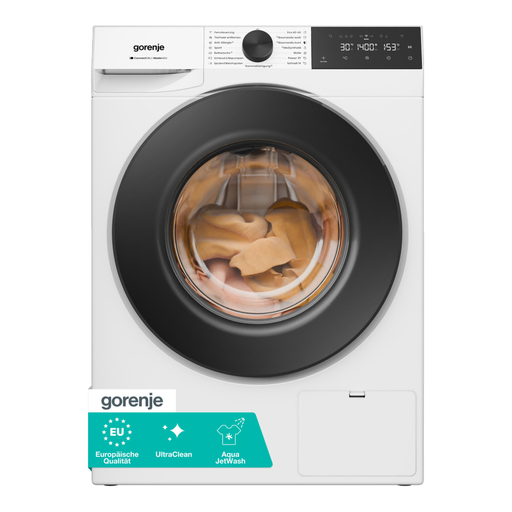 No image available
This front-loader could be an option if there’s room for the door to open and for the machine to fit in your laundry nook. Check the model documentation to see whether it’s suitable for under-counter installation.
8 kg rated capacity, 1400 rpm, energy class A, 15 programmes.
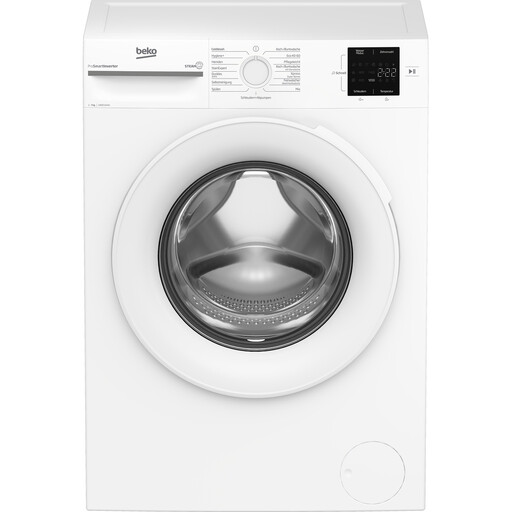 No image available
This front-loader is more likely to suit your space if there’s enough room in front of the machine for the door to open. Check its installation dimensions against your laundry nook.
7 kg, 1400 rpm, energy class A.
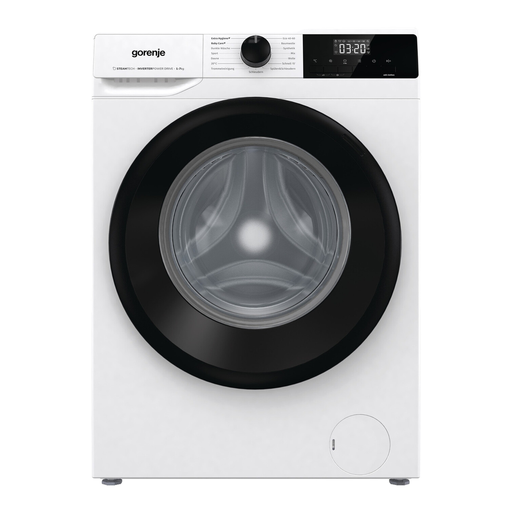 No image available
This front-loader could be an option if the door has enough clearance to open. Before buying, check the dimensions and the space needed for connections.
7 kg, 1400 rpm, steam function, energy class A.
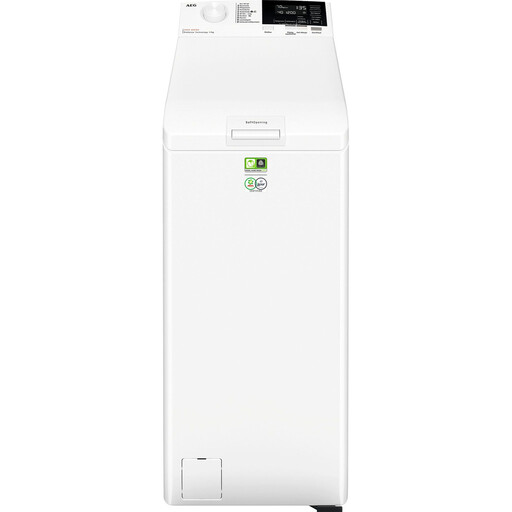 No image available
This top-loader could suit a narrow space, provided there’s enough room above the machine for the lid to open fully.
7 kg, 1300 rpm, energy class A.
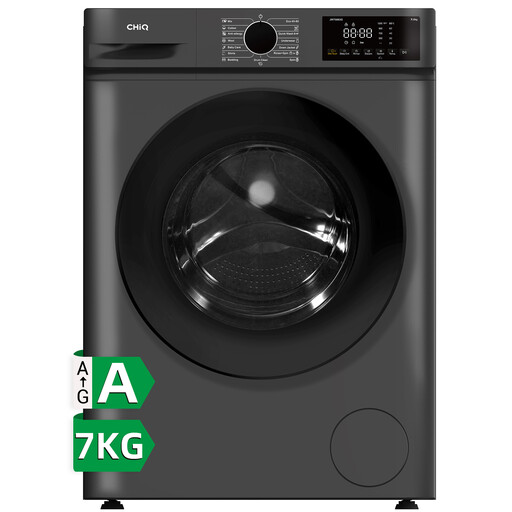 No image available
This front-loader could suit a laundry nook where there’s room to open the door and access the machine. Check the space it needs against your available area.
7 kg, 1200 rpm, energy class A, 16 programmes.
Bosch recommends a Cottons or Coloureds programme for cotton or flannelette bedding. You should also follow the care label and check the maximum load and temperature for your chosen programme.
First, check that the transit bolts have been removed, the machine is level and the floor is stable. AEG also notes that a single large item of laundry can cause an unbalanced load. Always follow the instructions for your specific model.
The EU energy label for household washing machines ranges from A to G. It includes information such as electricity use per 100 Eco cycles, water use per Eco cycle, capacity and spin noise. According to the European Union, the label must also be clearly accessible when shopping online.
No. If a product is faulty, your statutory rights are against the retailer. A guarantee is an optional extra, offered subject to its own terms and conditions. Consider additional service plans separately from your legal rights.
According to the German Environment Agency, electrical waste must not go in unsorted household or bulky waste. You can take it to a recycling centre, among other options. The agency also explains that when you buy a qualifying large appliance, the retailer must offer free take-back—including for online purchases delivered to your home.