If width is your main constraint, it’s worth comparing top-loading machines; if depth is limited, a shallow front-loader may fit, while a model specifically designed for under-counter installation could work beneath a suitable worktop. Measure the recess, connections and space needed to open the door or lid, then check the maximum load for your chosen programme and bedding. The European Commission explains that the energy-label consumption figures are based on standardised Eco 40–60 conditions and don’t automatically apply to every programme.
Which designs suit different needs
For anyone with a narrow space for a washing machine
If a standard front-loader is too wide, a top-loader may be a good design to compare. The North Rhine-Westphalia Consumer Advice Centre describes top-loaders as narrower, but also points out that they need depth and open upwards. So measure the recess and the space above the machine.
For households that wash bedding regularly
If you want to wash cotton bedding using the most suitable programme, compare the size of your load with the maximum load for that programme. The stated capacity alone doesn’t mean that every type of fabric can be washed at that load size on every programme.
For anyone with limited depth in their space
If there’s enough width but little room behind the machine or in front of its door, the full dimensions of the specific front-loader are key. Haier notes that the door design and connection hoses can affect the required depth, so check the space needed to open the door and access the connections too.
What to look for when buying
Top-loader
A good fit if: The recess is too narrow for a standard front-loader and there’s enough room to open the lid fully.
Keep in mind: A narrower machine isn’t necessarily less deep, and the space above it must be kept clear.
Slimline front-loader
A good fit if: Depth is your main constraint and you can find a currently available model with suitable overall dimensions.
Keep in mind: Slim doesn’t necessarily mean narrower. The F2V7SLIM8E example described by LG measures 600 × 850 × 475 mm (W × H × D) and is no longer available according to LG Germany, so it’s not a current buying option.
Front-loader suitable for under-counter installation
A good fit if: There’s enough width for a front-loader, the height beneath the worktop is limited, and the specific machine is explicitly described as suitable for under-counter installation.
Keep in mind: The door needs space to open forwards, and this design doesn’t automatically save width.
First measure the dimension that’s actually limited, then compare only machines whose dimensions and opening clearance suit the space. For cotton bedding, also check the maximum load for your chosen programme and the care labels.
For energy use, the Consumer Advice Centre recommends comparing like-for-like label figures, including electricity consumption in kWh per 100 Eco cycles and water consumption per cycle. The European Commission describes the EU energy label scale as running from A to G; the figures shown don’t guarantee the same consumption on every other programme.
| What matters |
What to check before buying |
Who it matters to |
| Will the machine fit in the narrow recess? |
Compare the machine and recess widths, as well as the space needed to open the lid and reach the connections. |
If the recess is tight on either side, I want to know whether the machine will really fit with the lid open. Around 36% of consumers focus mainly on width. |
| Will the bedding fit the drum and suit the programme? |
Compare the dry load with the programme-specific maximum load and check the care labels. |
If I wash cotton bedding regularly, I want to be able to use a suitable programme without relying on the stated capacity alone. Around 29% of consumers prioritise this. |
| Is depth the main constraint? |
Check the overall depth, door swing, protruding parts and connections against the specifications for the specific model. |
If there’s enough space at the sides but the recess isn’t very deep, I need to know the full dimensions, including the room needed for the door and connections. Around 21% of consumers prioritise depth. |
| Which energy figures and ongoing costs matter? |
Compare electricity and water consumption on the same label basis, along with noise figures; check what’s included in delivery and the installation services available. |
If several machines fit the recess, I want to compare their declared consumption figures and the ongoing costs that matter to me. Around 14% of consumers focus primarily on consumption and running costs. |
Common misconceptions
-
‘Narrow’ and ‘slim’ save the same amount of space
A top-loader may need less width, while a slimline front-loader is designed primarily to be shallower. A slimline model can still be as wide as a standard front-loader.
Start by measuring the dimension that’s limited, then check the full dimensions of the specific model, including opening clearance and connections.
-
The stated capacity applies to every bedding load and every programme
The maximum load depends on the programme and the manufacturer’s instructions. Sheets and filled duvets are also different types of load.
Compare the weight of your dry laundry with the maximum load for the programme you plan to use, and follow the care labels.
If a load exceeds the limit for the suitable programme, you may need to run extra wash cycles.
-
An A energy rating means the same consumption on every programme
The consumption figures on the energy label are based on standardised Eco 40–60 conditions. Other programmes may use more or less.
Compare label figures on the same basis and consider which programmes you can actually use for your bedding.
Brands and suitable model examples
Midea
The MF10ET80B top-loader is an example worth comparing when width is limited. Midea lists a width of 400 mm, a depth of 610 mm and a stated capacity of 8 kg.
- The specific dimensions and stated capacity give you useful points of comparison for your space and planned laundry load.
- That doesn’t automatically make it shallow; these dimensions are manufacturer specifications, not the results of an independent washing performance test.
Haier
Haier offers both front-loaders and top-loaders. For the THASNQ286TM5-84 top-loader, Haier lists dimensions of 405 × 600 × 860 mm (W × D × H) and a capacity of 8 kg.
- These dimensions give you specific figures to compare for a narrow recess.
- The lid needs space to open upwards; these figures apply to this model, not the brand as a whole.
AEG
For the LTR6E60378 top-loader, AEG lists a width of 397 mm, a depth of 599 mm excluding protrusions, a height of 903 mm and a stated capacity of 7 kg.
- Its width gives you a useful point of comparison if space at the sides is limited.
- Check the depth, including any protrusions and connections, as well as the clearance needed to open the lid.
Siemens
According to Siemens, the WU14UT22 front-loader is suitable for under-counter installation. Siemens lists dimensions of 845 × 598 × 590 mm (H × W × D) and a maximum load of 9 kg.
- This model is worth comparing if there’s room for a front-loader beneath a suitable worktop.
- It won’t save as much width as a top-loader; Siemens lists aquaStop as ‘No’ for this model.
LG
The F2V7SLIM8E illustrates a shallower front-loader design. LG lists dimensions of 600 × 850 × 475 mm (W × H × D) and a capacity of 8.5 kg.
- The model’s dimensions show why a shallower machine isn’t necessarily narrower.
- LG marks this model as no longer available. Its dimensions therefore don’t indicate a current buying option and don’t apply to other LG machines.
Joybuy products
Joybuy products to consider when choosing a washing machine for cotton bedding and a tight space.
 No image available
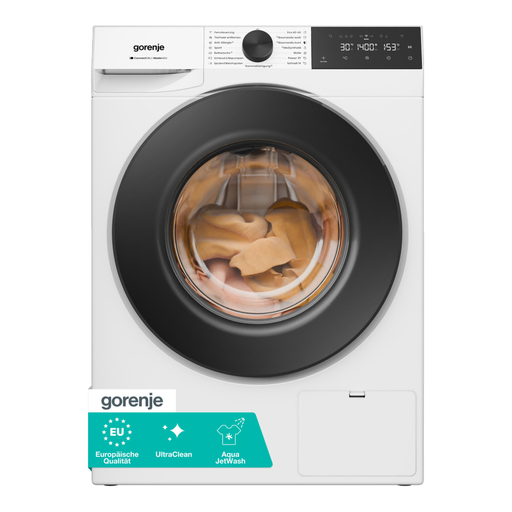
Gorenje W5G4S84AP2, front-loader, 8 kg, energy rating A
If depth is limited, the machine depth given in the product title is a useful figure to compare.
The product title lists a depth of 460 mm, an 8 kg capacity, 1,400 rpm and energy rating A. The product description mentions a bedding programme, as well as Cotton and Eco 40–60 programmes.
View at Joybuy
 No image available
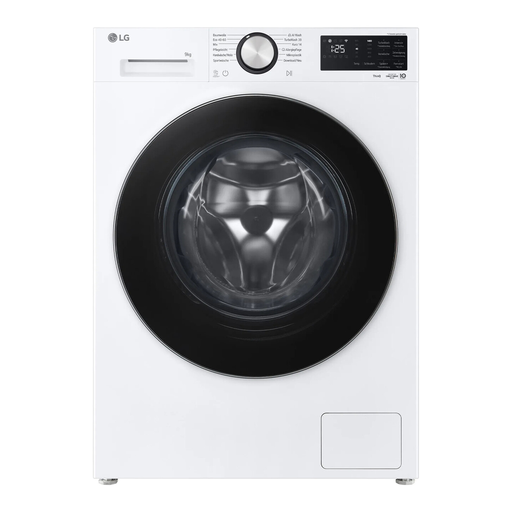
LG F4WX7092W, 9 kg, 1,400 rpm, energy efficiency rating A
If the dimensions suit your space, the listed Cotton programmes may be useful for the laundry load you have in mind.
The product details list a 9 kg capacity, Cotton and Eco 40–60 programmes, and AquaLock.
View at Joybuy
 No image available
LG F2X7SLIM9W, Slim Fit, 9 kg, 1,200 rpm
The Slim Fit design may be worth considering if space is tight; check the full dimensions of the model and the room needed for the door before buying.
The product details list a 9 kg capacity, 1,200 rpm, and Cotton and Eco 40–60 programmes; no specific depth measurement is provided here.
View at Joybuy
 No image available
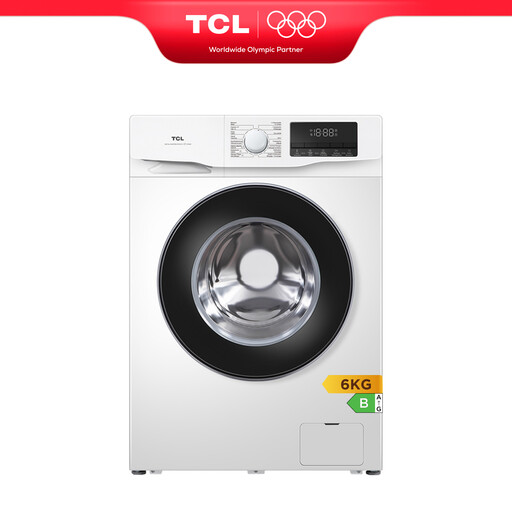
TCL FF1006WB0, 6 kg, 45 cm deep, energy rating B
If depth is limited, the product title gives a depth of 45 cm to compare with the available space.
The product details list a 6 kg capacity, Steam Wash, a 15-minute quick programme and Auto Weight.
View at Joybuy
 No image available
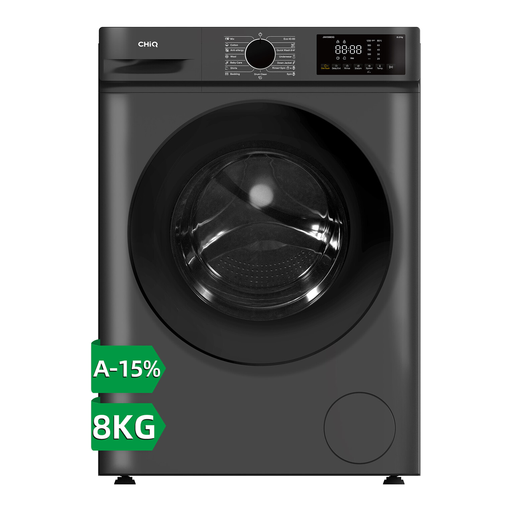
CHiQ JW85883G front-loader, 8 kg, 465 mm wide
The product title lists a width of 465 mm for comparison; check that it suits your recess and leaves enough room for the connections.
The product title also lists a 530 mm drum diameter, a BLDC motor and 1,400 rpm.
View at Joybuy
Frequently asked questions
Can I wash cotton bed sheets on the Eco 40–60 programme?
Yes, if the care labels allow washing at 40 °C or 60 °C, the laundry is normally soiled and you stay within the maximum load for the specific programme. The European Commission describes Eco 40–60 as intended for cotton laundry labelled as suitable for washing at 40 °C or 60 °C. For duvets and any different care instructions, also check the textile and appliance manuals.
Do I need to leave space above a top-loader?
Yes, the lid must be able to open fully. Check the dimensions for your chosen model to work out how much space you need; a top-loader won’t necessarily fit beneath a continuous worktop.
What should I check before connecting a washing machine in a rented home?
Check the intended location and the available connections, and ask your landlord about anything you’re unsure of. The Consumer Advice Centre highlights the risk of water damage; a water protection system is a product feature, not a blanket guarantee of insurance cover.
Is the statutory warranty the same as a manufacturer’s guarantee?
No. The Consumer Advice Centre distinguishes the statutory warranty for faults from a voluntary guarantee with its own terms. If a motor or spare parts guarantee is advertised, check exactly what it covers and the conditions that apply.
Which energy figures should I compare when buying a new washing machine?
Compare figures on the same label basis, including electricity consumption per 100 Eco cycles, water consumption per cycle, rated capacity, programme duration and noise levels. The European Commission has used an A to G scale for the EU energy label since 1 March 2021; the efficiency rating alone doesn’t show the consumption of every other programme.


