What should you look for when buying?
First check the time available and the duration of the programme you need. You can then assess the capacity, care labels and energy and water use in context.
| Priority |
What to check before buying |
Who will find this most important? |
| Finish the wash on time |
Check the cycle time for your intended load, as well as the delay-start option and any available time-saving settings. |
If I need to coordinate the machine with other people, I need a suitable programme duration and must allow time to unload it. Around 29% of consumers say that fitting in with a shared laundry slot is their main concern. |
| Fit in a load of collected laundry |
Compare your usual laundry load with the rated capacity and the load limit for the programme you choose. |
If I collect pyjamas with other suitable items, I want to know whether they will fit into a suitable load. Around 23% of consumers prioritise capacity for collected laundry. |
| Follow care labels |
Compare the recommended temperature and treatment with the care symbols on your pyjamas. |
If the care labels on my pyjamas specify different limits, I choose the programme and temperature to suit the specific items. Around 18% of consumers focus primarily on choosing the right care for their clothes. |
| Consider other users and where the machine will go |
Compare spin noise levels using the same label basis and check the coverage offered by the specific water-protection system. |
If other people use the laundry room or adjoining rooms, I want to take noise levels and the machine’s location into account. Around 18% of consumers place particular importance on consideration for other users and preventing damage. |
| Compare energy and water use |
Compare Eco 40–60 consumption figures on the same basis; don’t use them to estimate consumption for other programmes. |
If running costs matter to me, I compare the figures provided for this purpose and take my usual load size into account. Around 12% of consumers focus on consumption during use. |
The German Environment Agency describes quick programmes as time-saving, but not automatically energy-saving. The European Commission describes Eco 40–60 as a programme for normally soiled cotton that, according to its care label, can be washed at 40 °C or 60 °C. These label figures are not directly comparable with those for every other programme.
Joybuy product selection
This selection includes front-loaders and one top-loader, with details on capacity, scheduling or programmes for different laundry loads.
 No image available
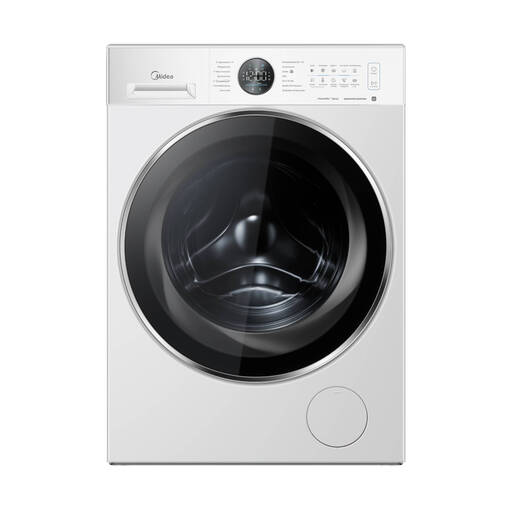
Midea MF21EW80WBA20, 8 kg front-loader
The delay-start option and remaining-time display are useful when coordinating a wash with a shared schedule.
Rated capacity: 8 kg; spin speed: 1400 RPM. The 15- and 30-minute quick programmes are specified for small loads.
View at Joybuy
 No image available
LG F2X7SLIM9W, 9 kg washing machine
The listed delay-start option and remaining-time display help with planning; cotton and Eco 40–60 programmes are also included.
Rated capacity: 9 kg; spin speed: 1200 rpm. The stated TurboWash 360° cycle time of 39 minutes applies to a half load.
View at Joybuy
 No image available
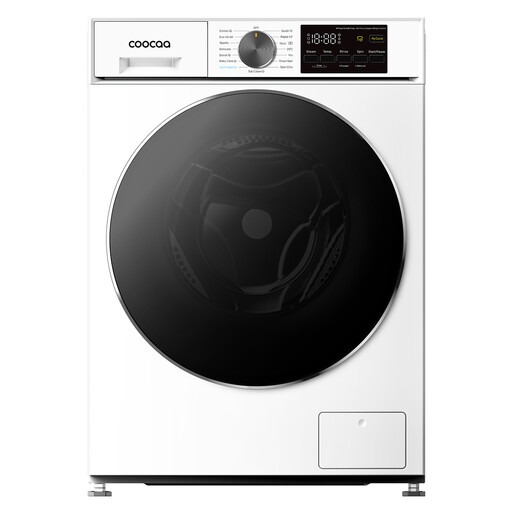
Coocaa Galaxy A3 F802A3AВC0, 8 kg front-loader
The end-time delay is listed as a useful scheduling feature; according to the product description, the 15-minute quick wash is intended for lightly soiled clothes.
Rated capacity: 8 kg. The description also lists adjustable temperature settings and 15 wash programmes.
View at Joybuy
 No image available
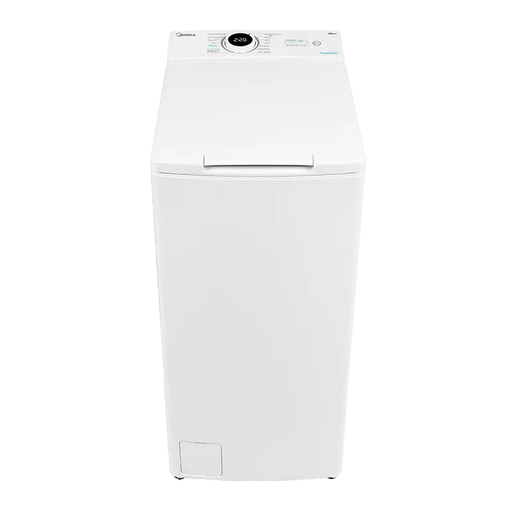
Midea MF10ET70BA10, 7 kg top-loader
The delay-start option, which can be set up to 24 hours ahead, and the remaining-time display are useful for planning. Cotton and Eco 40–60 programmes with temperature selection are also listed.
Rated capacity: 7 kg; spin speed: 1200 RPM; noise level: 78 dB.
View at Joybuy
 No image available
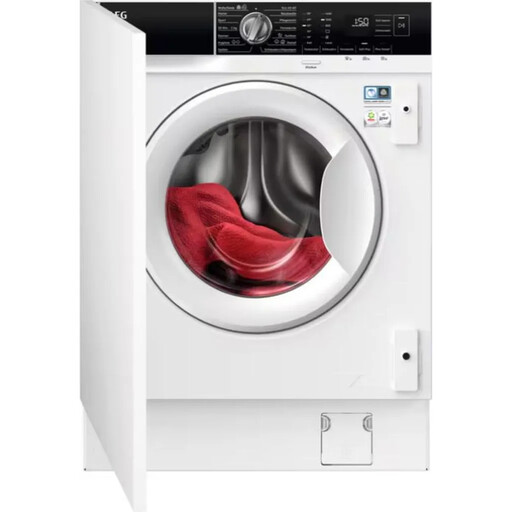
AEG LR7BI6480 7000 ProSteam®, 8 kg integrated washing machine
The time-saving option and delay start are useful when planning a wash; a cotton programme is also listed.
Rated capacity: 8 kg; spin speed: 1400 rpm. For installation, the description specifies a recess at least 82 cm high and professional installation.
View at Joybuy
Frequently asked questions
Can all cotton pyjamas go in the Eco 40–60 programme together?
Only if the care symbols on each pair of pyjamas allow this treatment. The European Commission describes Eco 40–60 as a programme for normally soiled cotton that, according to its care label, can be washed at 40 °C or 60 °C; the number in the wash tub symbol indicates the maximum permitted temperature.
Is the shortest wash programme also the most economical?
No. A shorter cycle does not automatically mean lower energy consumption. The German Environment Agency points out that quick programmes save time; the figures on the EU energy label are based on standardised Eco cycles, not every programme you can select.
What should I check before installing a machine in a shared laundry room?
Check the available space, the water and electricity connections required, the water-protection system on the specific model and the agreed usage times for your building. A delay-start option does not replace agreeing when the machine can be in use.
What are my rights in Germany if a new appliance is faulty and comes with a manufacturer’s guarantee?
Your statutory rights are against the seller; a manufacturer’s guarantee is an additional voluntary service with its own terms and conditions. According to the Verbraucherzentrale, for purchases made from 31 July 2026, the statutory guarantee period may be extended to three years if you choose a repair rather than a replacement within the original two-year period.
Does a retailer in Germany have to take back an old appliance when you buy a new one?
Under the conditions set out in section 17 of the ElektroG, retailers covered by the law must take back an equivalent old appliance free of charge when you buy a new one. The Federal Ministry of Justice and the Federal Office of Justice define this as an appliance of the same type, with essentially the same functions. When placing your order, check how any collection that may be required will be arranged.


