For a small laundry area, start by measuring the width and depth, checking the connections and allowing room to open the lid or door. Then choose the type of machine that will fit. For cotton shirts, follow the care label and choose a suitable wash programme; a steam refresh is no substitute for a wash cycle. Compare energy and water use on the same programme basis, and check water protection, delivery and installation services separately.
Who is this selection for?
Households with a narrow laundry alcove
When width is limited, you also need to consider depth, connections and the space needed to open the lid. The North Rhine-Westphalia Consumer Advice Centre lists these measurements among the key things to check when buying a washing machine.
Households that wash shirts regularly
If you wash cotton shirts, follow the care label and don’t treat cotton, shirt and refresh programmes as interchangeable. The European Commission explains the purpose of the Eco 40–60 programme, while Miele also highlights the importance of textile care instructions.
Households with limited alcove depth
If there’s room in front of the appliance for a front-loader door to open, but the alcove itself is shallow, a slimmer or more compact model may be worth considering. Haier lists different dimensions and capacities for certain models; these details apply only to the specific model in question.
What should you consider when buying?
First, measure the space, including the connections and the room needed to open the door or lid. Then check the care programmes and capacity, and compare energy and water use, noise and water protection using the details for the specific model.
| What matters |
What to check before buying |
Who will find this especially important? |
| Width and opening space |
Allow for the alcove dimensions, appliance dimensions, hoses and the space needed to open the lid or door fully. |
If the alcove is narrow, I want to be sure the appliance will fit and can still be loaded afterwards. Around 36% of consumers would put suitable width and opening space first. |
| Shirt programmes |
Check the care label, available programmes and their load limits; consider refresh programmes only for clothes that don’t need washing. |
If I wash cotton shirts regularly, I want to make sure the programme matches the care label. Around 29% of consumers would see shirt care as a priority when buying. |
| Depth, height and capacity |
Measure the appliance depth, including the space needed for connections, and its height; compare the stated capacity with the loads you usually wash together. |
If depth or height is limited, I want to find a suitable appliance without losing sight of how much laundry I need to wash day to day. Around 21% of consumers would prioritise the available space and a suitable capacity. |
| Energy use and protection |
Compare kWh per 100 Eco cycles, water consumption, spin noise, water protection, and delivery and installation services. |
If energy use, noise or the risk of water damage matters particularly to me, I want to compare the details for each model and offer. Around 14% of consumers would put these ongoing and practical considerations first. |
Common buying mistakes
-
Measuring only the appliance width
A narrow top-loader can still be 60 cm deep; front-loader doors need space to open in front of the appliance.
Measure the entire alcove, including the space for connections, and check the opening clearance against the dimensions of the specific model.
-
Confusing a steam refresh with washing shirts
Refresh programmes are intended for clothes that don’t need washing; they won’t replace a wash cycle for dirty shirts.
Before considering a convenience feature, choose a suitable wash programme based on the care label.
-
Assuming the energy efficiency rating applies to every programme
The stated consumption figures relate to the Eco programme and can’t be applied directly to any other shirt programme.
Compare Eco figures on the same basis, and don’t use them to estimate consumption for other programmes.
-
Assuming delivery includes full installation
Delivery and installation services may be offered separately; the exact services depend on the individual offer.
Before buying, check whether connecting the appliance, carrying it to the installation location and taking away the old appliance are included.
Suitable brands at a glance
Bauknecht
The Bauknecht WMT 612 B6 is a top-loader for laundry areas where width is the main constraint.
- The manufacturer lists this model as 40 cm wide, 60 cm deep and with a 6 kg capacity.
- Its narrow width won’t solve a lack-of-depth problem. Advertised stain-removal claims aren’t independent evidence of shirt-washing performance.
AEG
According to AEG, the LTR7A70260 top-loader combines a 6 kg capacity with ProSteam.
- AEG lists a width of 40 cm and a steam programme for dry clothes.
- The wrinkle reduction stated by the manufacturer applies to refreshing dry clothes and is no substitute for a wash cycle.
Haier
The HW70-BP14929 and HW50-BP12307AU1 models illustrate different space-saving options, from front-loaders to compact appliances.
- Haier lists the HW70-BP14929 as 595 × 477 × 850 mm (W × D × H) with a 7 kg capacity, and the HW50-BP12307AU1 as 510 × 488 × 700 mm (W × D × H) with a 5 kg capacity.
- These dimensions and capacities apply to the respective models; they don’t support any general claims about the brand’s washing performance.
Bosch
The WAN28127 is a front-loader for a laundry area with enough width and depth.
- Bosch lists this model as having an 8 kg capacity, dimensions of 845 × 598 × 590 mm (H × W × D) and an add-laundry function.
- AquaStop is explicitly not included with this variant. Advertised wrinkle-reduction or time-saving claims are from the manufacturer, not independent measurements for cotton shirts.
Siemens
The WU14UT70 is a front-loader suitable for installation under a worktop, provided it fits the dimensions of your alcove.
- Siemens lists this model as having an 8 kg capacity, dimensions of 845 × 598 × 590 mm (H × W × D) and suitability for under-worktop installation.
- At just under 60 cm wide, it won’t suit a narrower alcove; check the installation dimensions and connections separately.
Joybuy products
The following Joybuy offers include compact appliances, front-loaders and top-loaders with a range of capacities. Before choosing one for cotton shirts or a small laundry area, check the dimensions, programmes and load capacity of the specific model.
 No image available
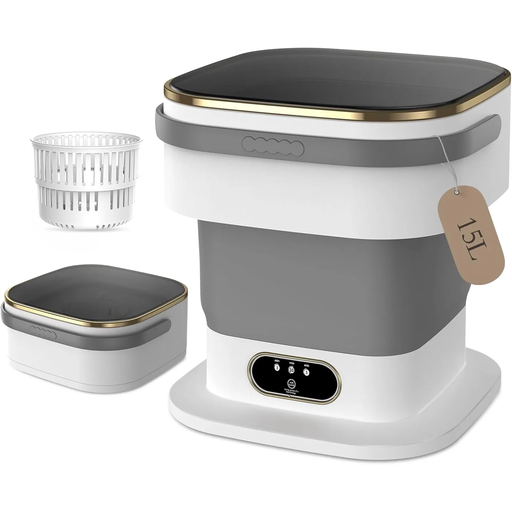
Foldable mini washing machine, 15 litres, with spin basket
The product description suggests it’s intended for small items such as underwear and socks, so check that it will meet your laundry needs.
15 litres; separate spin basket.
Joybuy
 No image available
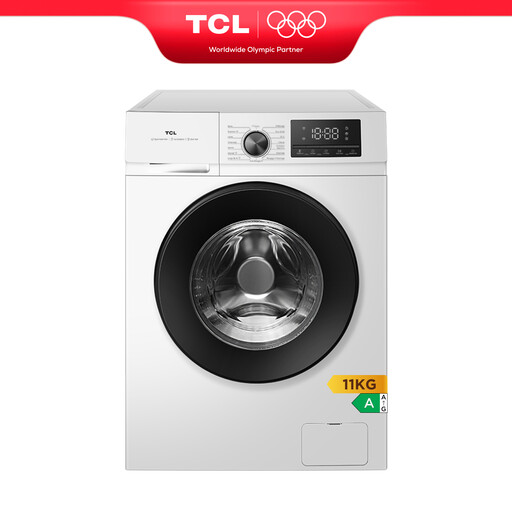
TCL FF2411WA2DE, 11 kg
The stated capacity is 11 kg; compare this with the available space and the size of your usual loads.
BLDC inverter motor; Quick Wash 15; Steam Wash; add-laundry function.
Joybuy
 No image available
LG F2X7SLIM9W Slim Fit, 9 kg
This front-loader may suit a shallow alcove, provided there’s also enough room in front for the door to open.
Dimensions: 600 × 850 × 475 mm (W × H × D); stated depth with the door open at 90°: 1,015 mm. Cotton programme; AquaLock.
Joybuy
 No image available
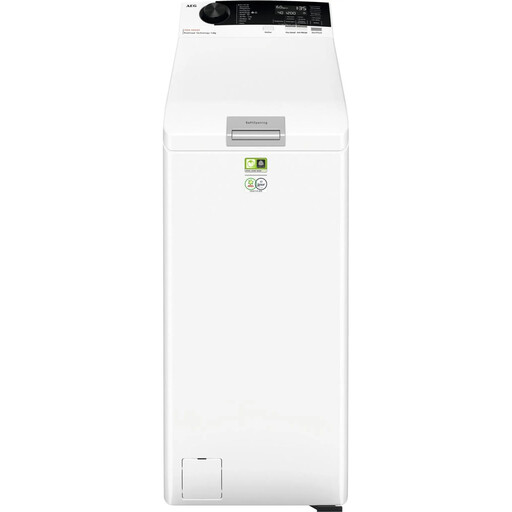
AEG LTR7A70260 7000 Series ProSteam, 6 kg
This top-loader may be a good fit if width is the main constraint and the lid can open fully.
Dimensions: 400 × 600 mm (W × D); Cotton and Eco 40–60 programmes; Aqua Control; SoftOpening.
Joybuy
 No image available
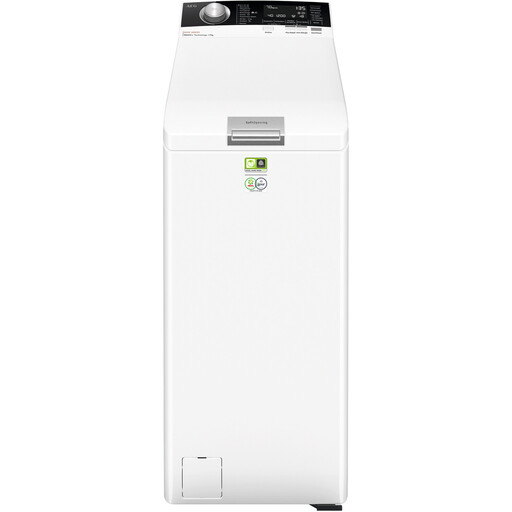
AEG LTR8A80370 8000 Series PowerCare, 7 kg
Check that the stated capacity suits the size of your usual loads and that the lid can open freely where you plan to install it.
Cotton programme; 1,300 rpm; ProSteam.
Joybuy
Frequently asked questions
Can I always wash cotton shirts on Eco 40–60?
No, not just because they’re made from cotton. According to the European Commission, Eco 40–60 is intended for normally soiled cotton garments whose care labels allow washing at 40 °C or 60 °C. Check the label on each shirt and the instructions for the programme.
What should I check before installing a washing machine in a rented home?
Check that the installation and connections are suitable for the property, and discuss protection against water damage with your landlord. The Consumer Advice Centre recommends doing this; it doesn’t mean that washing machines are generally prohibited in rented homes.
What does the EU energy label tell me about a shirt or quick-wash programme?
The stated kWh per 100 wash cycles and water consumption figures relate to the Eco programme. They don’t show the consumption of another programme directly.
What are my rights if the appliance develops a fault, and where should the old one go?
If a newly purchased machine is faulty, consumers can generally exercise their statutory rights against the seller within two years of receiving it; this is separate from any voluntary guarantee. The Consumer Advice Centre gives this timeframe, although the outcome depends on the circumstances of each case. Old appliances should be taken to an authorised collection point, not put in household waste. Retailer take-back is subject to the requirements of the Electrical and Electronic Equipment Act, as explained by the Federal Ministry for the Environment.


