Families with lots of coloured laundry
If you wash cotton shorts with other suitable family laundry, make sure the drum size and washing frequency suit the amount of laundry you usually have.


You won’t usually need a specialist feature to wash cotton shorts in a family household. What matters is choosing a drum size that suits your regular family loads and a programme that follows the care label. For normally soiled cotton labelled as washable at 40 °C or 60 °C, the European Commission describes Eco 40–60 as a suitable programme. Also compare the EU label values, installation dimensions and water protection of the specific appliance. The German Environment Agency points out that quick programmes save time but are not automatically energy-efficient.
If you wash cotton shorts with other suitable family laundry, make sure the drum size and washing frequency suit the amount of laundry you usually have.
The care label and choice of programme can help you decide how to tackle stains. Don’t rely solely on claims about specialist programmes.
Check the appliance’s design, the space needed to open it and its spin noise level at the intended location. The specifications of the particular model are what count.
Start with the amount of laundry you usually have and the care label on the shorts. Then compare energy and water use, the space required and the features you’ll actually need day to day.
| Buying criterion | What to check | Who will find this most important? |
|---|---|---|
| Drum size | Compare the amount of laundry you usually have with the rated capacity and the permitted load for the programme you’ve chosen. | If we regularly have family laundry to wash, the drum should suit our usual loads rather than be oversized just for a few pairs of shorts. Around 29 % of consumers put choosing the right capacity first. |
| Cotton care and stains | Check the care label, the cotton programme and Eco 40–60; pre-treat visible stains if needed. | If I’m washing stained shorts, I want to follow the care label and choose a suitable programme, rather than rely solely on an advertised stain-removal mode. Around 23 % of consumers prioritise cotton care and stain treatment. |
| Energy and water use | Compare kWh per 100 Eco 40–60 cycles and litres per cycle using the same labelling basis. | If the machine runs frequently, I want to compare like-for-like consumption figures and estimate ongoing costs based on how I actually use it. Around 18 % of consumers focus on energy and water costs. |
| Space, noise and water protection | Check the appliance’s exact dimensions, the space needed to open it, the spin noise level and the stated water protection system. | If space is limited where the washing machine will go, or it’s near living areas, I want to check the dimensions and spin noise level in advance. Around 18 % of consumers prioritise installation requirements and water protection. |
| Quick programmes | Check the stated maximum load for a quick programme, and don’t assume that a shorter cycle uses less energy. | If I only need to wash a few items at short notice, I want to know whether a quick programme is suitable for them. Around 12 % of consumers prioritise quick cycles for occasional small loads. |
The consumer advice centre and the German Environment Agency recommend choosing an appliance size to suit the amount of laundry you actually have. A large rated capacity alone doesn’t tell you whether it’s right for your usual loads.
Make a note of your typical loads and compare them with the permitted loads for the programmes you plan to use.
The German Environment Agency points out that quick programmes mainly save time and don’t automatically use less energy. They may also have a lower permitted load than the machine’s rated capacity.
Check the stated maximum load for the quick programme. For regular, planned loads, you can use the Eco programme’s consumption figures for comparison.
The appliance’s dimensions and the space needed to open it must suit the intended location. Delivery and installation services may vary depending on the offer.
Measure the space and opening area at the intended location, and check before buying which delivery or installation services are included in the offer.
The WG44B2A40 is a German-market 9 kg front-loading washing machine with a cotton programme, water protection and an option for small loads.
The German-market W1 model WWA120 WCS 8kg Active is an 8 kg front-loading washing machine with AddLoad and CapDosing.
The B3WFU58415W1 is an 8 kg front-loading washing machine with a stain programme and a quick programme for small loads.
According to AEG, the German-market 9 kg front-loading LR8EA75690 combines a drawer for different types of detergent with pre-mixing before the detergent enters the drum.
The German-market FP0824WC0 is an 8 kg front-loading washing machine with automatic dosing and a quick programme.
Washing machines for family laundry that includes cotton shorts: compare the stated capacity with your usual loads, and choose only features that suit your laundry routine.
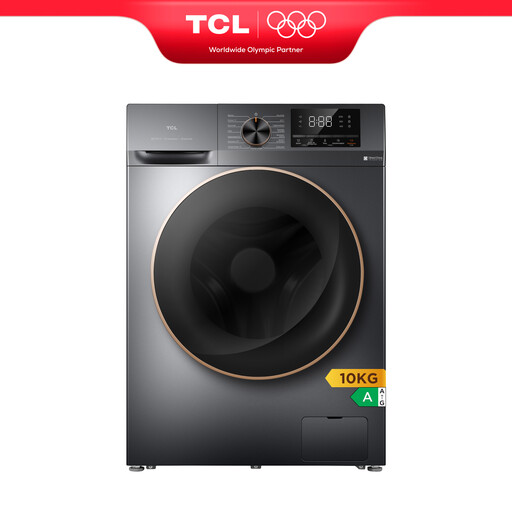 No image available
The stated capacity could be a good fit if it suits your usual family loads.
Features listed in the product name: 10 kg, Smart DD motor and a 15-minute quick programme.
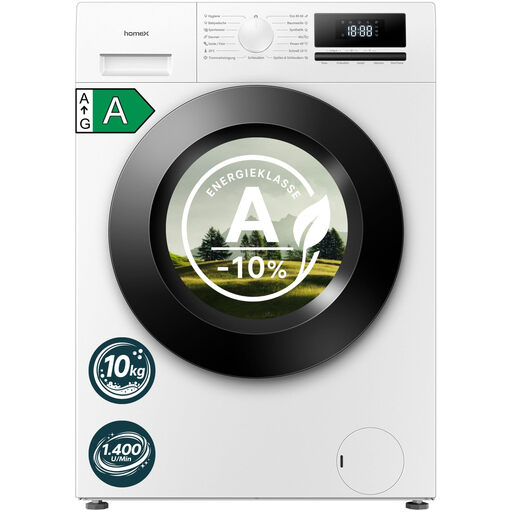 No image available
A front-loading washing machine with this stated capacity could be a good fit if it suits your regular family loads.
Features listed in the product name: 10 kg, 1400 rpm and a steam function.
 No image available
Check particularly carefully whether the stated capacity suits the loads you wash regularly.
Features listed in the product name: 13 kg and 1360 rpm.
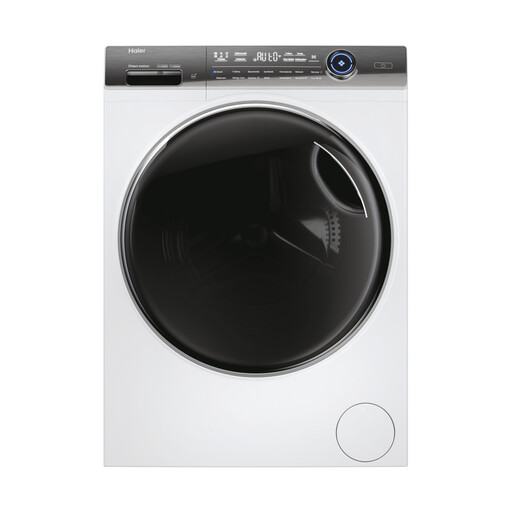 No image available
The stated capacity could work if it can handle your usual family loads.
Features listed in the product name: 8 kg and 1400 rpm.
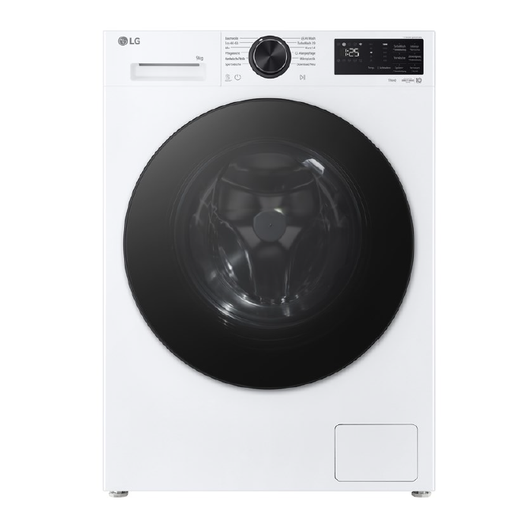 No image available
Compare the stated capacity with your regular loads and check the dimensions against the space available.
Features listed in the product name: 9 kg, 1200 rpm and Slim Fit.
Check the care label first. For normally soiled cotton labelled as washable at 40 °C or 60 °C, the European Commission describes Eco 40–60 as a suitable programme. Sort the laundry and pre-treat any visible stains if needed.
The German Environment Agency explains that boiling or disinfecting laundry isn’t generally necessary for everyday household washing. If someone in your household has a contagious illness, other hygiene measures may be needed. Anyone with a weakened immune system should discuss suitable precautions with their doctor if necessary.
Not automatically: the German Environment Agency distinguishes between quick programmes that save time and programmes that save energy. Also check the permitted load for the particular quick programme, as it may be well below the machine’s rated capacity.
For the specific models, compare kWh per 100 Eco 40–60 cycles and litres per cycle. To calculate your own costs, you’ll also need to use the same assumed number of wash cycles and your own energy and water rates; the label values alone don’t tell you what your bill will be.