Choose a drum that can fit your usual family loads and the tablecloth without overloading the machine. An older Verbraucherzentrale checklist suggests 7–8 kg as a guide for households with more than three people, rather than a fixed requirement. Then check the care label, suitable wash programmes and consumption figures on the same programme basis. According to the German Environment Agency, a quick programme saves time, but not necessarily energy.
Who should consider this?
Families dealing with frequent food stains
If you regularly wash cotton tablecloths after meals, a suitable cotton or stain-removal programme and the fabric’s care instructions are important factors to consider. GINETEX GERMANY recommends pre-treating stains appropriately and checking colourfastness beforehand.
Families with larger laundry loads
If you want to wash tablecloths with the rest of your family’s laundry, make sure the rated capacity, the load limit for your chosen programme and the available space all work together. Verbraucherzentrale recommends choosing a machine size to suit your household.
Households keeping an eye on running costs
If you wash frequently, it’s worth comparing electricity and water consumption figures on the same programme basis, rather than looking only at the efficiency class. Verbraucherzentrale also recommends loading the machine appropriately and adjusting the detergent to the laundry load, how dirty it is and the water hardness.
What should you look for when buying?
Start with the drum size and the space available where you plan to install the machine. Then compare the care options and consumption figures for the programmes you’re most likely to use.
| Consideration |
What to look for when buying |
Who should pay particular attention? |
| Stains and cotton care |
Check the tablecloth’s care label against the cotton programme and, where applicable, the stain-removal programme on the specific model; consider colourfastness. |
If food stains regularly remain on your tablecloth after meals, choosing the right programme matters more than using an intensive wash by default. Around 36% of consumers put stain treatment first. |
| Drum size |
Check your usual dry laundry load, the size of your tablecloth and the load limit for the programme you want to use. An older Verbraucherzentrale checklist suggests 7–8 kg as a guide for households with more than three people. |
If you wash tablecloths with typical family loads, you need enough room for the actual amount of laundry without overfilling the drum. For around 29% of consumers, choosing the right load capacity is the main consideration. |
| Electricity and water |
Compare kWh per 100 cycles and litres per cycle on the same label programme basis; also consider programme duration. |
If you do a lot of washing, the consumption figures for the programme you use most often are particularly relevant. Around 21% of consumers focus primarily on running costs. The German Environment Agency points out that quick programmes save time, but not necessarily energy. |
| Space and ease of use |
Check the available space, how the door or lid opens, the connections and the water protection system on the specific model. |
If space is limited or the door or lid cannot open fully, choosing the right design makes all the difference to everyday use. For around 14% of consumers, space and ease of use are the main priorities. |
Avoid common buying mistakes
-
Washing all cotton items at a high temperature or on an especially intensive setting
The care label states the maximum treatment allowed; the fibre type alone doesn’t determine which temperature is suitable for a particular tablecloth.
Check the label, pre-treat stains appropriately and consider colourfastness. GINETEX GERMANY recommends these steps for soiled textiles.
-
Assuming a quick programme and a high efficiency class guarantee savings
The label figures are based on the Eco 40–60 programme. According to the German Environment Agency, quick programmes save time, but not necessarily energy.
Compare label figures on the same programme basis and consider which programme you actually plan to use.
-
Comparing only the capacity in kilograms
The rated capacity alone won’t tell you whether the machine will fit in the space available or whether your tablecloth and usual laundry load will fit in your chosen programme.
Measure the space, including the room needed to open the door or lid, and check your typical laundry load against the programme’s load limit.
Brands and models to consider
Beko
The B5WF69410W is a front-loading model with a 9 kg capacity and a listed StainExpert programme.
- Beko Germany lists stain-removal programmes and a 9 kg capacity for this model.
- The manufacturer’s claim that pre-treatment is unnecessary as a result is not an independently verified benefit for cotton tablecloths. The care label remains the deciding factor.
Bosch
The WAN28271 is an example of an 8 kg front-loader with specified dimensions and water protection.
- Bosch Home Appliances Germany lists dimensions of 845 × 598 × 590 mm and AquaStop for this model.
- These details don’t demonstrate any particular stain-removal performance and can’t be applied to other Bosch models.
Samsung
The WW80CGC04ATEEG is an example of an 8 kg front-loader with a cotton programme and additional convenience features.
- Samsung Germany lists Hygiene Steam and Wi-Fi control for this model.
- Percentage savings quoted by the manufacturer are based on internal tests of other models in the range. They don’t prove the same results for this machine or for tablecloths.
Miele
The WWE380 WPS is an 8 kg front-loader with listed steam and quick-wash options.
- Miele Germany lists SteamCare and QuickPowerWash for this model.
- Whether either option is suitable for a particular tablecloth depends on its care label and the programme you choose.
Siemens
The WG44B2A40 is an example of a 9 kg front-loader reviewed independently.
- F.A.Z. Kaufkompass recommended the model in its review dated 1 July 2026.
- Siemens Home Appliances now lists this exact model as no longer available. This doesn’t indicate anything about successor models.
Washing machines at Joybuy
This selection includes front-loaders and a slim top-loader, with a range of capacities and programme options for cottons, stain treatment and family loads.
 No image available
LG F4WR5035, 13 kg
The specifically listed cotton programme and 13 kg capacity may be useful for larger family loads.
Eco 40–60: 44 kWh per 100 cycles and 58 l per cycle.
View at Joybuy
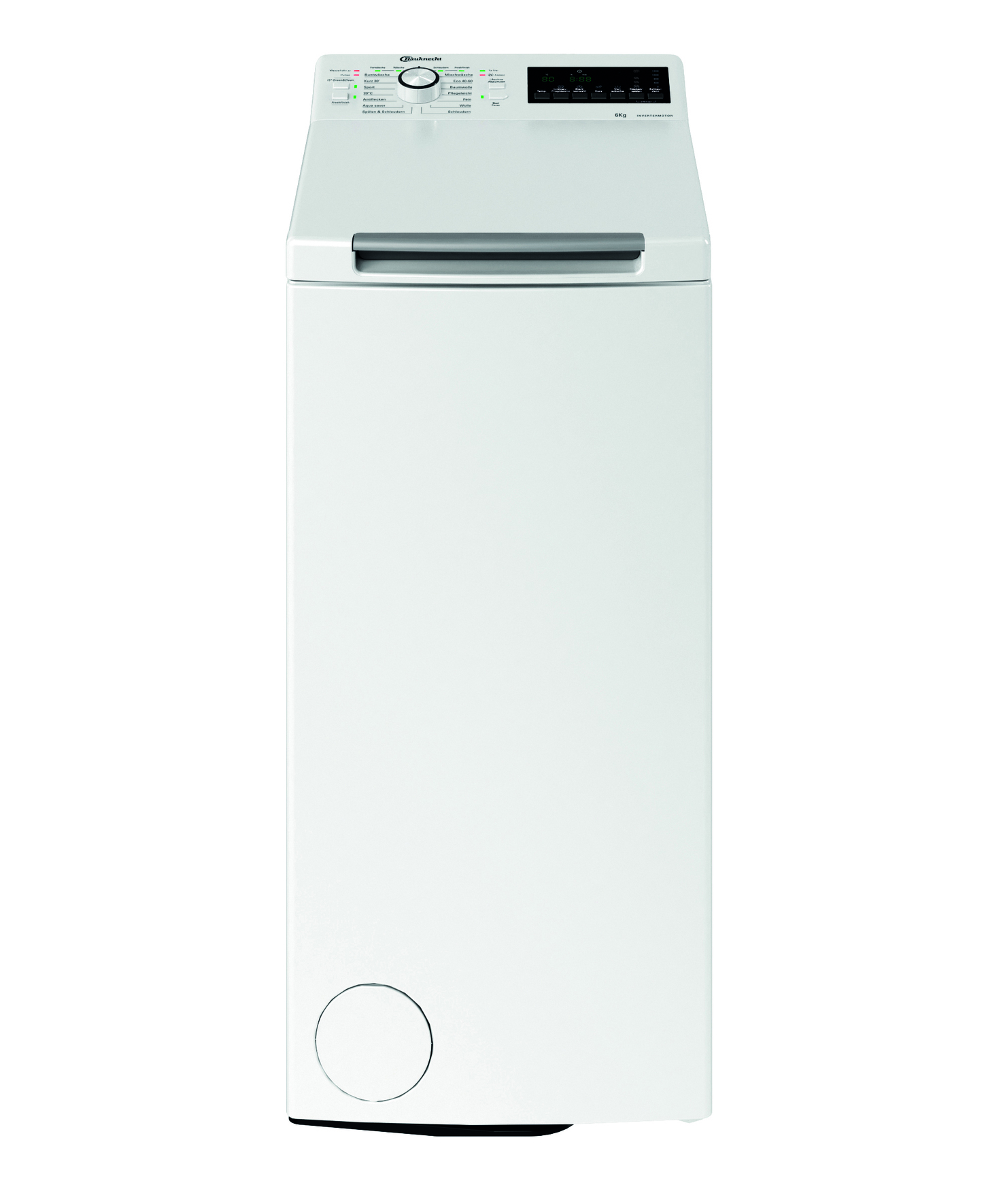 No image available
Bauknecht WMT Eco Shield 626 A, 6 kg
This top-loader is listed as 40 cm wide, which may suit a narrow space; remember that the lid needs room above the machine to open.
The anti-stain programme is listed at 20 °C. Consumption: 42 kWh per 100 cycles and 43 l per cycle.
View at Joybuy
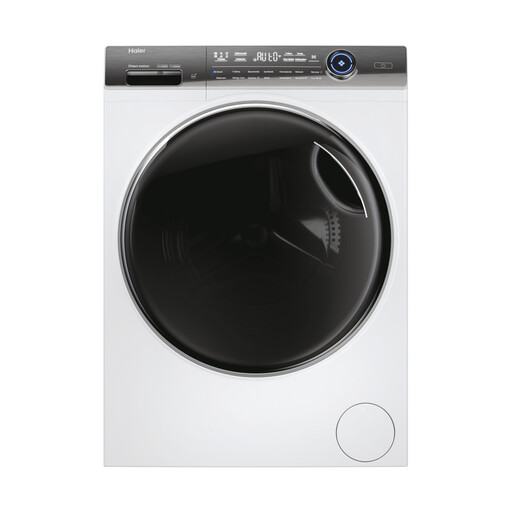 No image available
Haier I-Pro 7 Plus HW80-BD14979EU1, 8 kg
The listed 8 kg capacity and front-loading design may suit regular family washing.
Eco 40–60: 44 l per cycle; up to 1400 rpm. The product name lists six types of stain.
View at Joybuy
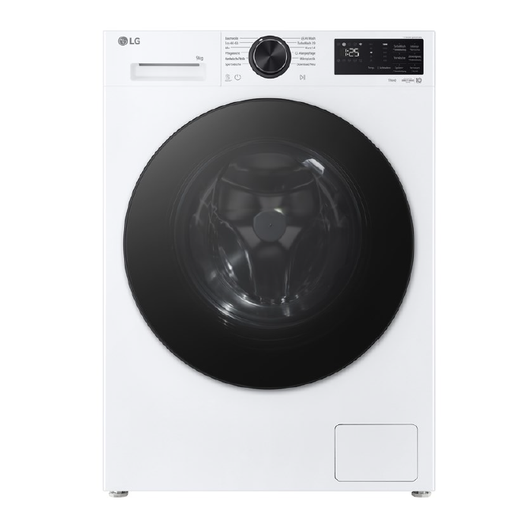 No image available
LG F2X7SLIM9W, 9 kg, Slim Fit
The Slim Fit design and listed depth of 53.5 cm may be useful if depth is limited. A cotton programme is specifically listed.
34 kWh per 100 cycles and 50 l of water per cycle; 1200 rpm.
View at Joybuy
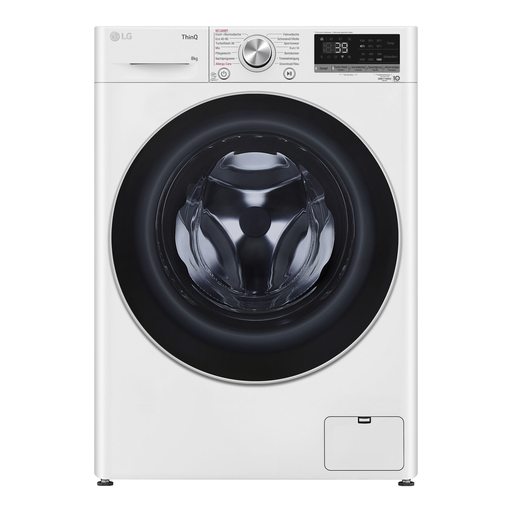 No image available
LG F4WV708P1E, 8 kg
This model is described as a freestanding front-loader with an 8 kg capacity and several wash programmes.
Features listed include a steam programme, AquaLock water protection and 1400 rpm.
View at Joybuy
Frequently asked questions
Can every cotton tablecloth be washed at 60 °C?
No. The fibre type alone doesn’t determine the permitted treatment. The care label on each tablecloth specifies the maximum treatment allowed; colour and any finish may also be relevant.
When is Eco 40–60 suitable for a tablecloth?
This programme is designed for normally soiled cotton that the care label says can be washed at 40 °C or 60 °C. For tougher stains, follow the care instructions and pre-treat them appropriately.
What drum size is right for a family?
The key factors are your usual dry laundry loads and the load limit for your chosen programme. An older Verbraucherzentrale checklist suggests 7–8 kg as a guide for households with more than three people, rather than a fixed requirement.
What should I check before installing the machine?
Measure the available space and the room needed to open the door or lid, check the connections and follow the installation instructions for the exact model number. Verbraucherzentrale also recommends looking for an integrated water protection system.
Where should an old washing machine go in Germany?
An old washing machine shouldn’t go in household rubbish. Take it to an authorised collection point or use a suitable take-back service. If you want it collected, check the terms in advance. The German Federal Environment Ministry confirms that the amendment to the Electrical and Electronic Equipment Act came into force on 1 January 2026.


