Which type is right for you?

Households with a narrow space for a machine

If width is your main constraint, compare a top-loader – including the space needed to open its lid – with a front-loader. The North Rhine-Westphalia Consumer Advice Centre gives a typical width of 40 to 45 cm for top-loaders, but the dimensions of the specific model are what matter.

Households with large duvet covers

The key question is whether your particular cover will fit in the wash programme you intend to use. So look beyond the stated capacity: check the fabric, care label and the programme’s maximum load, too.

Households without space to dry laundry

If there’s nowhere to put a clothes airer, a washer-dryer could be a space-saving option. Check its separate drying capacity and whether the care label says your duvet cover can be tumble-dried.

What should you look for when buying?

Slim top-loader

A good fit if: width is your main constraint and there’s enough room above the machine to open the lid.

Trade-off: A narrow machine isn’t necessarily shallow. Check that the drum and programme load are suitable for your duvet cover, too.

Shallow front-loader

A good fit if: depth is limited, but you have room for a machine around 60 cm wide and space in front of the door.

Trade-off: The door, connections and hoses need extra room. Stated capacity alone doesn’t guarantee that every duvet cover will fit in every programme.

Larger or built-under front-loader

A good fit if: you have a space around 60 cm wide and deep, and want a higher stated capacity.

Trade-off: Even with a higher stated capacity, programme load limits still apply. Check the installation space and features of the specific model, too.

Washer-dryer

A good fit if: you don’t have room for a clothes airer and the care label says your duvet cover can be machine-dried.

Trade-off: The Consumer Advice Centre says washer-dryers use more electricity and water than separate appliances. You also can’t dry a full wash load in one go.

Criterion What to check when buying Who should consider this?
Space for the machine Measure the width, depth and height of the space. Allow for the door or lid to open and for connections. If one dimension is particularly tight, I want to choose a type and size that will fit. Around 31% of consumers prioritise the space available.
Room for the duvet cover Compare the stated capacity with the drum space, care label and maximum load for the programme you plan to use. When washing a large duvet cover, what matters to me is whether it can move around in the right programme – not just the number of kilograms on the machine. Around 31% of consumers put space for large covers first.
Drying For washer-dryers, check the drying capacity and care label. The Consumer Advice Centre notes that they use more energy and water than separate appliances. If there’s no room for a clothes airer after washing, I need a suitable way to dry my laundry. Around 23% of consumers say a lack of drying space is their top priority.
Running costs Compare energy and water use on the same programme basis, and factor in delivery and installation separately. Once I’ve found a machine that fits and is suitable for my duvet cover, I also want to consider how much it costs to run. Around 15% of consumers prioritise running costs.

Common buying misconceptions

  • “Slim” also means “shallow”

    One Bauknecht top-loader is 40 cm wide and 60 cm deep, while a shallower Beko front-loader is 60 cm wide. These types don’t necessarily save space in the same direction.

    Measure the dimension that’s most restricted, and allow for the door or lid to open, connections and space in front of the machine.

  • The kilogram rating guarantees room for any duvet cover

    Maximum loads can vary depending on the wash programme and fabric. The stated capacity alone won’t tell you whether a particular duvet cover is suitable for the programme you want to use.

    Check the cover and its care label against the load limit for the specific programme.

  • Wash and dry loads are the same size

    The Consumer Advice Centre says a washer-dryer can only dry part of its wash load in one go. It also uses more energy and water than separate appliances.

    Check the washing and drying capacities separately, and consider a washer-dryer only if you really don’t have space to dry laundry.

Brands to consider

Bauknecht

The WAT Eco 712 B3 top-loader is worth comparing if width is your main space constraint.

  • Bauknecht says this model is 40 cm wide, 60 cm deep and has a stated capacity of 7 kg.
  • These dimensions apply to this model, not the entire brand. Check there’s room to open the lid, and confirm exactly what delivery and installation include.

Beko

The BM3WFU4841W front-loader is a model-specific option to compare if depth is limited.

  • Beko lists this model as 60 cm wide, 54.6 cm deep, with a stated capacity of 8 kg.
  • Allow space for the door to open, as well as for connections and hoses. The stated capacity doesn’t mean every duvet cover will fit in every programme.

Bosch

The WUU28T49 built-under front-loader is worth comparing if you have a space around 60 cm wide and deep.

  • Bosch lists this model as 598 mm wide and 590 mm deep, with a stated capacity of 9 kg.
  • The manufacturer doesn’t list AquaStop for this specific model. Check the dimensions and programme load separately before buying.

Siemens

The WM14N271 front-loader is another option to compare if a stated capacity of 8 kg is important to you.

  • Siemens lists a capacity of 8 kg and a maximum spin speed of 1.400 rpm for this model.
  • These details don’t prove that the machine takes up particularly little space or that it’s suitable for every duvet cover. Check the dimensions of the specific model.

LG

The F2V7SLIM8E is an older example of a shallow front-loader, useful for comparison.

  • LG lists a stated capacity of 8,5 kg and a machine depth of 47,5 cm for this model.
  • LG marks this model as no longer available, so it isn’t a current buying recommendation.

Washing machines at Joybuy

The Joybuy models below let you compare washing machines with stated capacities of 8 or 9 kg. Some also have a slim design or shallow depth. Check the exact dimensions and make sure the wash programme you want to use is suitable for your duvet cover.
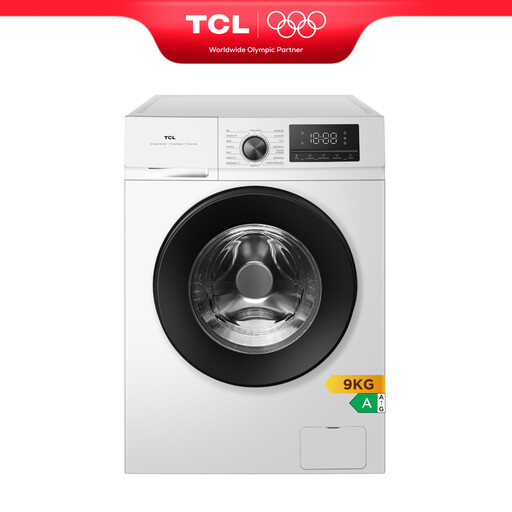
TCL FF0109WA2AMDE washing machine

TCL FF0109WA2AMDE washing machine, 9 kg

The stated capacity is a useful point of comparison, but you’ll still need to check the programme load for your duvet cover.

Stated capacity: 9 kg, energy class A, 1.400 rpm, BLDC motor and steam wash.

Joybuy

LG F2X7SLIM9W washing machine, 9 kg, Slim Fit

LG F2X7SLIM9W washing machine, 9 kg, Slim Fit

The product listing describes this model as Slim Fit. Check its dimensions against the space available, including room for the door to open and for connections.

Stated capacity: 9 kg, 1.200 rpm, Slim Fit, energy class A, AI DD, steam, TurboWash 360° and ThinQ.

Joybuy
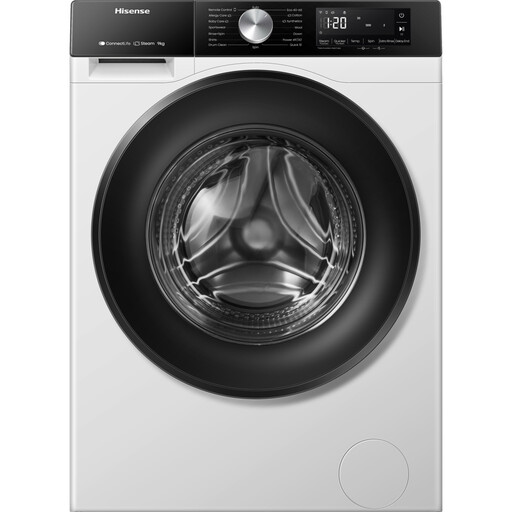
Hisense WF3S9043BW3 front-loader, 9 kg

Hisense WF3S9043BW3 front-loader, 9 kg

The product description lists a machine depth of 55 cm. Also allow for space in front of the door and for connections.

Stated capacity: 9 kg, 85 × 60 × 55 cm, 1.400 rpm, energy class A and ConnectLife Wi-Fi.

Joybuy
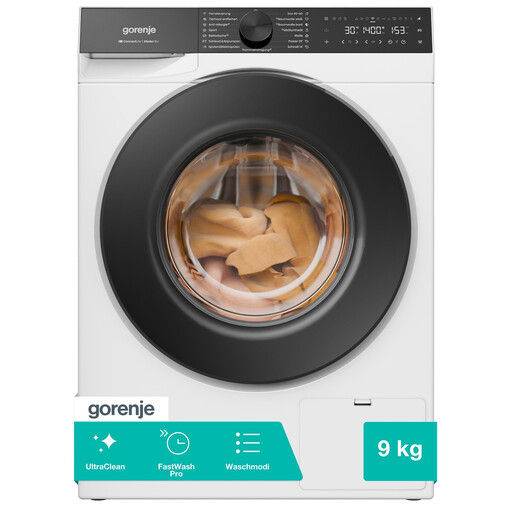
Gorenje W5G694A1T1 front-loader, 9 kg

Gorenje W5G694A1T1 front-loader, 9 kg

The product description lists a bedding programme. Check its load limit against the care label and your duvet cover.

Stated capacity: 9 kg, machine depth 54 cm, 1.400 rpm, energy class A and Total AquaStop.

Joybuy
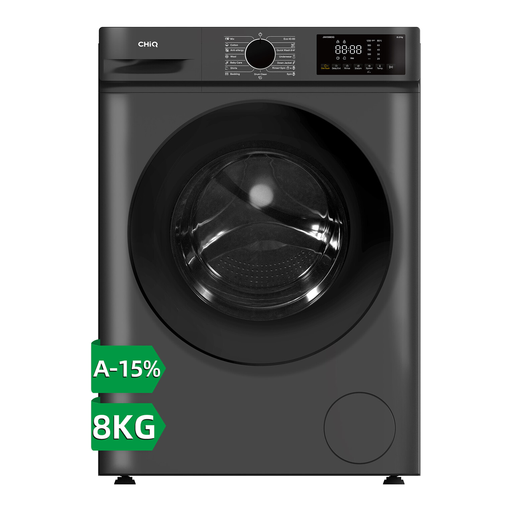
CHiQ JW85883G front-loader, 8 kg

CHiQ JW85883G front-loader, 8 kg

The product title lists a width of 465 mm, which may suit a narrow space. Check the other dimensions needed for installation, too.

Stated capacity: 8 kg, width 465 mm, 1.400 rpm, steam wash and 15-minute quick programme.

Joybuy

Frequently asked questions

Do I need a duvet programme to wash a duvet cover?

Not just because of the type of textile. Choose a programme that suits the fabric and care label. A programme for filled duvets isn’t necessarily the same thing, so check the maximum load for the programme you choose.

What should I check before installing a machine in a small space?

Measure the width, depth and height of the space, and check how far the front door or top-loader lid can open. Also check the connections, installation instructions and exactly what installation services have been agreed.

What information helps me compare running costs?

The EU energy label shows, among other details, electricity use per 100 Eco 40–60 cycles and water use per Eco cycle. Compare like-for-like programmes; delivery and installation aren’t included.

What should I look for in a washer-dryer?

Check the washing and drying capacities separately, and make sure the care label on your duvet cover allows tumble-drying. The Consumer Advice Centre notes that washer-dryers use more electricity and water than separate appliances, and can’t dry a full wash load in one go.

How can I prevent unpleasant smells after washing?

Take wet laundry out promptly and let the machine, seal and detergent drawer dry after each wash. The Consumer Advice Centre also recommends cleaning the machine regularly and using a suitable 60-degree whites programme with powder detergent about once a month.