Limited space
Measure more than just the alcove: check the depth, the route for getting the machine into your home, and the space needed to open the door or lid. The consumer advice centre recommends choosing a machine size to suit your household.


Start by measuring the floor space, room for opening the machine and available connections. Then decide whether you want to wash just flannels or other household laundry too. The Federal Centre for Health Education (BZgA) recommends washing flannels at a minimum of 60 °C with a heavy-duty detergent containing bleach. So check for a dedicated 60 °C programme rather than assuming that ‘Eco 40–60’ reaches this temperature. A compact mini washing machine may suit small loads, while a narrow top-loader can handle more household laundry. In either case, the water inlet and drain must be suitable for your flat.
Measure more than just the alcove: check the depth, the route for getting the machine into your home, and the space needed to open the door or lid. The consumer advice centre recommends choosing a machine size to suit your household.
If you often wash just a few cloths, a small machine may suit the size of your loads. Also check that it offers the wash temperature you need: the BZgA recommends washing flannels at a minimum of 60 °C with a heavy-duty detergent containing bleach.
If you wash clothes as well, compare the load capacity with the amount of laundry you actually have. For top-loaders, consider the space above the lid and the connections. Bauknecht and AEG list slim dimensions for their respective 6 kg models.
The BZgA recommends washing flannels at a minimum of 60 °C with a heavy-duty detergent containing bleach. An Eco 40–60 programme alone does not prove that every machine lets you select a wash at 60 °C.
| What matters | What to check | Who is this most important for? |
|---|---|---|
| Space and access | Measure the alcove, depth and opening space; compare front-loaders, top-loaders and mini machines using their exact dimensions. | If I have limited space, there needs to be room for the open lid or door as well as the machine itself. Around 28% of consumers put available space at the top of their list when choosing. |
| Laundry hygiene | Check for a dedicated 60 °C programme and the care labels on your cloths. Don’t assume ‘Eco 40–60’ guarantees a wash at 60 °C. | If I want to wash flannels in line with the BZgA recommendation, having the right programme is essential. Around 22% of consumers put this hygiene requirement first. |
| Small loads | Compare the capacity and suitable settings of the specific machine with the amount of laundry you actually have. | If I often wash just a few cloths, I don’t want to have to wait until I have more laundry. Around 22% of consumers make small loads their main consideration. |
| Connections and water protection | Check the machine instructions against your water inlet, drain height and installation location; find out exactly what any built-in protection features do. | If the machine is going near a vulnerable area of my home, the inlet and drain need to be right for the installation. Around 17% of consumers prioritise connections and water protection. |
| Energy use and noise | Compare energy and noise figures only for equivalent programmes. Also take account of how often you wash and your own energy costs. | If the machine runs frequently or is near living or sleeping areas, energy use and noise are important factors for me. Around 11% of consumers put these considerations first. |
The BZgA recommends washing flannels at a minimum of 60 °C with a heavy-duty detergent containing bleach. HAVA lists a 60 °C option for the T02, while the manufacturer says the T01 Plus only washes in cold water.
Check the full model name against the available programmes, and make sure your cloths are suitable for the temperature you choose.
If the machine doesn’t offer the temperature you need, you may need another way to wash those items.
A top-loader needs space above the lid, while a front-loader needs room in front of the door. Depth, the route for getting the machine into your home, and access to the water inlet and drain all affect whether you can use it where you plan to put it.
Check the dimensions and opening space together, and compare the connections with the instructions for the specific model.
Figures in kWh and litres refer to specific Eco cycles. They don’t automatically show how much energy and water a small load at 60 °C will use.
Compare machines using the same programme, and factor in how often you wash and your energy prices when estimating your own costs.
The consumer advice centre notes that washer-dryers use more electricity and water than separate machines. With a washer-dryer, you may also only be able to dry part of the wash load straight away.
First consider whether you really need to dry laundry in a machine, and whether you have space to air-dry it.
HAVA offers compact, portable washing machines for smaller loads.
The WMT Eco Star 626 A is a top-loader designed for narrow spaces and household laundry.
The LTR6T4EP3 top-loader is a 6 kg model designed for a narrow space.
Candy describes its Aquamatic range as a compact front-loader option for small spaces and smaller loads.
This selection includes portable mini washing machines for very small loads and slim front-loaders for extra household laundry. Whether you can wash flannels at a minimum of 60 °C depends on the programme. Check the details for the specific model.
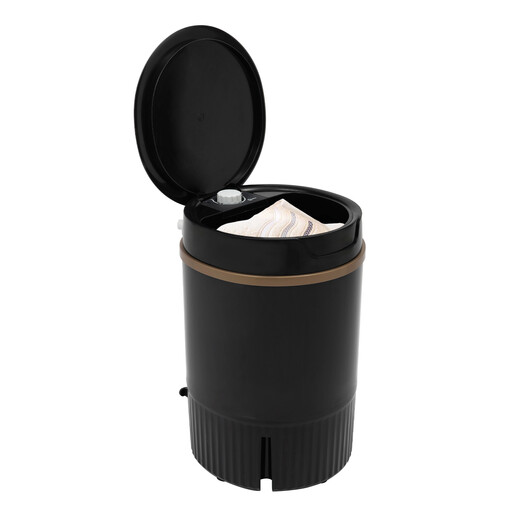 No image available
For very small loads; the description lists a maximum laundry capacity of 0.8 kg.
The product is described as semi-automatic, with a wash cycle of 1–10 minutes and a 3-minute spin cycle.
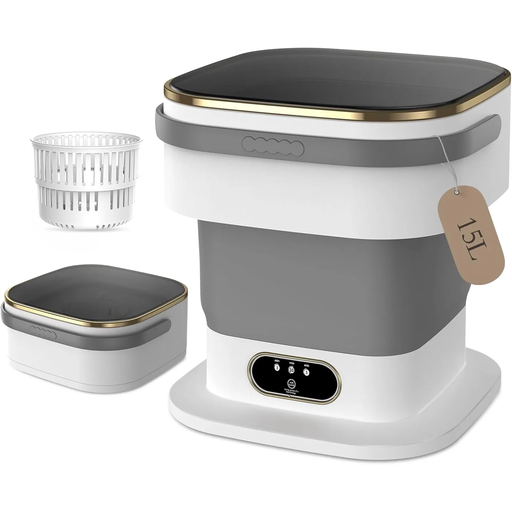 No image available
The product name describes it as a foldable, portable washing machine for small loads.
It has a listed capacity of 15 litres and comes with a spin basket. The product details don’t specify a wash temperature.
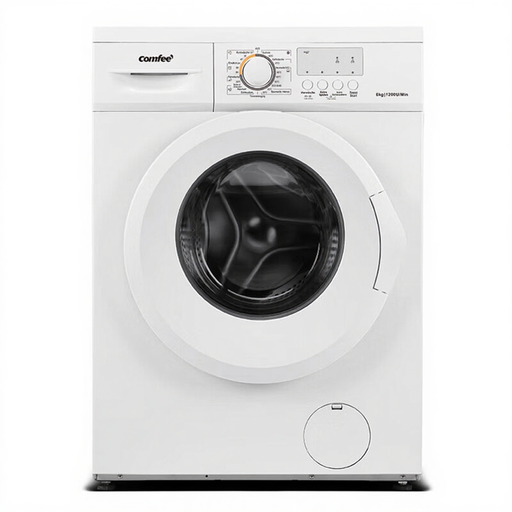 No image available
For households that want to wash everyday laundry as well as small loads of flannels.
The product details list a depth of 40 cm, a capacity of 6 kg, 1200 rpm and selectable wash temperatures from cold to 90 °C, including 60 °C. It has an energy rating of D.
 No image available
For limited spaces and extra household laundry; this machine is described as a freestanding front-loader.
The product details list a depth of 40 cm, a capacity of 7 kg and a 60 °C Baby Care programme.
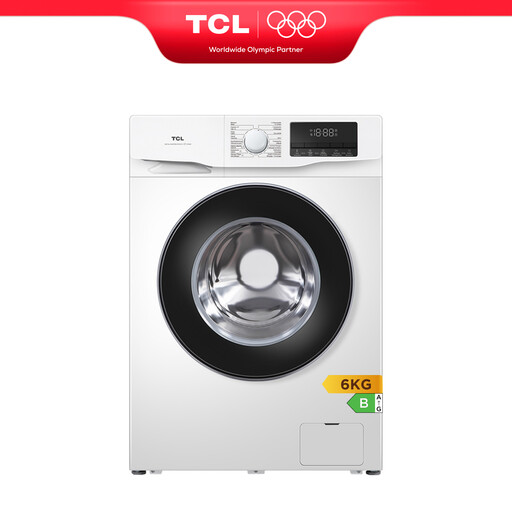 No image available
The listed depth of 45 cm may be useful when planning for limited space. Remember to check the actual alcove and door opening too.
The product name lists a capacity of 6 kg, steam wash, a 15-minute quick wash, automatic weight detection and an energy rating of B.
No. The programme doesn’t prove that every machine lets you select a wash at 60 °C. The European Commission describes Eco 40–60 as a programme for normally soiled cotton laundry labelled as washable at 40 or 60 °C. To follow the BZgA recommendation, check for a dedicated 60 °C programme and the care labels on your cloths.
The BZgA recommends washing flannels at a minimum of 60 °C with a heavy-duty detergent containing bleach; it doesn’t consider additional laundry sanitisers necessary. For the machine, it recommends running a 60 °C wash after around every fifth load or every two weeks.
Check the installation location and the inlet and drain against the machine instructions, and discuss your specific situation with your landlord. The consumer advice centre explains that permission to install a washing machine in a flat generally can’t be refused outright; this isn’t a guarantee for every tenancy agreement or damage claim. Also check the requirements for water protection and insurance.
For washing machines covered by EU energy labelling, figures such as kWh per 100 Eco cycles and litres per Eco cycle help you compare like with like. To estimate your own costs, you’ll also need to consider how often you wash and your electricity and water prices. The label figures don’t measure the consumption of a small 60 °C load.
You shouldn’t assume so without checking how the specific machine is classified under the regulations. The European Commission describes energy labelling and ecodesign requirements for washing machines within their respective scopes. Check the product documentation rather than inferring an energy rating from an advertising claim.