Choose the drum capacity based on the amount of laundry your house share actually generates. If you regularly have suitable loads to wash together, a larger capacity may be useful; if you often do small, separate loads, choose a machine that fits your needs without being oversized. For cotton shorts, the care label, sorting and choosing the right programme are key. If floor space is limited, a top-loading machine could be an option, provided there is enough clearance above it to open the lid.
What types of house share are there?
House share with shared washing loads
You coordinate washing days and regularly have larger loads that can be washed together according to their care instructions and colours. Drum capacity you can actually use and energy consumption per cycle are important to you.
House share with limited space
You need your own machine but only have a narrow space for it or limited room for a door to swing open. The machine’s dimensions and connections matter more than extra features.
Housemates who do separate small loads
You mostly wash your shorts and other clothes yourself. Suitable programmes, care labels and how well the machine handles frequent small loads matter more than maximum capacity.
What should you look for when buying?
The right machine depends on the laundry you actually combine and how much space you have where it will be installed. The European Commission says the energy label includes details such as energy consumption per 100 cycles, water consumption per cycle and noise levels.
| What matters |
What to check before buying |
Who is this particularly important for? |
| Drum capacity and consumption figures |
Think about shared and separate loads; compare the energy and water label figures on the same programme basis. |
If we can combine our washing days, we want a drum that suits the shared loads we can actually wash together. Around 36% of consumers prioritise drum capacity and stated consumption. |
| Caring for cotton shorts |
Check the care label, colour and how soiled the item is; check the programme and the machine’s permitted load size. |
When washing cotton shorts, I choose the programme and temperature based on the care label, colour and how soiled they are. Around 29% of consumers say choosing the right fabric-care settings is their main concern. |
| Space and connections |
Measure the machine and the clearance needed to open it; check the connections and installation requirements for your rented home. |
If space is limited where the machine will go, I need one that fits and enough room to open it. Around 21% of consumers prioritise space and connections. |
| Noise and washing days |
Compare the spin noise in dB on the energy label; coordinate programme lengths and washing times with your housemates. |
When sharing a machine, I want to be able to plan washing times and avoid disturbing my housemates with spin noise as much as possible. Around 14% of consumers prioritise quiet, predictable washing days. |
Which common mistakes can you avoid?
-
Choosing drum capacity based only on the number of people in your house share
Living together doesn’t automatically mean you can wash everyone’s laundry together, as colours and care requirements may differ. A large drum may go unused if you often do separate small loads.
Think about the shared and separate loads you actually do. The Verbraucherzentrale says that the number of people is only a guide; how you use the machine is what matters.
-
Assuming a quick programme can replace every cotton programme
The permitted load for a quick programme can be well below the machine’s rated capacity. For the BM3WFU4741N model, Beko specifies a maximum load of 2 kg for its 14-minute programme.
Check the care label, stains and the programme’s load limit for the specific machine before choosing a quick programme.
-
Looking only at the energy class
The energy class alone doesn’t show all the declared consumption and noise figures. These figures also apply to the stated programme basis, not automatically to every wash cycle.
Compare the specific label figures on the same programme basis and consider which programmes you’re likely to use.
-
Ordering a slim machine without measuring the clearance needed to open it
A top-loader needs clear space above the lid, while a front-loader needs enough room for the door to open where it will stand. The delivery route and connections also need to be suitable.
Measure the floor space, delivery route and clearance needed to open the machine before you order. The Verbraucherzentrale also recommends checking the specific installation arrangements with your landlord in advance.
Brands to consider
Beko
The BM3WFU4741N is an example of a 7 kg front-loader with programmes for different types of laundry.
- For this model, Beko specifies 1,400 rpm, a depth of 49.6 cm and a 14-minute programme for loads of up to 2 kg.
- The manufacturer’s energy-saving claim refers to a specific older Beko model and particular programmes; it isn’t an independent comparison with all washing machines.
Bauknecht
The DTL 6B BK W FF top-loader may suit a narrow space, provided there is enough clearance above the machine to open the lid.
- Bauknecht specifies a 6 kg capacity and a width of 40 cm for this model.
- The lid must be able to open fully where you plan to put the machine. The dimensions and features apply to this model and not necessarily to other Bauknecht machines.
Miele
The WWA120 WCS 8kg Active is an example of a front-loader with a larger drum, for house shares that regularly have suitable loads to wash together.
- Miele specifies an 8 kg capacity, 1,400 rpm and an AddLoad function for this model.
- A larger capacity is only suitable if your house share can regularly combine appropriate loads; the number of people alone doesn’t determine this.
Washing machines to suit your needs at Joybuy
This selection includes front-loaders and washing machines with different rated capacities, for separate, medium-sized or regularly planned shared loads in a house share.
 No image available
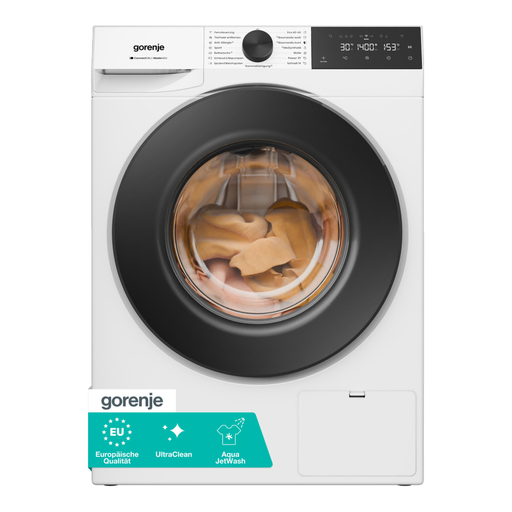
Gorenje W5G4S84AP2 front-loading washing machine, 8 kg
The stated capacity may suit house shares that regularly have appropriate loads to wash together.
Listed in the product name: 1,400 rpm, energy efficiency class A, 15 programmes and a depth of 460 mm.
View at Joybuy
 No image available
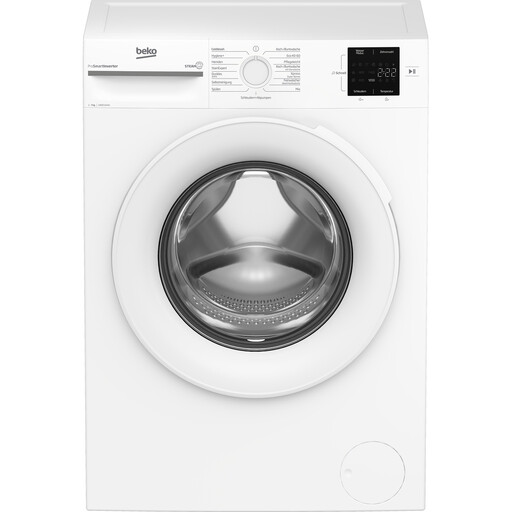
Beko BMMWFU374A washing machine, 7 kg
The 7 kg capacity is worth considering for separate or medium-sized everyday loads; check whether it suits the way you actually do your washing.
Listed in the product name: 1,400 rpm and energy efficiency class A.
View at Joybuy
 No image available
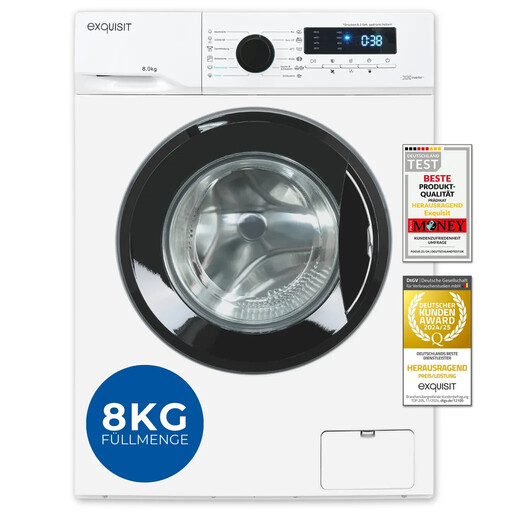
Exquisit WA58014-020A washing machine, 8 kg
The stated capacity may suit regularly planned shared loads, provided the items can be washed together.
Listed in the product name: energy efficiency class A, maximum 1,400 rpm, 13 programmes, a delay-start function and a child lock.
View at Joybuy
 No image available
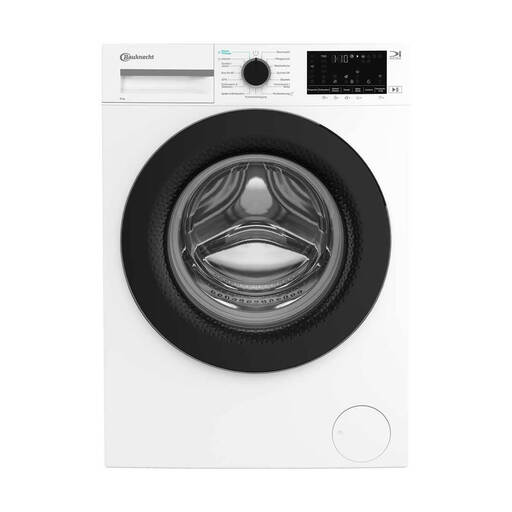
Bauknecht BW 8A10 BS washing machine, 8 kg
The capacity may suit larger shared loads if it fits your washing habits and the care instructions.
Listed in the product name: maximum 1,400 rpm and energy efficiency class A.
View at Joybuy
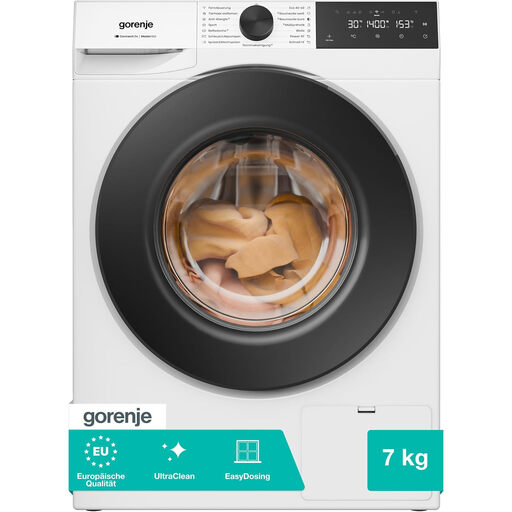 No image available
Gorenje W5G474A2P1 washing machine, 7 kg
The 7 kg capacity may suit separate or medium-sized loads; consider which items you can actually wash together.
Listed in the product name: 1,400 rpm and 15 programmes.
View at Joybuy
Frequently asked questions
Do I have to use a 60°C programme for cotton shorts?
No, not simply because they’re made of cotton. Check the care label and how soiled they are first; the Umweltbundesamt generally recommends lower temperatures for lightly to normally soiled laundry. The EU Eco 40–60 programme is for normally soiled cotton laundry that the label says can be washed at 40°C or 60°C.
Can our house share install a washing machine in a rented flat in Germany?
It wouldn’t be accurate to say that it’s always prohibited. The Verbraucherzentrale says installing a machine in the home is generally permitted, but recommends discussing your specific situation with your landlord before installation. Also check the connections and the terms of your tenancy; this isn’t a guarantee for every individual case.
What do the energy class and consumption figures on the label mean?
Since March 2021, household washing machines have used the EU energy scale from A to G. According to the European Commission, the label includes details such as energy consumption per 100 cycles, water consumption per cycle and noise levels, based on the stated programme. These figures don’t tell you the consumption for every other programme.
Where should we take an old washing machine from our house share?
An old washing machine should go to a separate collection point, not into household rubbish. The Umweltbundesamt says local authority collection points are generally free. Whether a retailer can take it back depends on the specific retailer’s requirements and how you bought it.


