House shares with delicate pillowcases
When washing removable covers, follow the care label for the temperature, programme and spin speed. GINETEX GERMANY explains that a bar beneath the wash symbol means the item needs gentler treatment.


Choose a washing machine that lets you set the temperature and spin speed to suit the care label on your pillowcases. For everyday use in a house share, also consider the amount of washing you typically do together. GINETEX GERMANY explains that a bar beneath the wash symbol means the item needs gentler treatment, with a smaller load and lower spin speed. The values on the EU energy label are based on the Eco 40–60 programme and cannot automatically be applied to delicates or quick programmes, as explained by Verbraucherzentrale and the Federal Environment Agency.
When washing removable covers, follow the care label for the temperature, programme and spin speed. GINETEX GERMANY explains that a bar beneath the wash symbol means the item needs gentler treatment.
If several housemates use the same machine, its rated capacity should suit your typical shared loads. Verbraucherzentrale and the Federal Environment Agency recommend choosing the size of the appliance to suit the household and how it is used.
If space in your home is limited, the appliance dimensions, connections, door clearance and access to the machine all need to work together. Spin noise and water protection may also matter depending on where you plan to install it.
First check the care requirements for your pillowcases, then make sure the capacity, dimensions and consumption figures suit shared use in your house share.
The percentages below relate to consumers choosing a washing machine for machine-washable pillowcases in a German student house share. Each figure reflects the buyer’s main priority.
| Buying priority | What to check | Who is it especially relevant to? |
|---|---|---|
| Caring for pillowcases | Check the care label and make sure you can adjust the temperature and spin speed. | If I wash delicate pillowcases, I want to be able to follow the care label. Around 31% of consumers prioritise caring for their pillowcases according to the fabric. |
| Shared washing | Compare the rated capacity with your usual house-share loads and the maximum load for the programme you choose. | If several housemates share a machine, I want to know whether the drum size suits our regular everyday loads. Around 25% of consumers prioritise the amount of washing they do together. |
| Space and installation | Measure the appliance, connections and door clearance; consider spin noise and water protection. | If space is limited or the location is sensitive to noise, I want to know before buying whether the appliance and connections will actually fit. For around 19% of consumers, installation space is their main priority. |
| Upfront and running costs | Compare energy and water figures on the same label basis and consider them in light of how you use the machine. | If we use the machine together regularly, I want to consider its running costs as well as the purchase price. Around 25% of consumers prioritise the overall cost. |
The EU energy label shows figures for Eco 40–60. The Federal Environment Agency points out that quick programmes save time, but do not automatically use less energy.
The care label sets the limits for how an item can be treated. According to GINETEX GERMANY, a bar beneath the wash symbol means gentler treatment, with a reduced load and lower spin speed.
Check the care label on each pillowcase and choose the temperature, programme, load and spin speed accordingly.
The right appliance size depends on the total amount of washing your house share usually does. Delicates or easy-care programmes may also have a lower maximum load.
Compare your typical shared loads with the rated capacity, and check the load limit for the programme you need separately.
The consumption figures shown are for Eco 40–60, not for delicates or quick programmes. The Federal Environment Agency notes that a quick programme does not automatically use less energy.
Compare appliances using the same label basis, and don’t assume other programmes will match these figures.
Appliance depth, space for connections and the door to open, water protection and the conditions at the installation location can all affect how practical it is to use.
Measure the full installation area and access route, and check the connections and water protection before you buy.
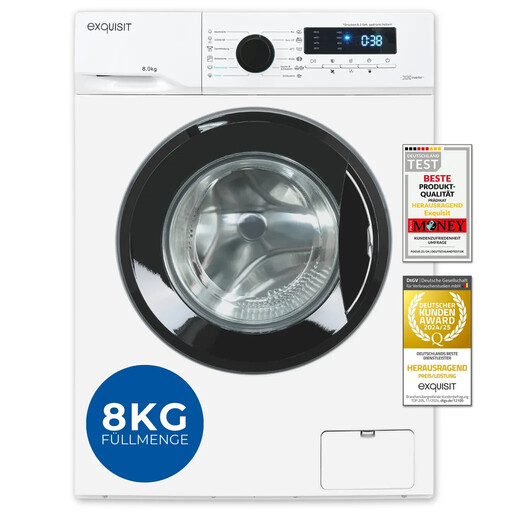
The WUU28T71 is an 8 kg-capacity front-loading washing machine that can be installed under a worktop.
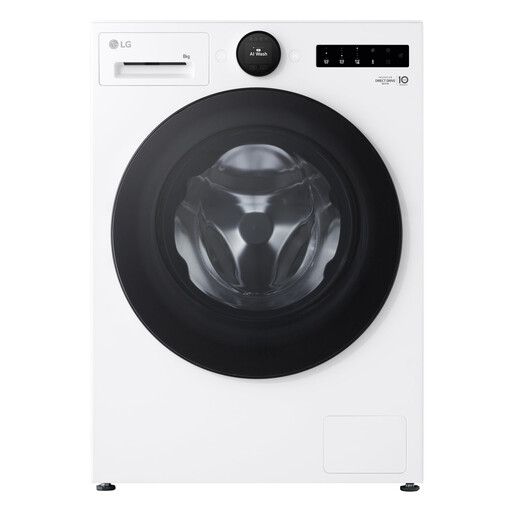
The L6FBA51480 from the 6000 series is a front-loading washing machine with an 8 kg rated capacity and ProSense load-sensing technology.
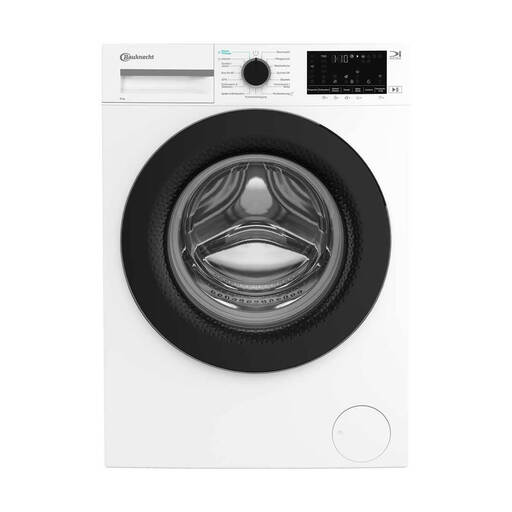
The BM3WFU3741X is a front-loading washing machine with a 7 kg rated capacity and a stated appliance depth of 49.6 cm.
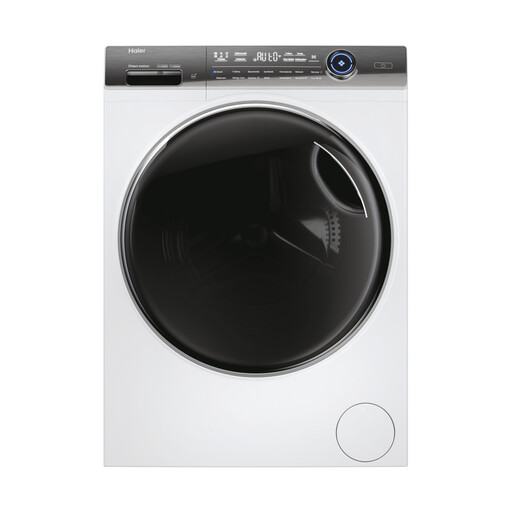
The WWA120 WCS 8kg Active combines an 8 kg rated capacity with features that Miele lists for garment care and adding items mid-cycle.
This selection includes front-loading washing machines for shared house-share washing, with a range of capacities and features.
 No image available
The stated 8 kg capacity may suit shared house-share loads; check the maximum load for your chosen programme separately.
The listed specifications include an A energy efficiency rating, 47 kWh per 100 cycles, 50 litres per cycle, AquaStop and 13 wash programmes.
 No image available
The stated 8 kg capacity is relevant for shared house-share loads; for delicate pillowcases, always follow the care label.
The product information lists a spin speed of 1,350 rpm, with adjustable temperature and spin speed.
 No image available
The 8 kg rated capacity may suit everyday shared washing; whether it is right for you also depends on the load limit of the programme you use.
The listed specifications include an A energy efficiency rating, 42 kWh per 100 cycles, 47 litres per cycle and an appliance depth of 55 cm.
 No image available
The stated 8 kg capacity is relevant for shared house-share loads; measure the installation space, including connections, before choosing.
The product information lists a depth of 50 cm, a maximum spin speed of 1,400 rpm, a spin noise level of 65 dB and 14 programmes.
 No image available
The stated 9 kg capacity may suit shared house-share loads; for pillowcases, check the care label and the load limit for the right programme.
The product information lists a spin speed of 1,200 rpm and Hand Wash/Wool and Easy Care programmes.
No, not in every case. The care label tells you how the item can be treated; according to GINETEX GERMANY, a bar beneath the wash symbol means gentler treatment, with a reduced load and lower spin speed. Choose a programme that suits the specific pillowcase.
No, a shorter cycle does not automatically use less energy. The Federal Environment Agency points out that quick programmes save time; the label figures are for Eco 40–60, not every quick programme.
Check the available space, connections and water protection, and find out about the specific conditions at the installation location. Verbraucherzentrale notes that tenants are generally not allowed to be prohibited from installing a washing machine in their home.
The current EU energy label uses a scale from A to G and includes details such as energy consumption per 100 Eco cycles, water consumption per Eco cycle, capacity and spin noise. Your Europe, the European Union’s information portal, explains the change to the current scale, which has applied to the relevant appliance categories since 2021.
The retailer is responsible for statutory consumer rights; a manufacturer’s guarantee is separate and voluntary, as Verbraucherzentrale explains. The Federal Ministry for the Environment describes online retailers’ obligations to take back old appliances. Collection from your home is subject to the conditions set out there and an agreement made when you buy.