For cloth napkins and the rest of your shared-house laundry, choose a washing machine that suits the care labels, your usual shared loads and the space available. A front-loading machine could work if there’s enough room in front of the door; if width is limited, a top-loader may be an alternative. For hygiene reasons, the German Environment Agency recommends washing napkins at 40 or 60 °C, rather than always defaulting to 60 °C. Also check programme load limits, spin noise, water protection and the figures on the EU energy label.
Who is the washing machine for?
Shared houses that use cloth napkins
If you want to wash napkins according to how soiled they are and what their care labels say, choose a suitable programme rather than running a separate wash for just a few napkins. For hygiene reasons, the German Environment Agency recommends washing napkins at 40 or 60 °C.
Shared houses with frequent communal washes
When several people share a machine and take turns doing the laundry, it’s important to choose a drum that suits your combined loads, with clear programme durations and straightforward controls.
Shared houses with limited space or noise-sensitive surroundings
Before buying, check that there’s room for the machine and for its door or lid to open, and consider the spin noise. The connections and water protection should also suit the installation location.
Which buying criteria matter?
Front-loader
Suitable if: there’s room for the door to open in front of the machine and your shared house regularly washes communal loads. The Verbraucherzentrale gives around 60 cm as a typical width.
Consider: check the rated capacity and the duration of each specific programme separately. Drum size alone doesn’t tell you the load limit for a quick wash.
Top-loader
Suitable if: the space is too narrow for a typical front-loader, but there’s room above the machine to open the lid.
Consider: the Verbraucherzentrale gives 40–45 cm as a typical width for top-loaders; check the capacity, height and programme selection of the specific model.
Washer-dryer
Suitable if: you don’t have a practical place to hang or dry laundry separately as well as space for a washing machine, and your shared house regularly needs both functions.
Consider: according to the Verbraucherzentrale, washer-dryers use more electricity and water than separate appliances. You can also only dry part of a wash load at a time.
| What matters |
What to look for when buying |
Who is it especially important for? |
| Fabric care and hygiene |
Care labels, suitable programmes and temperatures; check the permitted load for quick programmes too. |
If I want to wash cloth napkins according to how soiled they are and look after the fabric, the care label and programme need to match. Around 31% of consumers put suitable fabric care and hygiene first. |
| Capacity and laundry planning |
Compare your usual shared load sizes with programme durations and the load limits for each programme. |
If we plan our washes together, the drum needs to suit the laundry we’ve collected, and the programme needs to fit our schedule. Around 25% of consumers prioritise load size and convenient washing times. |
| Electricity and water use |
Compare EU label figures on the same Eco 40–60 basis and take your own usage into account. |
If you do laundry regularly in a shared house, you’ll want to assess energy and water use using comparable figures. Around 25% of consumers prioritise this. |
| Space, noise and water protection |
Check the specific model’s dimensions, including opening clearance, spin noise and water protection. |
If space is limited or the machine is near shared living areas, you’ll need suitable dimensions and acceptable spin noise. Around 19% of consumers prioritise installation suitability and water protection. |
Which buying and usage mistakes can you avoid?
-
Assuming a quick programme can take a full load
The time shown doesn’t automatically apply to the full rated capacity. For the Beko BM3WFU4841W, the manufacturer specifies a maximum load of 2 kg for the 14-minute programme; LG’s 39-minute figure for the F4WV708P1E applies to a half load.
Check the load limit and the recommended soil level for the specific programme before relying on it for napkins or shared laundry.
If the quick programme’s load limit is lower than the amount of laundry you have, you may need to run extra washes.
-
Choosing drum size based only on the number of napkins
A shared house usually washes other fabrics too. A machine with too little capacity could mean more communal washes; conversely, a higher rated capacity doesn’t guarantee that a quick programme can take the same amount of laundry.
Estimate your usual shared loads and compare them with the rated capacity and programme load limits. Measure the available space too, including room for the door or lid to open.
-
Judging a washer-dryer by its space-saving design alone
The Verbraucherzentrale highlights that washer-dryers use more electricity and water than separate appliances, and can only dry a limited load at a time.
First, work out whether you can hang napkins and other laundry up to dry or dry them separately. Only consider the drying function if your shared house genuinely needs it regularly.
-
Assuming water protection means you don’t need to check the installation location
A protection system doesn’t replace suitable connections or checking the conditions in a rented property. Other residents could also be affected if there’s a water leak.
Check the installation requirements and protection system of the specific model, as well as the conditions at the intended location. If you’re unsure, clarify things before installing the machine.
Relevant brands and models
Bosch
The WAN282ECO6 is an 8 kg front-loader and a useful comparison for shared laundry.
- Bosch lists AquaStop, a reload function, energy class A and dimensions of 845 × 598 × 590 mm for this model.
- The spin noise is listed as 71 dB(A). These figures apply to the WAN282ECO6, not to other models from the brand.
Siemens
The WG44G2Z90 is a 9 kg front-loader and a useful comparison for shared houses that regularly collect larger loads.
- Siemens lists aquaStop and dimensions of 845 × 598 × 588 mm for this model.
- The higher rated capacity only matters if it suits your actual loads; it doesn’t make the machine a better choice for a few napkins.
Beko
The BM3WFU4841W is an 8 kg front-loader with a quick programme and stain programme, making it an example of a machine for different shared-house loads.
- According to Beko, the 14-minute programme has a maximum load of 2 kg.
- Beko lists a spin noise of 76 dB(A) for this model. The manufacturer’s claims about stain removal or energy savings aren’t independent test results.
AEG
The L6FBC41689 is an 8 kg front-loader with automatic load adjustment, making it a useful comparison for loads of different sizes.
- AEG lists 47 kWh per 100 Eco 40–60 cycles and 43 litres per cycle for this model.
- These figures refer to the model’s stated consumption; they don’t demonstrate specific savings from ProSense in a shared-house setting.
LG
The F4WV708P1E is an 8 kg front-loader with steam and quick-wash functions, according to the manufacturer.
- LG’s 39-minute time is explicitly based on a half load.
- This figure doesn’t show that the cycle takes the same amount of time with a full load, or that every soiled napkin should be washed using this programme.
Joybuy models for shared-house laundry
The following front-loaders could suit shared-house laundry. Compare their rated capacity and dimensions with your usual loads and the space available.
 No image available
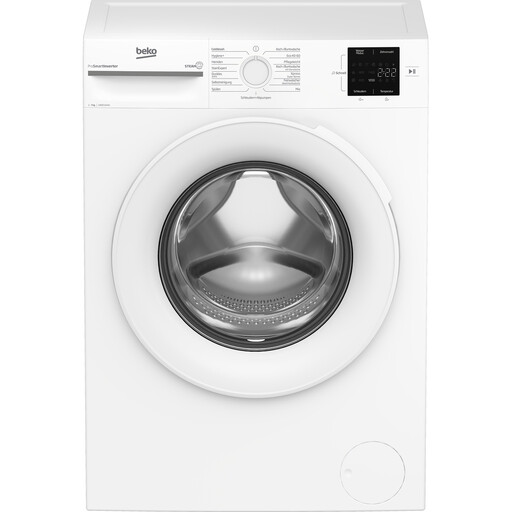
Beko BMMWFU374A, 7 kg
This 7 kg front-loader could be a good fit if its rated capacity suits the shared loads you collect. Check the care labels and the load limits for the programmes you need.
Features listed in the product name: 1400 rpm, SteamCure, ProSmart Inverter Motor and energy class A.
View on Joybuy
 No image available
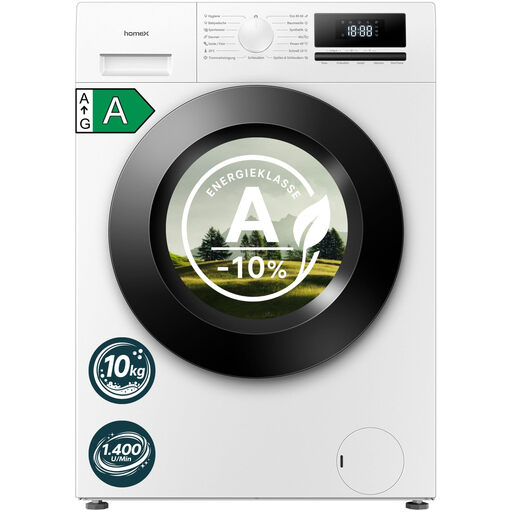
homeX WF1014H1A-W, 10 kg
With a rated capacity of 10 kg, this model can be compared with larger shared loads. Before buying, check that the machine’s dimensions, including opening clearance, will fit the available space.
The product name identifies this model as a front-loader.
View on Joybuy
 No image available
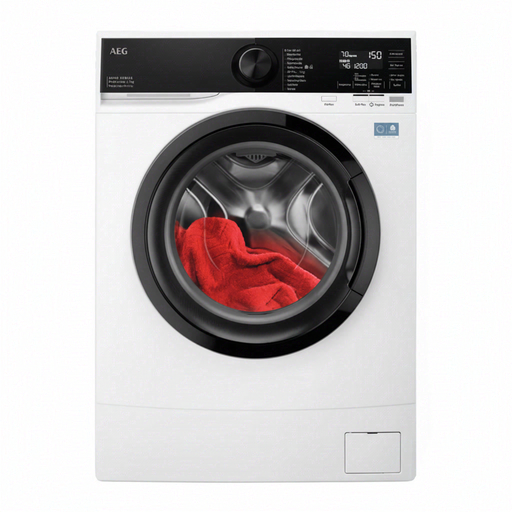
AEG LSR6FA75470, 7 kg
This 7 kg front-loader could suit a shared house whose usual loads don’t exceed its rated capacity. Consider which programmes are suitable for your fabrics.
According to the product description, the 20-minute programme is designed for small, lightly soiled loads of up to 3 kg.
View on Joybuy
 No image available
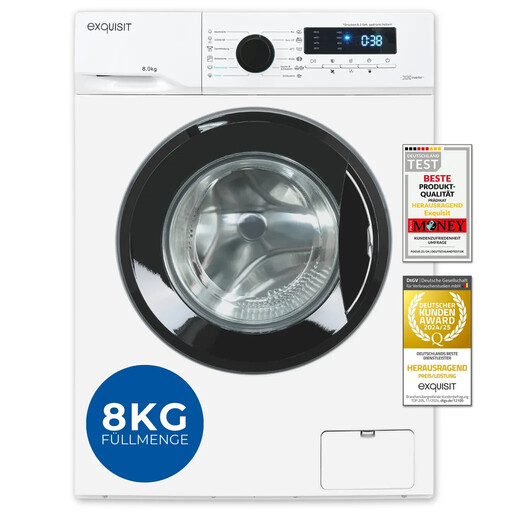
Exquisit WA58014-020A, 8 kg
The 8 kg rated capacity gives you a useful point of comparison for shared loads. Check the machine’s dimensions and the space needed for the door and connections.
The product name identifies this model as a front-loader.
View on Joybuy
 No image available
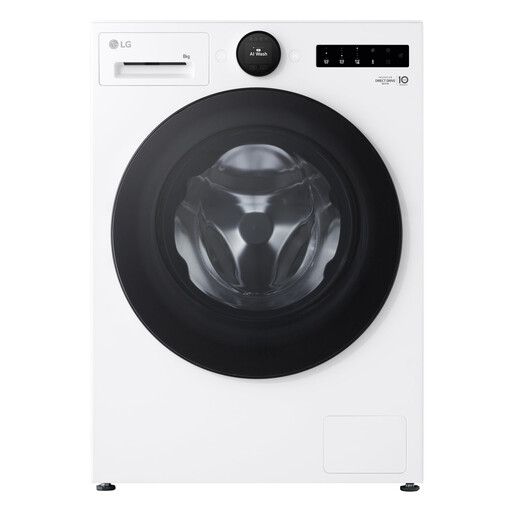
LG F4WX808YC, 8 kg
This 8 kg front-loader could suit your shared house if its rated capacity matches your usual communal loads. Bear in mind that short programme times don’t automatically apply to a full drum.
The stated 39-minute TurboWash time is based on a half load.
View on Joybuy
Frequently asked questions
Do cloth napkins always need to be washed at 60 °C?
No, there’s no general requirement to wash them at 60 °C. For hygiene reasons, the German Environment Agency recommends washing napkins at 40 or 60 °C; choose the temperature according to the care label and how soiled they are. Advice that additional laundry disinfection is not normally needed applies to healthy household members and normally soiled laundry.
Is Eco 40–60 the same as choosing a 60 °C programme?
No. The European Commission describes Eco 40–60 as a standardised programme for normally soiled cotton laundry that, according to its label, can be washed at 40 or 60 °C. The energy-label figures for this programme can’t automatically be applied to other programmes.
What should a shared house in rented accommodation check before installing a machine?
Check the connections, installation space, tenancy agreement and, where relevant, the shared laundry room. If you’re unsure, discuss the specific situation with your landlord before installing the machine. The Verbraucherzentrale notes that tenants generally can’t be categorically prohibited from having a washing machine in their home, and explains possible insurance considerations in the event of water damage.
What legal rights do you have if a new washing machine is faulty?
According to information from the European Union, when you buy from a business seller, you have a minimum two-year legal guarantee from the date you receive the goods. The seller is generally your point of contact; an additional manufacturer’s guarantee doesn’t replace these rights.
How can your shared house compare energy and water use?
Compare the EU label figures on the same Eco 40–60 basis, then take your expected number of washes and your electricity tariff into account. These label figures don’t provide an accurate estimate of consumption for other programmes.


