What to look for in a shared house
Start by comparing load size and available space, then consider T-shirt care, noise and consumption figures.
| What matters |
What to look for when buying |
Who is it important to? |
| Capacity and shared use |
Compare typical load sizes and the space available with the machine’s dimensions and clearly marked programmes, taking actual use in the shared house into account. The Verbraucherzentrale recommends choosing a drum size to suit the household. |
If several housemates often wash their own loads, I want the drum and controls to suit our shared routine. Around 33% of consumers put capacity and ease of shared use first. |
| Caring for cotton T-shirts |
Check care labels, how dirty the clothes are, cotton and low-temperature programmes, and the maximum load for any quick programme. The Umweltbundesamt points out that quick programmes do not automatically save energy. |
For T-shirts, I want to choose a programme and temperature based on the care label and how dirty they are, rather than always using the same programme. Around 25% of consumers prioritise suitable T-shirt care. |
| Spin noise |
Compare the stated dB(A) spin noise level with the planned installation location and the usual washing times in the shared house. |
If the machine is near living areas, I want to take spin noise into account when planning washing times. For around 17% of consumers, keeping noise to a minimum where the machine is installed is a priority. |
| Running costs and water protection |
Compare kWh per 100 Eco 40–60 cycles and litres per Eco cycle on the EU energy label. Also check water protection, connections and who is responsible for what. The Verbraucherzentrale recommends agreeing the installation location with your landlord before installation. |
When sharing a machine, I want to consider both consumption and protection against water leaks. Around 25% of consumers prioritise costs and water protection. |
Washing machines for shared-house living
The following Joybuy picks are front-loading washing machines with stated capacities from 8 to 13 kg. Match the drum size to your household’s usual loads and the space available.
 No image available
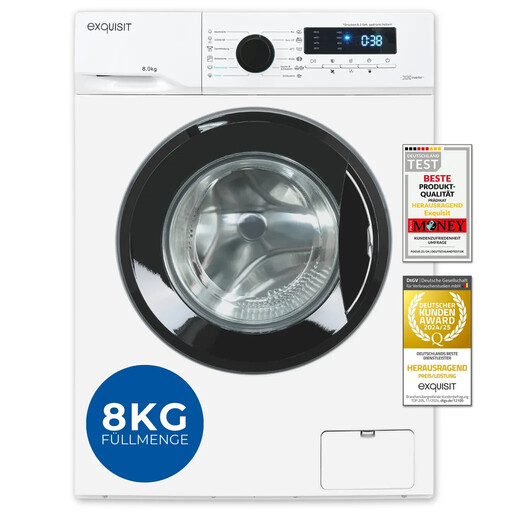
Exquisit WA58014-020A washing machine, 8 kg
The listed Cotton Care and ECO programmes, along with the remaining-time display, are useful features to consider for a shared machine.
8 kg; energy efficiency class A; 47 kWh per 100 cycles; maximum 1,400 rpm; AquaStop; LED programme display; 13 programmes; 3–24-hour delay start.
View at Joybuy
 No image available
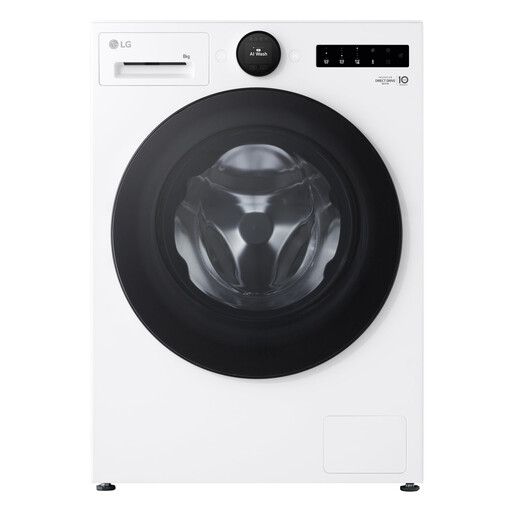
LG F4WX808YC washing machine, 8 kg
For mixed loads in a shared house, the stated capacity and features for different fabric fibres and half loads are worth considering.
8 kg; maximum 1,350 rpm; 72 dB during spin; AI DD fibre detection; TurboWash 360; steam; AquaLock; touch controls.
View at Joybuy
 No image available
LG F4WR5035 washing machine, 13 kg
The 13 kg capacity may suit larger or frequent shared loads. Check that this size matches how much laundry your household actually produces.
13 kg; 44 kWh per 100 cycles; 72 dB(A) during spin; Cotton and Eco 40–60 programmes; AquaLock; Add Item function; LoadSense with automatic water-level adjustment.
View at Joybuy
 No image available
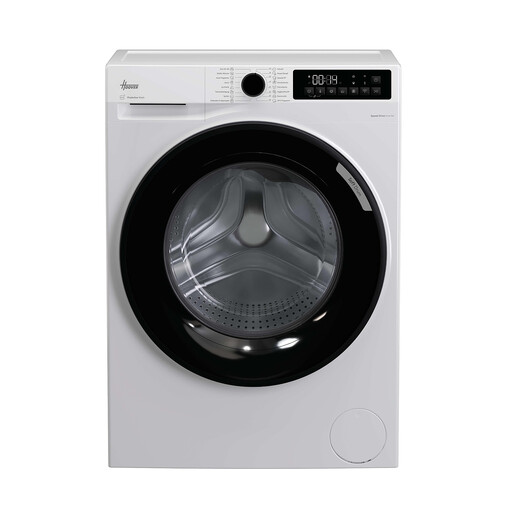
Hoover ProWash 300 HGDQ49SBL8U-84 washing machine, 9 kg
For a household with several housemates, the stated capacity and choice of programmes may be useful. If the machine will be near living areas, also consider its spin noise level.
9 kg; 40 kWh per 100 cycles; 72 dB during spin; 16 programmes; Aquastop; app control.
View at Joybuy
 No image available
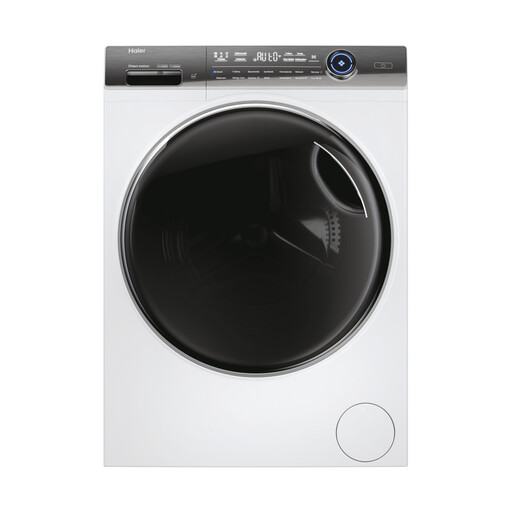
Haier I-Pro 7 Plus HW80-BD14979EU1 washing machine, 8 kg
For regular shared loads, capacity, consumption figures and spin noise are useful points to compare.
8 kg; 38 kWh per 100 cycles; 44 l per Eco 40–60 cycle; 65 dB during spin; 14 programmes; AquaStop; automatic detergent dosing.
View at Joybuy
Frequently asked questions
Is Eco 40–60 the right choice for every cotton T-shirt?
No. This EU programme is designed for normally soiled cotton that can be washed at 40 °C or 60 °C according to its care label. Always check the label first. There is also a 20 °C programme for suitable, lightly soiled cotton.
Does a shared house need to wash T-shirts at 60 °C regularly?
No, not as a rule. The Umweltbundesamt says that lower temperatures are often sufficient for typical household laundry; additional measures may be needed where there are specific hygiene requirements. To look after a machine that is usually run at cooler temperatures, the Verbraucherzentrale recommends washing a suitable load of whites at 60 °C with powdered detergent for whites about once a month—not washing all your T-shirts at a high temperature.
What should you check before installing a washing machine in a rented shared house?
Check the available space, connections and drainage, and agree the planned installation location with your landlord. This helps you confirm the specific installation requirements for the property in advance.
Which figures are useful for comparing running costs?
The current EU energy label includes figures such as kWh per 100 Eco 40–60 cycles and litres per Eco cycle. To estimate your own costs, compare these test figures with the programmes you actually use and your local tariffs.


