The key factors are the amount of laundry your household usually washes together and the space available: a front-loader may work if there’s enough room in front of the door, while a slim top-loader needs clear space above it. Choose the drum capacity to suit your typical loads rather than a single pillowcase, and check care labels, suitable programmes, the energy label, spin noise and water protection for the specific model. For hygiene reasons, the German Environment Agency recommends washing bedding at 40 or 60 °C. However, a higher temperature isn’t suitable for every pillowcase.
Which washing machine is right for you?
Shared house with set laundry days
If several housemates wash pillowcases and everyday clothes together, the machine’s stated capacity should suit your usual loads. The consumer advice centre and the German Environment Agency recommend choosing a machine size and load to suit your household and the laundry you actually wash.
Shared house with limited laundry space
When floor space is limited, you need to consider the width and depth, as well as which way the machine opens and how much clearance the door or lid needs. A front-loader and a top-loader require different kinds of access.
Shared house with different types of pillowcase
If your pillowcases have different care symbols, it’s important to choose a programme and temperature that suit each fabric. According to GINETEX Germany and the German Association of Personal Care and Detergent Industries, the number in the wash symbol indicates the maximum recommended washing temperature.
What should you consider when choosing?
Start with the amount of laundry you usually wash together and the dimensions of your laundry space. Then compare the care programmes and operating specifications.
| Consideration |
What to check before buying |
Who is it most relevant to? |
| Drum capacity for shared loads |
Compare your usual sorted laundry loads and the maximum load for the relevant programme with the machine’s stated capacity. |
If we combine laundry from several housemates, we want a drum that suits the usual total load. Around 33% of consumers prioritise having the right capacity for shared loads. |
| Space and access |
Measure the width, depth and height, as well as the clearance needed to open the door or lid. |
In a tight laundry space, I want to be able to open the door or lid fully without blocking connections or a walkway. Around 25% of consumers prioritise the machine’s dimensions and opening clearance. |
| Caring for pillowcases |
Check the available programmes and temperature settings, and follow the textile’s care label. |
When pillowcases have different care labels, I want to be able to choose a temperature and programme that suit each one. Around 25% of consumers prioritise caring for pillowcases according to the fabric. |
| Energy use, noise and water protection |
Compare kWh per 100 Eco cycles, litres per Eco cycle, spin noise in dB(A) and the water protection system. |
If the machine is running in the home, I want to consider energy use, spin noise and protection against water damage together. Around 17% of consumers give these operating and protection features the greatest priority. |
The figures on the EU energy label refer to the Eco programme and don’t automatically describe the energy and water use of other programmes. The consumer advice centre also recommends checking whether the machine has an integrated water protection system.
Avoid common buying mistakes
-
Choosing a machine based on a single pillowcase
It’s your shared house’s usual laundry loads that determine the capacity you need, not the size of one pillowcase. The permitted load for a programme may also be lower than the machine’s stated capacity.
Before buying, decide which items you regularly wash together and check the load limits for the programmes you plan to use.
A machine with the wrong capacity can make organising shared laundry days more difficult.
-
Assuming Eco 40–60 is guaranteed to wash at 60 °C for hygiene
The European Commission describes Eco 40–60 as a programme for normally soiled cotton that, according to its care label, can be washed at 40 °C or 60 °C. For hygiene reasons, the German Environment Agency recommends washing bedding at 40 or 60 °C. That doesn’t mean every pillowcase should automatically be washed at 60 °C.
Check the programme name and care label separately. If you have particular hygiene requirements, don’t choose a temperature based on the programme name alone.
-
Measuring only the width of a slim top-loader
A top-loader opens upwards, while a front-loader opens forwards. So a machine can fit the available width but still be unsuitable if you can’t open its lid or door fully.
Measure the height and depth too, and check the opening clearance and connections at the intended location.
-
Treating label figures as a cost estimate for every wash
The electricity and water figures on the energy label refer to the Eco programme, not every wash programme.
Compare label figures on a like-for-like basis. To work out your own costs, also take into account your laundry habits and the electricity and water rates that apply to you.
Key brands to consider
The details below relate to specific models and product ranges; they aren’t a general assessment of each brand’s entire range.
Beko
Useful for comparing two front-loaders with different stated capacities.
- Beko Germany lists the BM3WFU4741N and BM3WFU4841A models as having stated capacities of 7 and 8 kg respectively, energy class A and a spin noise level of 76 dB(A). The machines differ in depth.
- Beko’s EnergySpin claim is based on a comparison of specific programmes with a named older Beko model. It doesn’t demonstrate savings for every shared-house load.
Bauknecht
The DTL 6B BK W FF top-loader is a specific design option for a narrow space.
- Bauknecht Germany gives this model a width of 40 cm and a stated capacity of 6 kg.
- The lid needs clear space above it. The manufacturer’s claims about quiet motor operation and durability aren’t based on independent comparative results.
Miele
The WWA120 WCS 8kg Active is a specific 8 kg front-loader with AddLoad.
- Miele lists this model as having a stated capacity of 8 kg, a spin speed of 1,400 rpm and the AddLoad function for adding laundry mid-cycle.
- The manufacturer notes that delivery and optional services may cost extra. Also check whether this additional feature would be useful for your household.
Joybuy products for shared-house laundry
The front-loaders below offer different stated capacities for laundry that you plan to wash together. Compare the specifications with your usual loads, care requirements and available space.
 No image available
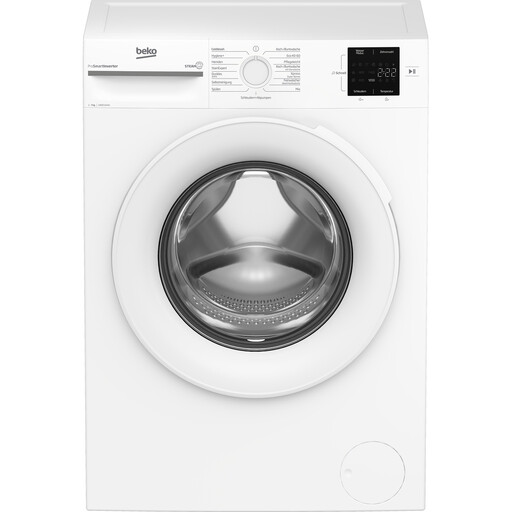
Beko BMMWFU374A, 7 kg
A front-loader option for shared houses that combine their laundry loads.
Stated capacity of 7 kg, 1,400 rpm and energy class A. The description lists 15 programmes, including Eco 40–60, Hand/Wool and Hygiene+, as well as a width of 600 mm and a depth of 496 mm.
View at Joybuy
 No image available
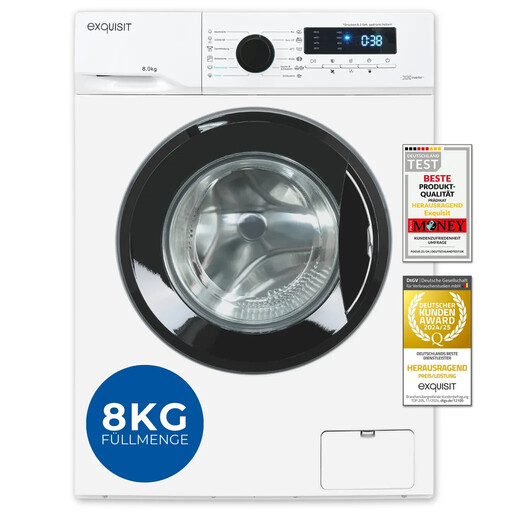
Exquisit WA58014-020A, 8 kg
A front-loader option for planned shared loads. Check the capacity against the amount of laundry you usually wash.
Stated capacity of 8 kg, energy class A, a maximum spin speed of 1,400 rpm and 13 wash programmes. Specifications include 47 kWh per 100 cycles, Aquastop, a width of 59.5 cm and a depth of 52.5 cm.
View at Joybuy
 No image available
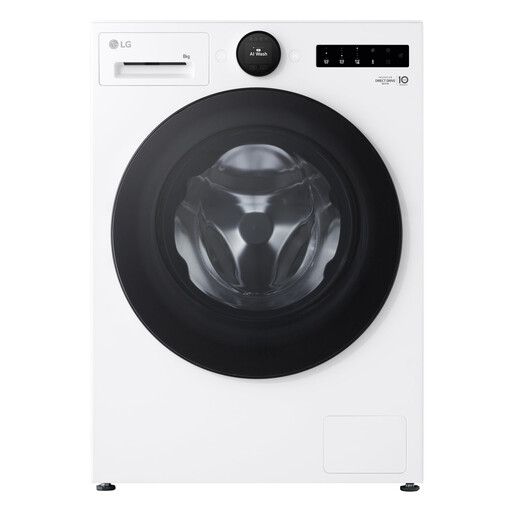
LG F4WX808YC, 8 kg
A front-loader option for shared houses that combine regular loads of a suitable size.
Stated capacity of 8 kg, 1,350 rpm and energy class A-20%. The description lists AI DD, TurboWash 360° and steam, as well as a 39-minute cycle for half loads. The machine is 600 mm wide and 565 mm deep.
View at Joybuy
 No image available
LG F4WR5035, 13 kg
A higher-capacity option for shared houses that regularly have loads large enough to fill it.
Stated capacity of 13 kg, 1,360 rpm and energy class A-20%. The description lists AquaLock, adjustable temperatures, Add Item for compatible cycles, and programmes for Eco 40–60, Delicates and Allergy Care. The machine is 600 mm wide and 615 mm deep.
View at Joybuy
 No image available
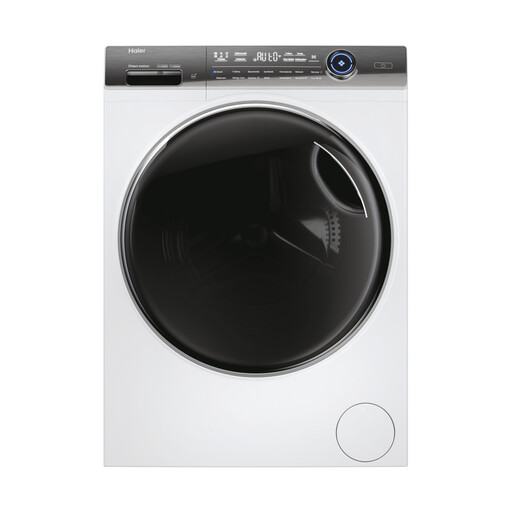
Haier HW80-BD14979EU1, 8 kg
A front-loader option for planned shared loads. Match the capacity to the amount of laundry you actually have.
Stated capacity of 8 kg, 1,400 rpm and energy class A-20%. Specifications include a spin noise level of 65 dB, AquaStop, 14 programmes, a width of 60 cm and a depth of 50 cm.
View at Joybuy
Frequently asked questions
Do pillowcases in a shared house always need to be washed at 60 °C?
No. The care symbol shows the maximum recommended washing temperature. For hygiene reasons, the German Environment Agency recommends washing bedding at 40 or 60 °C; in specific hygiene situations, other measures may also be relevant. An Eco 40–60 programme doesn’t automatically wash at 60 °C.
What should we check before installing a washing machine in a rented home?
Check the proposed location and connections, and confirm the installation details with your landlord or letting agent. The consumer advice centre also highlights the risk of water damage and the importance of suitable insurance. This doesn’t mean there’s a general ban on installing a washing machine in your home.
How can we compare running costs as a household?
Check the current EU energy label for kWh per 100 Eco cycles and litres per Eco cycle. To work out your own costs, you’ll also need to consider the actual number and type of washes you do, along with the electricity and water rates that apply to you. The label figures don’t apply to every programme.
How can we keep a shared washing machine clean?
The German Environment Agency recommends occasional 60 °C washes to help prevent the growth of germs, and adjusting the detergent dosage to the type of laundry, how soiled it is and the water hardness. This doesn’t mean you should wash delicate pillowcases above the temperature shown on their care label.


