Homes with limited space for a machine
If you wash T-shirts regularly, work out whether width or depth is the main constraint. You’ll also need room to open the machine and access its connections.


For cotton T-shirts in a small flat, your washing machine should suit the space available and the amount of laundry you usually wash. If width is limited, a top-loader may be worth considering; if depth is the issue, look at a shallow front-loader. Also compare suitable programmes, spin noise and energy and water figures on the same label basis. A washer-dryer is mainly an option if you have little or no space to air-dry your laundry, as the Verbraucherzentrale says that combined washing and drying uses more electricity and water.
If you wash T-shirts regularly, work out whether width or depth is the main constraint. You’ll also need room to open the machine and access its connections.
If you usually have only a few T-shirts to wash, choose a drum capacity and programmes that suit the amount of laundry you actually have. Don’t choose solely on the basis of a large full load.
If you need a way to dry your clothes as well as wash them, compare a washer-dryer with an airer or a practical shared laundry option.
A good fit if: width is the main constraint and there’s enough room above the machine to open the lid. According to the manufacturer, the Bauknecht WMT 612 B6 is 40 cm wide, 60 cm deep and has a 6 kg capacity.
Bear in mind: A narrow machine isn’t necessarily shallow. A worktop above it could stop the lid from opening.
A good fit if: depth is limited and there’s enough room in front for the door to open. AEG lists the LSR6FA70268 as having a maximum appliance depth of 416 mm and a width of 595 mm.
Bear in mind: You’ll need extra space for connections, the door and controls, as well as enough clearance to get the machine into place.
A good fit if: you regularly have more laundry and have enough width for the machine. According to the manufacturer, the LG F2V3SLIM7 has a 7 kg capacity.
Bear in mind: LG lists this model in energy class D. Its slim depth and appliance dimensions refer to different measurements, so check how they compare before buying.
A good fit if: there’s nowhere suitable to air-dry clothes in your flat and you need washing and drying in one appliance.
Bear in mind: The Verbraucherzentrale highlights that combined washing and drying uses more electricity and water, and that the amount you can dry straight after washing is smaller than the wash load.
A good fit if: there’s a shared machine in your building that’s easy to get to, and the rules for using it work with your laundry routine.
Bear in mind: You won’t need space for your own machine, but you’ll need to plan around availability and organising your laundry.
| What matters when buying | What to look for | Who it matters to |
|---|---|---|
| Machine fits the space and access route | Check the full appliance dimensions, plus clearance for the door or lid, connections and delivery route. | If there’s little room between my furniture, the machine and its opening need to work in the space I’ve chosen; around 33% of consumers put finding a suitable spot first. |
| Small T-shirt loads | Compare the rated capacity and programmes for cotton or Eco 40–60; check the care label. | If I often wash just a few cotton T-shirts, the capacity should suit my loads; around 27% of consumers prioritise smaller loads and suitable programmes. |
| Noise and water protection | Compare spin noise in dB on the EU label and check the specific water-protection features. | If the machine is near my living area, I want to consider spin noise and water protection when deciding; around 20% of consumers prioritise these features. |
| Consumption and overall costs | Compare kWh per 100 Eco 40–60 cycles, water consumption and rated capacity on the same label basis; check delivery and installation separately. | If everyday running costs matter to me as well as the purchase price, I compare the label figures and what’s included; around 20% of consumers put overall costs first. |
The European Commission describes the EU energy label for washing machines as using classes A to G. Compare the figures on the same programme basis: they don’t promise the same consumption for every wash programme. The Umweltbundesamt points out that a shorter programme doesn’t necessarily use less energy just because it runs for less time.
Advertised depth figures and the dimensions in a product table may refer to different measurement points. Connections and the open door or lid also need space.
Check the dimensional drawing and measure the space, delivery route and clearance needed, using the full model number.
The energy label is based on the Eco 40–60 programme. The Umweltbundesamt says a quick programme doesn’t automatically save energy just because it runs for less time.
Compare label figures on the same programme basis, and choose a wash programme to suit the fabric and how soiled it is.
According to the Verbraucherzentrale, a washer-dryer can only dry part of a wash load straight after washing. You should also factor in electricity and water use when running a combined cycle.
First check whether an airer or shared laundry option would work for you. Otherwise, compare the washing and drying capacities separately.
Depending on the model and the service you choose, you may need to arrange delivery and installation separately.
Before ordering, check whether delivery to the intended position, connection and removal of your old appliance are included.
Delivery and installation may require extra arrangements, so check what’s included in advance.
The LSR6FA70268 front-loader is a 6 kg option for spaces where depth is limited.
The WMT 612 B6 top-loader is worth considering if width is the main constraint.
The F2V3SLIM7 slimline front-loader offers a 7 kg option if you need more capacity and have enough space for it.
This selection includes full-size washing machines and portable mini washers for very small loads. The capacity in litres given for mini washers isn’t directly comparable with the rated capacity in kilograms of a household washing machine.
 No image available
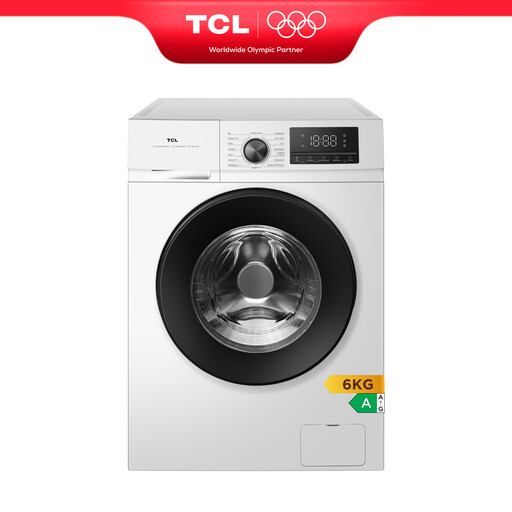
The stated 6 kg capacity may suit smaller everyday loads; check the full appliance dimensions before choosing it for a tight space.
Features listed in the product name: 6 kg, BLDC motor and a 15-minute quick wash programme.
 No image available
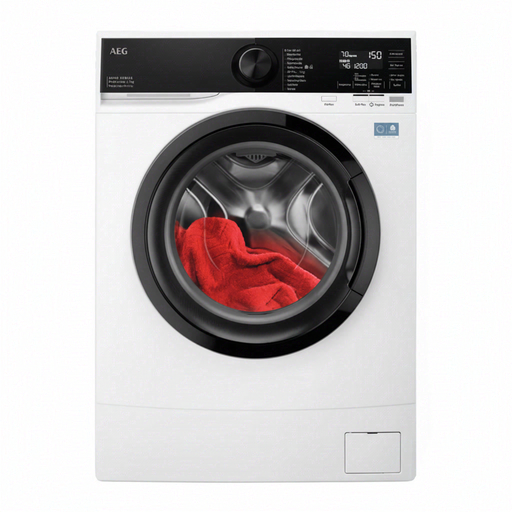
For households looking for a higher rated capacity than 6 kg; check that this specific model’s dimensions will fit the space available.
Features listed in the product name: 7 kg, 1400 rpm and energy class A.
 No image available
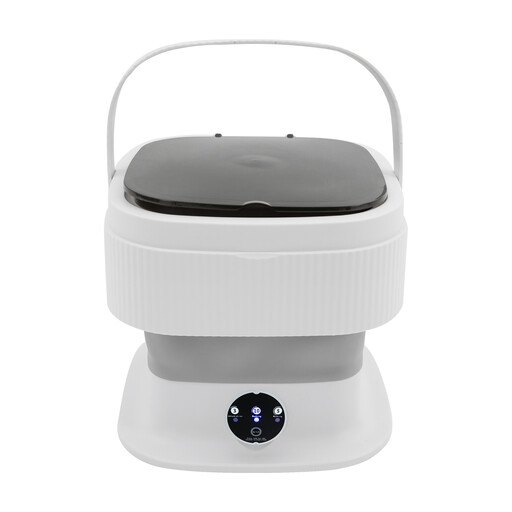
A possible option for very small loads and limited storage space; check that the opening and capacity will suit your T-shirts.
Features listed in the product name: 10 L, semi-automatic operation and dual rotation. The capacity in litres isn’t directly comparable with a rated capacity in kilograms.
 No image available
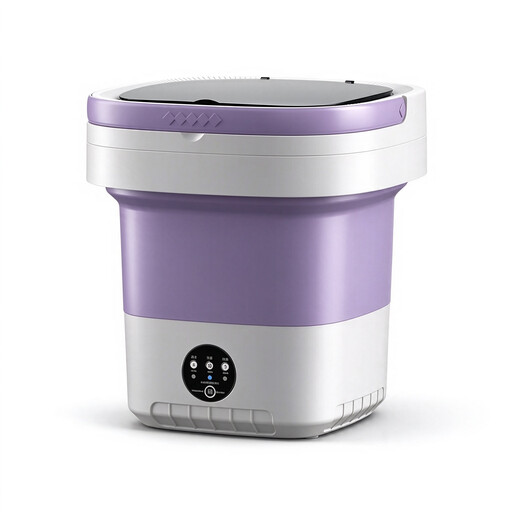
For very small loads and limited storage space; check that the capacity is enough for the clothes you plan to wash.
Features listed in the product name: 12 L, spin dryer and three wash modes. The capacity in litres isn’t directly comparable with a rated capacity in kilograms.
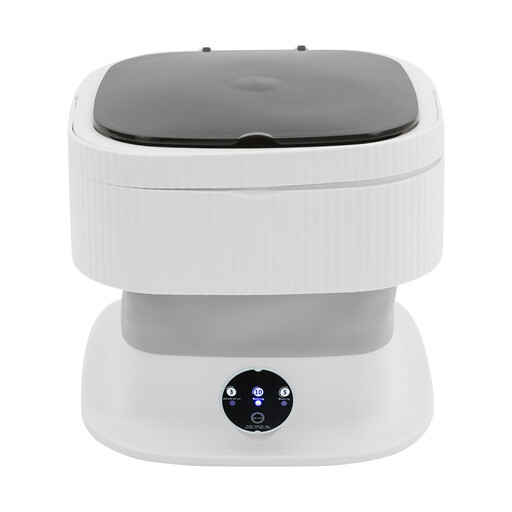 No image available
Could suit very small loads if you want to put the machine away when it’s not in use; check that it will work for your clothes and fit the space available.
Features listed in the product name: 10 L, three wash modes and touch controls. The capacity in litres isn’t directly comparable with a rated capacity in kilograms.
Start by checking the care label and how soiled the T-shirts are. The EU Eco 40–60 programme is intended for normally soiled cotton items that can be washed at 40 °C or 60 °C according to their care label; a 20 °C programme is available for lightly soiled cotton. Programme names don’t replace the care instructions on the garment.
The EU label for covered household washing machines uses classes A to G and shows, among other things, energy consumption per 100 Eco 40–60 cycles, water consumption, capacity and spin noise. The European Commission says this scale has been in use since 1 March 2021; the figures shown aren’t a guarantee for every wash programme.
A washer-dryer may be a good option if you need to wash and dry in one appliance and don’t have a practical place to dry clothes. The Verbraucherzentrale highlights that combined washing and drying uses more electricity and water, and that only part of the wash load can be dried straight away. So compare the washing and drying capacities separately.
Take wet laundry out promptly, dry the seal and detergent drawer, and clean the lint filter according to the instructions if there is one. The Verbraucherzentrale also recommends occasional 60 °C washes of white laundry using powder detergent for whites.
Measure more than just the machine: check the delivery route, connections and the space needed to open the door or lid. Compare the full dimensions of the specific model with the space available. If you’re considering a washer-dryer, also check that its washing and drying capacities suit your needs.