Households with a narrow laundry space
First, check which type of machine will actually fit, including the space needed to open the door or lid and room for the connections.


Start by measuring the space, connections and room needed to open the machine. If width is limited but there’s enough clearance above, a top-loading machine could fit; if you have enough width and room in front of the door, a front-loader is another option. Choose the capacity based on the total amount of laundry you wash regularly, check the care label on your pyjamas and compare the specific Eco consumption figures. A washer-dryer is worth considering if there’s also no suitable space for air-drying.
First, check which type of machine will actually fit, including the space needed to open the door or lid and room for the connections.
If you often wash small loads of pyjamas, don’t judge drum size and energy consumption on maximum capacity alone.
If there’s no suitable space for an airer as well as the machine, consider whether air-drying is possible or a washer-dryer might be a better option.
When choosing a washing machine for cotton pyjamas in a small laundry nook, consider the space available, your usual laundry load, fabric care and running costs.
A good fit if: Width is the main constraint and there’s enough room to open the lid fully. In its 2019 checklist, the Verbraucherzentrale typically describes top-loaders as 40–45 cm wide and 60 cm deep; specific model dimensions may vary.
Trade-off: A narrow design doesn’t automatically mean a shallower machine, and you’ll need enough clearance above it to open the lid.
A good fit if: There’s enough width beside the machine and room in front of the door. The Bosch WAN28127 is one specific example, with a width of 598 mm and a rated capacity of 8 kg, according to Bosch.
Trade-off: A higher rated capacity alone doesn’t make a machine better suited to frequent small loads of pyjamas. Check its consumption figures and suitable programmes too.
A good fit if: There’s no suitable space for air-drying as well as the machine, and the care label allows tumble-drying.
Trade-off: According to the Verbraucherzentrale, washer-dryers use more electricity and water for washing and drying than separate appliances. Compare the wash and wash-and-dry cycles, as well as their respective capacities.
| What matters | What to check when buying | Who is this important to? |
|---|---|---|
| Will it fit in the laundry space? | Measure the footprint, route into the room, connections and clearance with the lid or door fully open; check these against the dimensions of the specific model. | If the space is tight, I want to know whether the machine, connections and open lid or door will really fit. Around 36 % of consumers put fitting the laundry space first. |
| Drum size for smaller loads | Consider the total amount of laundry you usually wash and how often you do it; check the rated capacity, programmes and consumption figures for partial loads. | If I usually have only a few items to wash, I want to choose a drum size based on all my laundry, not just the maximum load. Around 29 % of consumers prioritise suitability for small loads. |
| Caring for cotton pyjamas | Check the care label and suitable cotton and Eco programmes; don’t assume special hygiene requirements based on the fabric alone. | I want to choose a programme that suits the care label, colour and how soiled my pyjamas are. Around 21 % of consumers prioritise the right fabric care. |
| Running costs and drying | Compare kWh per 100 Eco wash cycles and litres per Eco cycle; for washer-dryers, also check the wash-and-dry cycle and its capacity. | If I want to keep an eye on consumption and potential drying costs, I compare the figures for the cycles I’ll actually use. Around 14 % of consumers put running costs first. |
A top-loader needs room to open upwards, while a front-loader needs space in front of the door. Even a narrow top-loader can be around 60 cm deep.
Measure the space, connections and clearance needed to open the machine, then compare them with the dimensions of the specific model.
The Verbraucherzentrale’s 2019 checklist still uses A+++ ratings. Since 1 March 2021, washing machines have used the EU label’s A to G scale.
Compare the current rating and the specific kWh and litre figures for each model.
The wash cycle doesn’t show how much the combined wash-and-dry cycle uses; the load capacity for drying may also be lower. According to the Verbraucherzentrale, washer-dryers use more electricity and water than separate appliances when running a combined cycle.
Consider a washer-dryer mainly if there’s no suitable space for drying, and compare both cycles and their capacities.
Machine drying uses additional electricity and water.
The LTR6N40260 top-loader is one specific example for a narrow space, with a 6 kg load capacity.
The DTL 6B BK W FF top-loader offers another specific point of comparison for limited width and a 6 kg load capacity.
The WAN28127 front-loader is a useful comparison for laundry spaces with enough room in front of the door and to the sides.
The W1 front-loader WWB360 WPS PWash&8kg is another 8 kg model to compare if a front-loader will fit your space.
The washing machines below have stated capacities of 6 to 8 kg. For a small laundry nook, you’ll also need to check the specific external dimensions and clearance required to open each machine.
 No image available
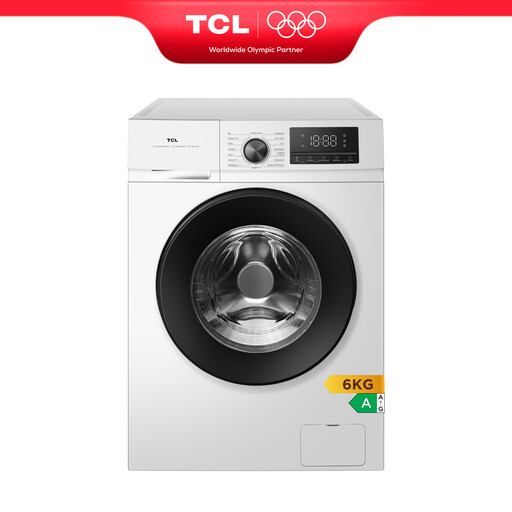
This could be worth considering if you’re looking for a stated capacity of 6 kg and a choice of wash options. Before choosing, check that the machine’s dimensions will fit your laundry space.
The product name lists a BLDC motor, steam wash function, 15 min quick wash, child lock, honeycomb drum and A energy efficiency class.
 No image available
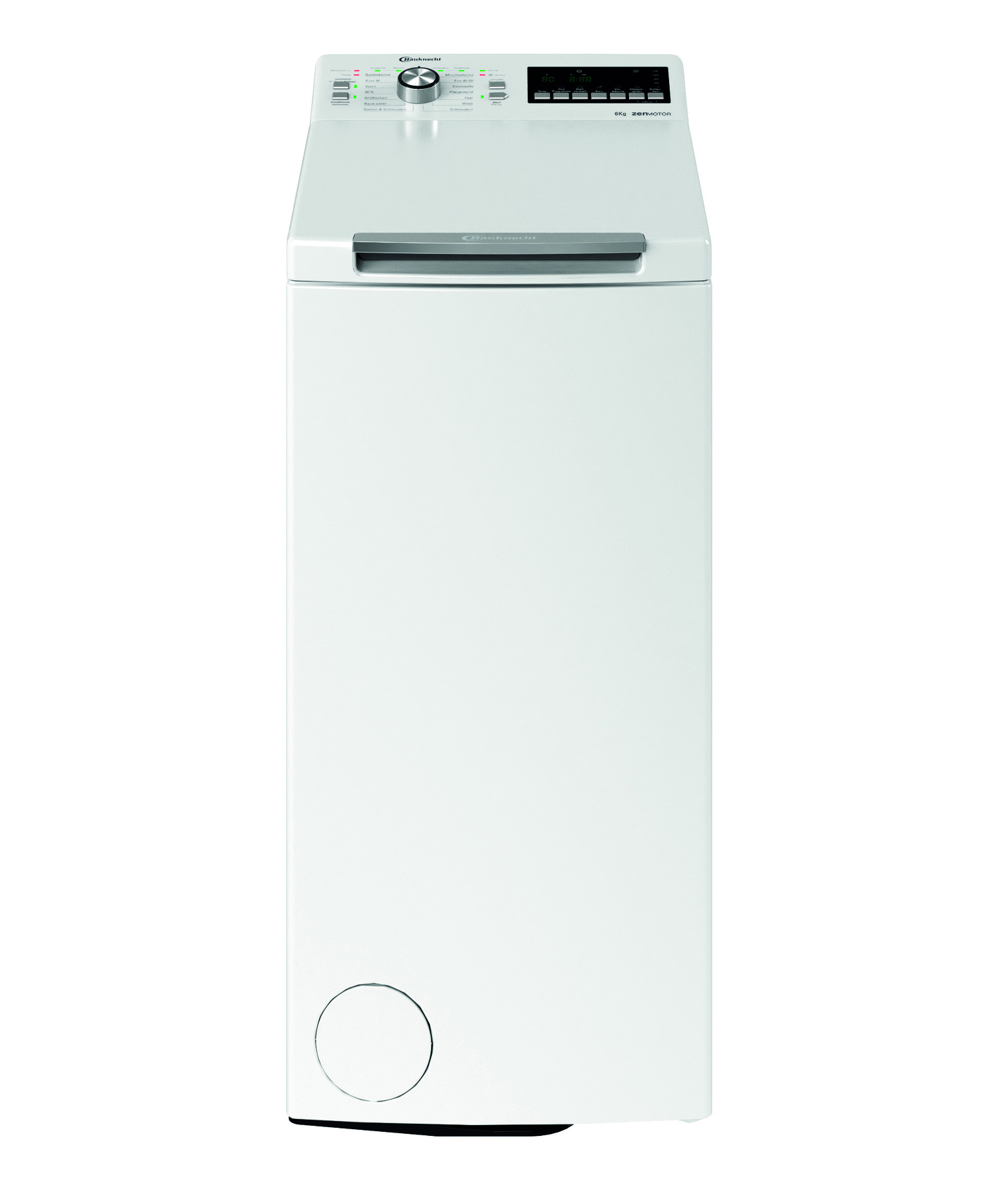
This top-loader could be an option if width is limited. Compare its dimensions with the available space and allow room to open the lid.
The product details list a width of 40 cm, a depth of 60 cm, a rated capacity of 6 kg and a spin speed of 1200 rpm. They also list B energy efficiency class, 48 kWh per 100 cycles, 43 l per cycle, 15 programmes and Eco 40–60.
 No image available
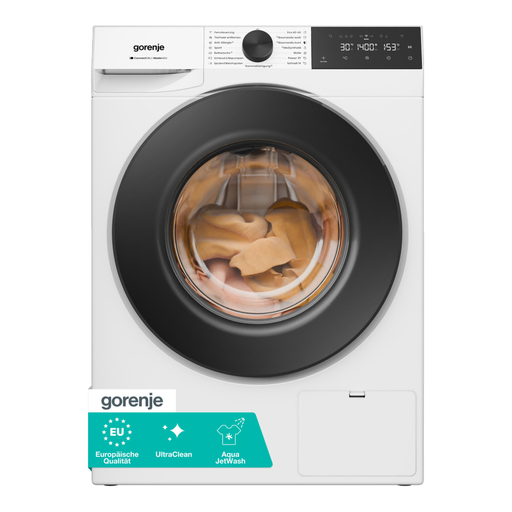
This front-loader could be an option if you have 600 mm of width and enough room in front of the door. Make sure to factor in its stated depth of 460 mm when measuring up.
The product details list an 8 kg capacity, 1400 rpm, A energy efficiency class, 43 kWh per 100 cycles and 41 l per cycle. Programmes include cotton and Eco 40–60, with 15 programmes in total.
 No image available
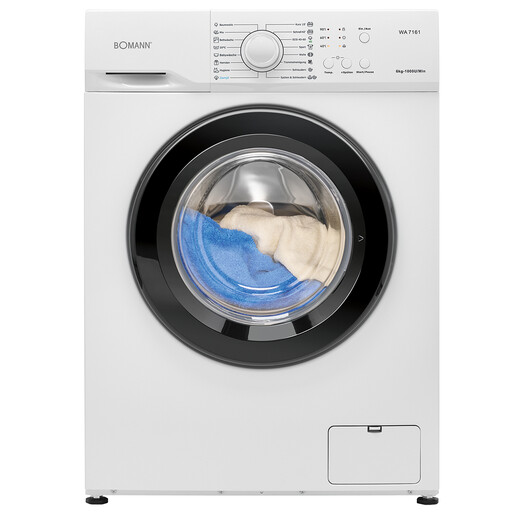
The stated capacity of 6 kg may suit smaller loads. If your laundry space is narrow, check the stated width of 60 cm.
The product details list a depth of 44 cm, 1000 rpm, 16 programmes and A energy efficiency class. They also list 42 kWh per 100 cycles and 36 l per cycle, as well as cotton programmes with temperature settings from cold to 90 °C.
 No image available
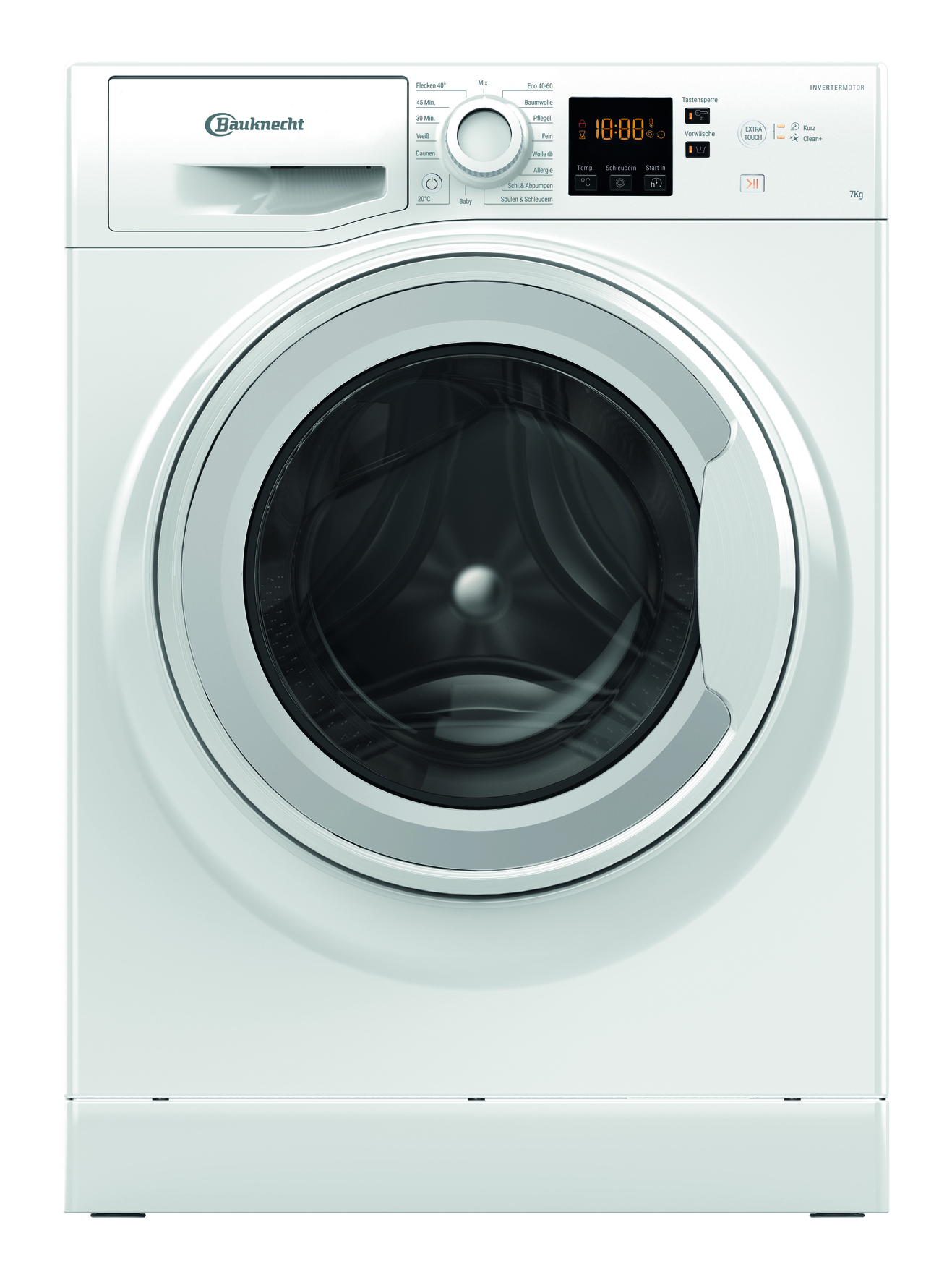
This front-loader will suit your laundry space only if you have enough room in front of the door as well as 59.5 cm of width. Its rated capacity is 7 kg.
The product details list a depth of 54 cm, A energy efficiency class, 45 kWh per 100 cycles and 45 l per cycle. Programmes include Eco 40–60, a 40 °C stain programme and automatic load adjustment.
Always check the care label first. The European Commission describes Eco 40–60 as a programme for normally soiled cotton that, according to its care label, can be washed at 40 °C or 60 °C. It isn’t a blanket recommendation for every pair of pyjamas.
No. According to the Umweltbundesamt, disinfection isn’t necessary for ordinary household laundry. If someone has a contagious illness or a weakened immune system, other measures may be needed. Follow the care label and ask a doctor about any specific health concerns.
Check the connections, installation space and protection against water damage, and discuss the installation with your landlord. The Verbraucherzentrale recommends doing so; this doesn’t mean there’s a blanket ban on using a washing machine in your home.
In its household advice, the Umweltbundesamt recommends running a 60 °C wash occasionally to prevent germs from building up in the machine. This is a maintenance recommendation for the machine, not advice to wash cotton pyjamas at 60 °C regardless of their care label.
New washing machines that are required to carry a label must follow EU energy labelling rules. According to the European Commission, the label must also be clearly visible when shopping online; washing machines use the A to G scale. The labelling requirement applies to market participants, not buyers.