People with limited space for a machine
Measure the width, depth and height, as well as the route into your home and the clearance needed to open the machine. Depending on what’s restricted, a different design may be more suitable.


First, measure the space for the machine, the route into your home and the clearance needed to open it. A slim front-loading machine can work when depth is limited, while a top-loader may suit a narrow space but needs room above it. For sportswear, the care label and a suitable wash programme are key. If you often wash small loads, the capacity and comparable energy and water figures matter too. A washer-dryer is mainly worth considering if you don’t have room for a clothes airer either.
Measure the width, depth and height, as well as the route into your home and the clearance needed to open the machine. Depending on what’s restricted, a different design may be more suitable.
If you regularly wash synthetic or outdoor clothing, the programme and temperature need to match the care labels. A dedicated sportswear programme isn’t the only option.
If you often wash individual loads of sports kit, choose a capacity and energy use that suit the amount of laundry you usually have – rather than simply going for the largest machine.
| Buying consideration | What to check | Who is this particularly important to? |
|---|---|---|
| Fitting the available space | Check the appliance dimensions, including any protruding parts, the route into your home, the connections and the space needed for the door or lid. The Verbraucherzentrale Nordrhein-Westfalen describes different designs as a guide, but you’ll need to measure the specific appliance to check it will fit. | If the alcove is tight, I want to know whether the machine, connections and opening will actually fit in my space. Around 29% of consumers put fit first. |
| Gentle care for sportswear | Match the care label, temperature and spin speed to the programme you choose. Bosch Hausgeräte Deutschland also suggests a delicate wash or 30 °C at a low spin speed for suitable sportswear. | When washing technical clothing, I follow the care label and want to avoid using an unsuitable setting. Around 29% of consumers prioritise fabric care. |
| Capacity for small loads | Compare the stated capacity with the amount of laundry you usually wash; the permitted load may vary between programmes. The Verbraucherzentrale recommends choosing an appliance size to suit your household. | If I often wash individual loads of sports kit, I want the drum to suit those as well as my other laundry. Around 24% of consumers put capacity for small loads first. |
| Noise, energy and water use, and drying space | Compare the spin noise and the energy and water figures. The European Commission notes that EU consumption figures are based on the defined eco 40–60 programme; they don’t automatically describe a sportswear programme. | If the machine is in my flat, I want to weigh up the spin noise and running costs. A lack of space for drying also affects my choice. Around 18% of consumers prioritise these operating and drying considerations. |
Slim front-loaders can vary in depth. A top-loader isn’t automatically shallower and needs clear space above the lid.
Measure the space and route into your home, then check the full depth of the specific model, its connections and the area needed to open it.
A quick programme may have its own load limit. Beko states that the Xpress programme on the WCL 71433 N has a maximum load of 2 kg; this doesn’t mean it’s suitable for every fabric.
Check the care label and the permitted load for the programme. For delicate fabrics, choose a suitable programme only.
The product page for the Beko WCL 71433 N uses the previous A+++ to D scale. According to the European Commission, household washing machines have used the A to G scale since 1 March 2021.
Use the current EU label to compare models, and check which programme the stated consumption figures refer to.
Space for a clothes airer affects whether a washer-dryer is a suitable option at all. Connections and water protection should also be considered when planning where to install the machine.
Before you buy, check where your laundry can dry, whether the care labels allow machine drying and what the installation space requires.
AEG gives the Slim front-loader LSR6FA75470 a maximum appliance depth of 487 mm and a rated capacity of 7 kg.
Bauknecht states that the DTL 6B BK W FF top-loader has a 6 kg capacity and is loaded from above.
Haier gives the Mini-Washer HW50-BP12307AU1 dimensions of 510 × 488 × 700 mm and a rated capacity of 5 kg.
LG gives the Slim-Fit front-loader F2X7SLIM9W a depth of 53.5 cm and a rated capacity of 9 kg.
Beko lists an Outdoor/Sports programme and a quick programme for loads of up to 2 kg for the WCL 71433 N.
This selection includes front-loaders and one top-loader for small flats. The right design depends on whether width, depth or clearance to open the machine is the main limitation.
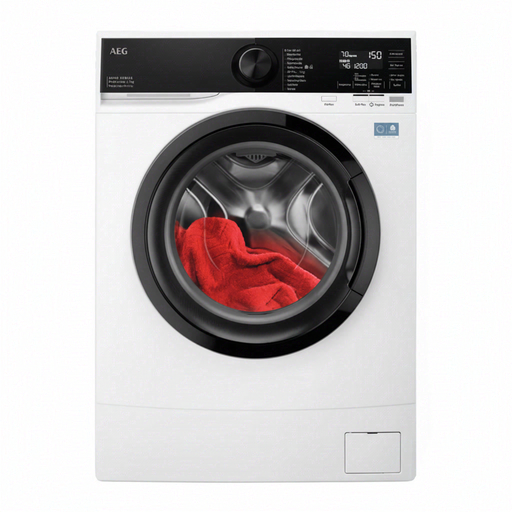 No image available
For a space with limited depth, if a front-loader suits your needs. Check that it will fit where you plan to install it.
AEG gives this model a rated capacity of 7 kg, a maximum appliance depth of 487 mm and a maximum spin speed of 1400 rpm.
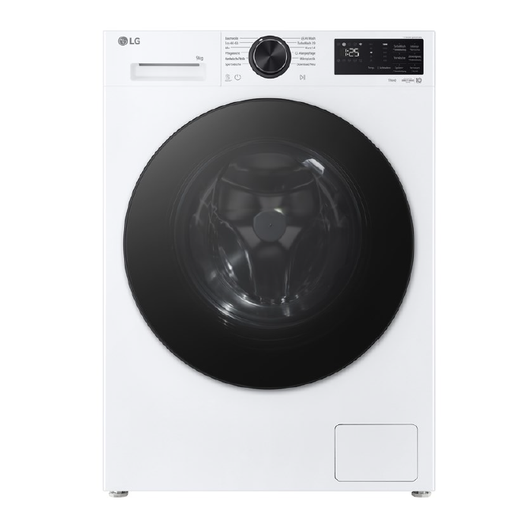 No image available
For households looking for a front-loader with a higher rated capacity, despite having limited depth.
LG gives this model a rated capacity of 9 kg and a depth of 53.5 cm. The product title states 1200 rpm.
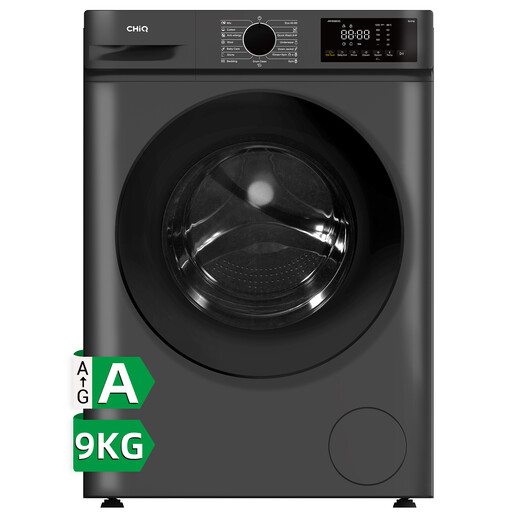 No image available
For spaces where width is limited. Check the stated width and allow room for connections and the door to open.
The product title states a rated capacity of 9 kg, a width of 465 mm and a 15-minute quick programme.
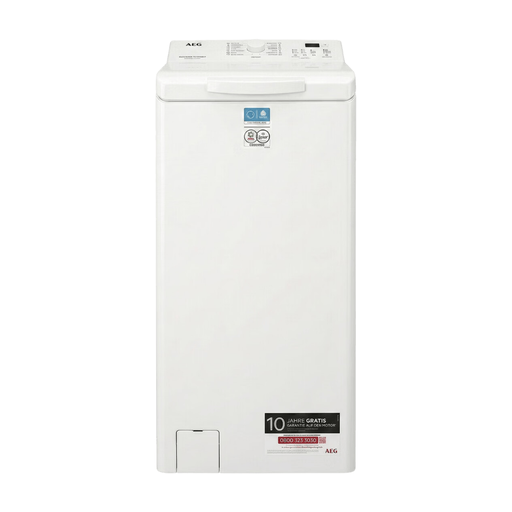 No image available
May be suitable if width is limited and there’s enough room above the machine to open it.
The product title states a rated capacity of 6 kg and 1400 rpm. Remember to allow for the space needed to open the lid.
 No image available
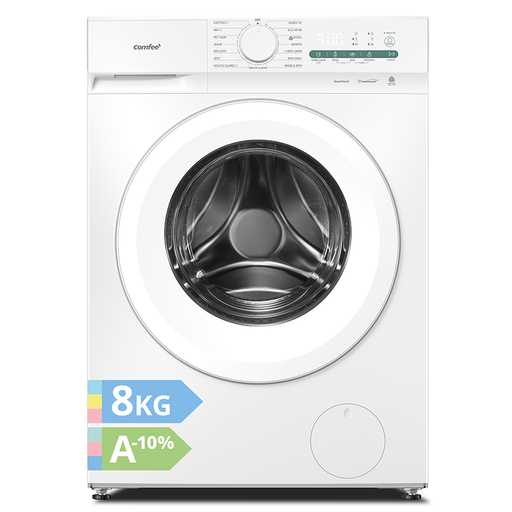
For households considering a front-loader with a stated rated capacity of 8 kg.
The product title states 8 kg, 16 programmes and an add-garment function. Check the dimensions and make sure the programmes suit your clothes before choosing this model.
No, a dedicated sportswear programme isn’t essential. Bosch Hausgeräte Deutschland also suggests a delicate wash or 30 °C at a low spin speed for suitable sportswear. Always follow the care label for each item.
Compare the machine’s full dimensions with the available space, allowing for connections, protruding parts, the route into your home and clearance to open it. If you’re choosing a top-loader, you’ll also need enough space above the machine to open it.
Energy information on the EU label for household washing machines is based on the defined eco 40–60 programme. According to the European Commission, the A to G scale has applied since 1 March 2021; the stated consumption can’t be directly applied to a different sportswear programme.
No. The Verbraucherzentrale considers a washer-dryer mainly as a space-saving option when there’s no room for either a separate tumble dryer or a clothes airer, and notes that combination appliances are less energy-efficient. Also check whether the care labels on your sportswear allow machine drying.
Check that the connections are suitable and that there’s adequate water protection, and speak to your landlord about where to install the machine if necessary. According to the Verbraucherzentrale, tenants generally can’t be categorically prevented from installing a washing machine in their flat. Questions about a shared laundry room, potential damage and insurance depend on the circumstances.