Start by measuring the space available, the connections and the clearance needed for the lid or door. If width is limited, a top-loader may fit; if depth is the issue, consider a shallow front-loader. Choose the drum capacity to suit the total amount of laundry you usually wash, and check the care labels on your towels and the available programmes. For hygiene reasons, the German Environment Agency recommends washing towels at 40 or 60 °C, while ‘Eco 40–60’ does not guarantee a selectable 60 °C wash.
Which designs may suit you
If your laundry nook is narrow
If width is limited, a top-loader may be an option. Remember to measure the appliance depth and allow enough room above it to open the lid. The North Rhine-Westphalia Consumer Advice Centre gives typical top-loader dimensions as 40–45 cm wide and 60 cm deep.
If you have limited depth
If there’s little room in front of or behind the machine, check the depth of the specific model, including the connections and door clearance. Haier points out that connections and design can affect the actual depth required.
If you have small towel loads
Choose the drum capacity based on your regular total laundry, not just a few towels. For hygiene reasons, the German Environment Agency recommends washing towels at 40 or 60 °C. You should also follow the care labels and check the programmes available on the model you choose.
What to look for when buying
First, check which dimensions and opening clearances your laundry area can accommodate. Then compare the programmes, load capacity and day-to-day running costs against your own laundry needs.
| Priority |
What to check before buying |
Who should pay particular attention |
| Fit and opening clearance |
Measure the width, depth and height of the space, as well as the connections and the fully opened lid or door. |
If my laundry area is cramped, I also measure the clearance above the lid or in front of the door. Around 31% of consumers put fit and opening clearance first. |
| Towel care |
Check the care labels and the available cotton programmes, including the temperature settings. |
If caring for my towels is especially important to me, I check their labels against the available programmes. Around 25% of consumers prioritise towel care. |
| Suitable load capacity |
Consider your usual total laundry load and the permitted load for the programmes you’ll actually use. |
If I regularly wash towels with other suitable laundry, choosing the right drum capacity matters to me. Around 19% of consumers put this first. |
| Energy use and water protection |
Compare kWh per 100 Eco cycles, litres per Eco cycle, spin noise in dB(A) and the stated water protection features. |
If energy use, noise or water protection matters particularly to me, I check the figures and details for the exact model. Around 13% of consumers prioritise these aspects. |
| Delivery and service |
Check what’s included in the delivery, whether installation is available, whether your old appliance can be taken away and who to contact about faults or repairs. |
If I need help with delivery or installation, I check what’s included before placing my order. Around 12% of consumers put the overall cost and service first. |
Common misconceptions when buying a washing machine
-
‘40 cm wide’ doesn’t automatically mean it will fit in any small space
According to Beko, the BWTL 6A W ES top-loader is 40 cm wide and 60 cm deep. You’ll also need enough clearance above it to open the lid.
Measure the space, connections and opening clearances, then compare them with the dimensions of the specific model.
-
‘Eco 40–60’ doesn’t guarantee a selectable 60 °C wash
The programme name doesn’t mean you can freely set the actual wash temperature to 60 °C. AEG explains that the temperature is fixed for the Eco 40–60 programme.
Check the care label and choose a suitable programme with the temperature you want, if the model allows you to select it.
-
Washer-dryers have different washing and drying capacities
The Haier HWD50-BP12307U1 has a stated washing capacity of 5 kg and a drying capacity of 2.5 kg. The Consumer Advice Centre also notes that washer-dryers use more electricity and water than separate appliances.
If you’ll actually use the drying function, check both capacities and the energy and water consumption figures.
-
Older energy label ratings aren’t directly comparable with today’s scale
Since 1 March 2021, the European Commission has used an A to G scale for household washing machines. Older ratings such as A+++ therefore can’t be compared directly with the current label.
Compare the current EU energy label for the specific model, and check which programme the consumption figures refer to.
Brands to consider for small laundry areas
AEG
The LTR6A41460 top-loader combines a 6 kg rated capacity with load adjustment, as described by AEG.
- AEG gives this model an A energy efficiency rating and states consumption of 42 kWh per 100 Eco cycles.
- Load adjustment is a manufacturer claim, not an independently measured energy saving. Also check the clearance needed for the lid and the installation dimensions.
Haier
The HW50-BP12307AU1 and HW70-BP14929 illustrate how front-loaders can differ in height and depth.
- Haier gives the HW50-BP12307AU1 dimensions of 510 × 488 × 700 mm and a 5 kg capacity; the HW70-BP14929 measures 595 × 477 × 850 mm and has a 7 kg capacity.
- These dimensions apply to the models listed, not every appliance from the brand. Check the connections, door clearance and programmes for each model individually.
Beko
The BWTL 6A W ES top-loader may suit a narrow space, provided it’s deep enough.
- Beko gives this model a 6 kg capacity, dimensions of 40 × 60 × 90 cm, an A energy efficiency rating and a spin noise level of 76 dB(A).
- Its narrow width doesn’t reduce the stated depth, and the lid needs clear space above it. Claims about EnergySpin are manufacturer comparisons made under the conditions stated.
Bauknecht
The DTL 6B BK W FF top-loader is another 6 kg model designed for a narrow space.
- Bauknecht gives this model dimensions of 40 × 60 × 90 cm, a B energy efficiency rating, Soft Opening and automatic drum positioning.
- The lid opens upwards and needs clearance. The comfort features listed apply to this model.
Bosch
The WGE02471 front-loader may be worth considering if you have enough depth and space in front of the door, as well as sufficient width.
- Bosch gives this model dimensions of 848 × 598 × 588 mm, a 7 kg capacity, AquaStop and an A energy efficiency rating.
- Compare the cabinet depth with the available space, and allow for the connections and the door’s swing.
Joybuy models at a glance
The range includes everything from a mini washing machine for very small loads to front- and top-loaders. Compare each appliance’s dimensions, connections and opening clearance with your laundry area; a product name alone doesn’t confirm that it will fit.
 No image available
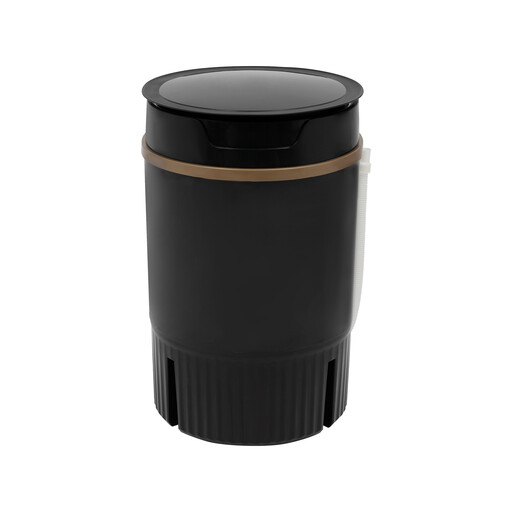
Portable mini washing machine, 4.5 l, semi-automatic
May suit very small towel loads; the product description lists towels as suitable laundry.
Maximum load: 0.8 kg. Separate spin cycle: 3 minutes. The appliance is semi-automatic.
View at Joybuy
 No image available
LG F2X7SLIM9W, 9 kg
Could be worth considering if you’re looking for a 9 kg front-loader. Check the Slim-Fit name against the appliance’s actual dimensions and the door clearance in your space.
The product details list 1,200 rpm, an A energy efficiency rating, a cotton programme and AquaLock water protection.
View at Joybuy
 No image available
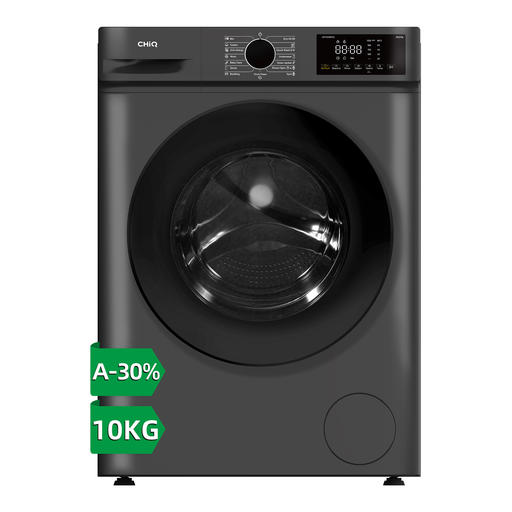
CHiQ JW105883G, 10 kg
Its stated width may be useful if space is tight; also check the depth, connections and clearance for the door to open.
The product details list a width of 465 mm, 1,400 rpm and a 15-minute quick wash.
View at Joybuy
 No image available
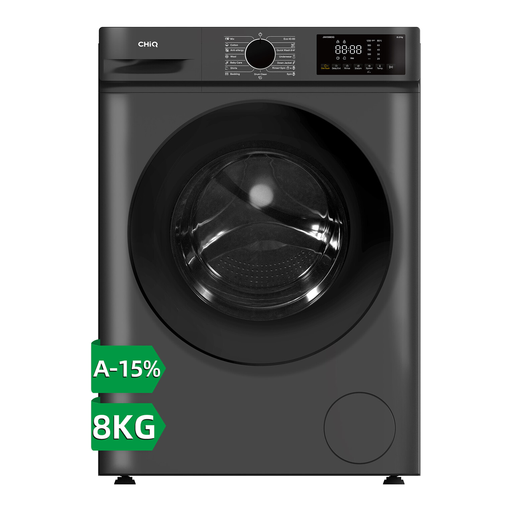
CHiQ JW85883G, 8 kg
Could be a good fit if you’re looking for a front-loader with the stated narrow width, and there’s enough room for the door to open and for the rest of the appliance to fit in your space.
The product details list a width of 465 mm, 1,400 rpm and a 15-minute quick wash.
View at Joybuy
 No image available
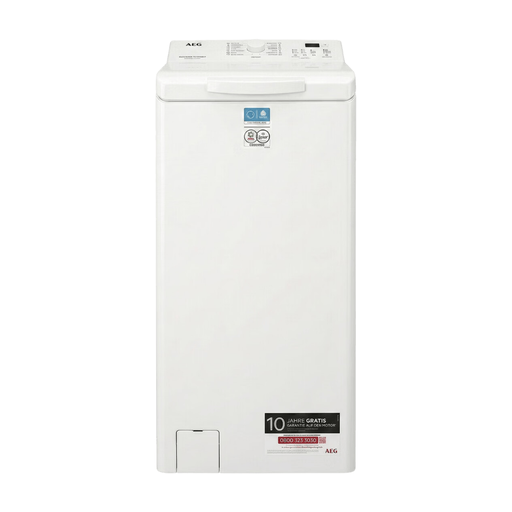
AEG LTR6A41460, 6 kg
May suit a narrow space, as long as there’s enough room above the top-loader to open the lid.
AEG gives this model a 6 kg capacity, 1,400 rpm, an A energy efficiency rating and consumption of 42 kWh per 100 Eco cycles. The product details also list ProSense load adjustment and Water Stop.
View at Joybuy
Frequently asked questions
Does ‘Eco 40–60’ mean my towels will actually be washed at 60 °C?
No. The programme name doesn’t guarantee a selectable or actual wash temperature of 60 °C. AEG explains that the temperature is fixed for this programme. Check the care label and choose a suitable programme with a selectable temperature if you need a specific setting.
What temperature is suitable for towels?
For hygiene reasons, the German Environment Agency recommends washing towels at 40 or 60 °C. Follow the care labels and check the available programmes; a promoted hygiene feature doesn’t replace these checks.
What capacity do I need for towels?
Choose based on the total amount of laundry you regularly wash, rather than just the number of towels. Also check the permitted load for the programme you actually plan to use.
Is a top-loader better suited to a small laundry area than a front-loader?
A top-loader may fit where width is limited, but it needs clear space above the lid and still requires enough depth. A shallow front-loader could work if there’s enough width and clearance for the door to open. Measure the specific model, including its connections.
Is a washer-dryer a good option if space is limited?
It depends on whether you really need the drying function and where else you could dry your laundry. The Consumer Advice Centre notes that washer-dryers use more electricity and water than separate appliances. According to the manufacturer, the Haier HWD50-BP12307U1 has a 5 kg washing capacity and a 2.5 kg drying capacity.


