Which type is right for you?

People with a narrow laundry alcove

If width is your main constraint, compare top-loaders by their actual dimensions and check that the lid can open fully. The Verbraucherzentrale identifies top-loaders as a narrower design, although dimensions vary by model.

Households with limited depth

If you have enough room at the sides but your alcove is shallow, a shallow front-loader could be an option. Also check that there’s enough space in front to open the door.

Small households that regularly wash towels

If you regularly wash smaller loads of towels, choose a drum size that suits the amount of laundry you wash overall. Check the care labels too, and make sure you have somewhere suitable to dry them.

What should you look for when buying?

Top-loader

A good choice if: the alcove is narrow and there’s enough room above the machine to open the lid.

Things to consider: The lid needs clear space above it, and dimensions vary by model.

Shallow front-loader

A good choice if: depth is your main constraint and the door can open freely.

Things to consider: A shallower machine isn’t necessarily narrower.

Washer-dryer

A good choice if: there’s no room for a clothes airer or separate tumble dryer as well as a washing machine.

Things to consider: The Verbraucherzentrale notes that washer-dryers use more electricity and water, and that the load they can dry straight after washing is smaller than the washing load.

Criteria What to check before buying Who should pay particular attention?
Space and opening clearance Measure the alcove and the space needed to open the machine; compare these with the appliance’s full dimensions. If my alcove is narrow, or there’s little room above the machine or in front of the door, I want to avoid buying one that fits but can’t be opened. Around 31% of consumers put available space first.
Towel care Check the care labels and look for suitable cotton programmes with appropriate temperatures. If I wash towels regularly, I want to be able to choose programmes that suit the fabric and how soiled it is. Around 25% of consumers prioritise towel care.
Drum size Estimate your typical laundry load and compare the rated capacity with the load limits for the programmes you use. If my towel loads are small or vary in size, I still want a drum that suits the rest of my laundry. Around 19% of consumers focus mainly on choosing the right capacity.
Running costs Compare the EU label’s electricity and water figures on a like-for-like basis, and take the programmes you actually use into account. If running costs matter to me, I want to compare consumption figures across models rather than look only at drum size. Around 13% of consumers put running costs first.
Noise and water protection Check the spin noise level on the EU label and the type of water-protection system in the model specifications. If the machine is near living areas or inside my flat, I want to consider noise and the risk of water damage. Around 12% of consumers prioritise these risks at home.

Common buying mistakes

  • Comparing only the appliance width

    A machine may fit in the alcove but still be unusable if there isn’t enough room to open the lid above it or the door in front.

    Measure the space and opening clearance, then compare them with the appliance’s full dimensions.

  • Assuming a quick programme is suitable for every towel wash

    A short, low-temperature programme won’t necessarily suit every load of towels or every care label.

    Take fabric care and how soiled the towels are into account. For hygiene reasons, the Umweltbundesamt recommends washing towels at 40 or 60 °C. It also says that normally soiled laundry in healthy households doesn’t need any extra disinfection.

  • Choosing a washer-dryer just because space is tight

    The space-saving benefit matters most when there’s no room to air-dry laundry either. The load that can be dried straight after washing is smaller than the washing load.

    First check how much drying space you have. If you’re considering a washer-dryer, compare the figures for washing and for washing plus drying separately.

Key brands to consider

Bauknecht

Top-loaders can be a good option for narrow spaces; compare the exact dimensions of each model.

  • Bauknecht lists the WAT DR 2 N as 40 cm wide, with a 6 kg capacity and cotton programmes at 40 °C and 60 °C.
  • The stated dimensions of 40 × 60 × 90 cm apply to this model and shouldn’t be assumed for other Bauknecht appliances.

AEG

The LTR6N40260 top-loader has a 6 kg capacity and could suit households with varying load sizes.

  • According to AEG, ProSense adjusts the time, water and energy used to suit the load size.
  • AEG lists this model in energy class B, with 48 kWh per 100 Eco cycles. Check that its dimensions suit your alcove.

Beko

A shallow front-loader could be an option if depth is limited but you have enough width.

  • Beko lists the WML61023NGR1 as 44 cm deep, with a 6 kg capacity.
  • The model is 60 cm wide and has an E energy rating according to Beko, so it won’t fit every narrow alcove.

Bosch

A front-loader is worth comparing if your space can accommodate a standard width and depth.

  • Bosch lists the WAN282EK1 as measuring 845 × 598 × 590 mm (H × W × D), with an 8 kg capacity and AquaStop.
  • These dimensions won’t suit every tight space. Also check that an 8 kg capacity is right for the amount of laundry you wash overall.

Joybuy models for tight spaces

The Joybuy models below include front- and top-loaders with a range of stated depths. Compare their dimensions with your alcove and choose a capacity that suits the amount of laundry you wash overall.
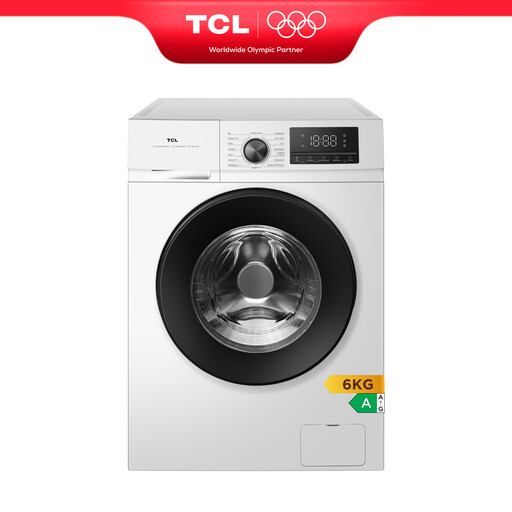
TCL FF0106WA2AMDE washing machine

TCL FF0106WA2AMDE, 6 kg

As a front-loader with a stated depth of 45 cm, this model could suit a shallow alcove, provided there’s enough width and room in front of the door.

The product details list a 6 kg capacity, a BLDC motor and a 15-minute quick programme.

View at Joybuy

LG F4WR5035 front-loader

LG F4WR5035, 13 kg

With a rated capacity of 13 kg, it’s particularly important to check that the drum size suits the amount of laundry you wash overall and that the machine fits in your available space.

The product details list dimensions of 600 × 850 × 615 mm, a cotton programme at 40 °C and 60 °C, and LoadSense.

View at Joybuy
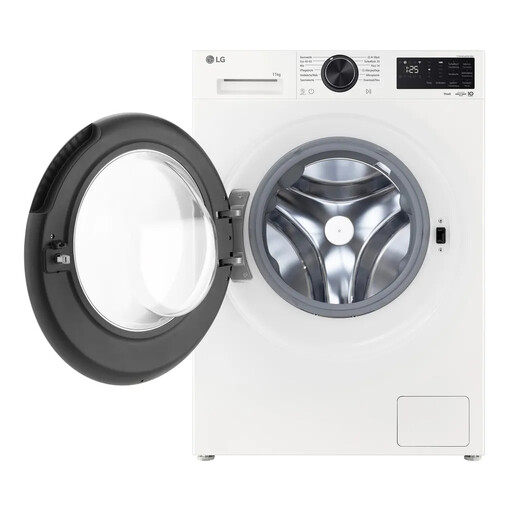
LG F4WX701Y washing machine

LG F4WX701Y, 11 kg

Its stated depth of 565 mm may be useful for a shallow alcove. Also check the width, opening clearance and capacity against the amount of laundry you wash overall.

The product details list a cotton programme at 40 °C and 60 °C, as well as AI Wash and LoadSense.

View at Joybuy
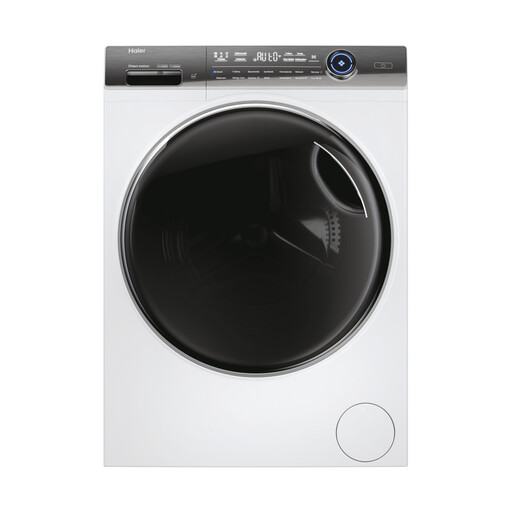
Haier I-Pro 7 Plus HW80-BD14979EU1 top-loader

Haier I-Pro 7 Plus HW80-BD14979EU1

As a top-loader, this model could be an option where width is limited, provided the lid can open fully.

The product details list a width of 60 cm and a depth of 50 cm, as well as load detection. Check the dimensions against your available space.

View at Joybuy
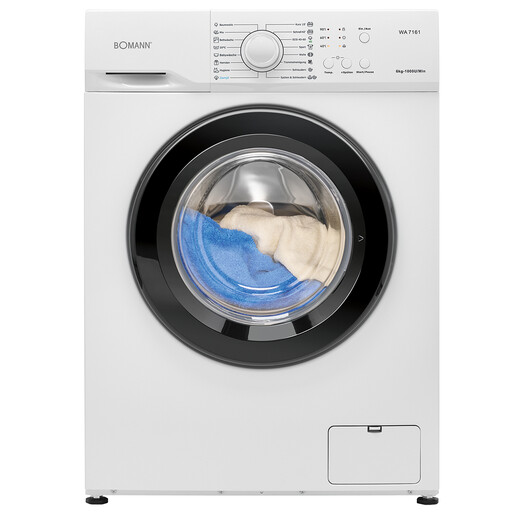
Bomann WA 7161 washing machine

Bomann WA 7161, 6 kg

Its stated depth of 44 cm could help if space is limited behind the machine. It’s 60 cm wide and needs room in front for the door to open.

The product details list a 6 kg capacity, 16 programmes and temperature settings of 40 °C and 60 °C.

View at Joybuy

Frequently asked questions

What temperature should I wash towels at?

For hygiene reasons, the Umweltbundesamt recommends washing towels at 40 or 60 °C. Check the care label too. The Umweltbundesamt says that normally soiled laundry in a healthy household doesn’t need any extra disinfection.

Does a top-loader always save space?

No, it depends on which dimension is limited in your alcove. A top-loader may fit where width is restricted, but it needs clear space above the lid. If depth is limited, a shallow front-loader could be an option, provided there’s enough room in front of the door.

What should I check before installing a washing machine in a rented flat?

Confirm the installation location and required connections in advance, and check whether there are any specific requirements for your flat. The Verbraucherzentrale also advises considering your insurance cover and the risk of water damage. This doesn’t mean there’s a blanket permission or ban that applies to every home.

How can I compare running costs?

Compare the figures on the EU energy label, including kWh per 100 Eco wash cycles and litres per Eco cycle. For a washer-dryer, compare the washing cycle and the complete wash-and-dry cycle separately.

Which energy label applies to household washing machines?

EU Regulation 2019/2014 covers energy labelling and product information for household washing machines and washer-dryers. The label makes it easier to compare consumption, but it won’t tell you whether the dimensions or programmes suit your home and towels.