Which option suits you?

Limited drying space, but somewhere to hang clothes

If you can air-dry your pyjamas in smaller loads, compare spin performance and make sure you have enough hanging space. Damp washing increases humidity indoors, so the German Environment Agency recommends airing rooms regularly.

Nowhere suitable to hang clothes

A washer-dryer could be a good fit if the care label says your pyjamas are suitable for tumble drying and the load fits within the lower drying capacity. The German consumer advice centre highlights the space-saving benefit of these combination appliances when there is no room for either a clothes airer or a separate appliance.

A narrow space for your appliance

If width is your main constraint, a top-loading washing machine could be an option. According to the manufacturer, the Bauknecht DTL 6B BK W FF is 40 cm wide. You’ll still need enough room to open the lid and dry your washing.

What to look for when buying

Washing machine with air-drying

A good fit if: you have a suitable place to hang your pyjamas to dry.

The trade-off: there’s no machine drying, so you’ll still need space and time to hang them up.

Washer-dryer

A good fit if: you have neither a suitable clothes airer nor room for two appliances, and the care label allows tumble drying.

The trade-off: drying capacity may be lower than washing capacity, and machine drying uses additional energy.

Narrow top-loader

A good fit if: width is your main constraint and there’s room to open the lid from above.

The trade-off: a narrower appliance won’t give you anywhere to dry clothes; check that the capacity and clearance above the machine are suitable.

Buying priority What to check Who is it most relevant to?
Residual moisture Compare spin-drying efficiency classes and adjustable spin options; the maximum spin speed alone doesn’t tell you how damp your washing will be. If you have little hanging space and want to minimise residual moisture, spin-drying efficiency is key. Around 25% of consumers name this as their main priority.
Drying without hanging space Check the care label for tumble-drying suitability, the drying capacity and the energy consumption of a complete wash-and-dry cycle. If you have nowhere suitable to hang clothes, machine drying may be a better option – provided the care label and load size are right. Around 25% of consumers say drying without hanging space is their main priority.
Fabric care Check the wash tub, underline and tumble-drying symbol on each garment; don’t exceed the stated maximum temperature. If you want to follow the care symbols on your cotton pyjamas, choose the temperature, spin and drying settings accordingly. Around 19% of consumers name fabric care as their main priority.
Space for the appliance Measure the width, depth and height; for a top-loader, also check the lid’s opening direction and the clearance above the appliance. If your washing machine space is narrow, the appliance needs to fit the alcove and be easy to open. Around 19% of consumers say space for the appliance is their main priority.
Running costs Compare kWh per 100 cycles and water consumption using the relevant label figures; for a washer-dryer, compare washing and complete wash-and-dry cycles separately. If you want to keep an eye on electricity and water use over time, compare the figures for the cycles you actually plan to use. Around 12% of consumers name running costs as their main priority.

Common buying mistakes

  • Looking only at the maximum spin speed

    Actual residual moisture doesn’t depend solely on the stated maximum spin speed; an appliance may reduce the speed if the load is unbalanced.

    Compare the spin-drying efficiency class and adjustable programmes too. And always follow the care label on your pyjamas.

  • Assuming washing and drying capacities are the same

    With a washer-dryer, the permitted drying load may be smaller than the washing load. You may need to split a larger load before drying it.

    Check both capacity figures for the specific model, and only tumble-dry pyjamas if their care label allows it.

    Splitting a load may mean an additional drying cycle, which takes more time and energy.

  • Thinking a narrow top-loader solves the lack of drying space

    A top-loader can save floor space, but it won’t solve the question of where to dry your wet pyjamas.

    Plan for the appliance and drying space separately, and allow enough clearance to open the lid from above.

  • Comparing energy figures for different cycles directly

    A wash-only cycle and a complete wash-and-dry cycle are not directly comparable. The heat pump technology used in one model isn’t a feature you can assume all washer-dryers have.

    Compare the kWh figures and, where relevant, water consumption for the cycle you actually intend to use.

Brands to consider

Beko

The BM3WFU4841A is a front-loading washing machine with an 8 kg capacity and a maximum spin speed of 1,400 rpm. It may suit households that can hang their washing out to dry afterwards.

  • Beko lists an A energy rating and a spin noise level of 76 dB(A) for this model.
  • Beko’s EnergySpin energy-saving claim is based on a comparison with a specific older Beko model; it doesn’t demonstrate lower energy use across brands.

Siemens

According to Siemens, the iQ300 WM14N127 is a front-loading washing machine with an 8 kg capacity and a maximum spin speed of 1,400 rpm, suited to air-drying your washing afterwards.

  • The manufacturer states a maximum spin speed of 1,400 rpm.
  • The appliance may automatically reduce the speed if the load is unbalanced. So compare spin-drying efficiency and dimensions too.

Bauknecht

The DTL 6B BK W FF top-loader has a 6 kg capacity and is designed for a narrow space.

  • Bauknecht lists a width of 40 cm and a top-opening lid.
  • This appliance won’t dry your pyjamas. Check that 6 kg is enough and that there’s room to open the lid.

Bosch

According to Bosch, the Series 6 WGG244F40 is a front-loading washing machine with a 9 kg capacity and a maximum spin speed of 1,400 rpm.

  • Bosch lists AquaStop and an appliance width of 598 mm.
  • If space is tight, check the full appliance dimensions and make sure it will fit the installation space.

AEG

The 9000 SensiDry L9WEF80690 is a washer-dryer option featuring heat pump technology, with a 9 kg washing capacity and a 6 kg drying capacity.

  • For this model, AEG lists 49 kWh per 100 wash-only cycles and 252 kWh per 100 complete wash-and-dry cycles.
  • These figures relate to different cycles. The heat pump technology in this model isn’t a standard feature of all washer-dryers.

Related products from Joybuy

The models below include washing machines for air-drying your washing afterwards, as well as washer-dryers for machine drying. For washer-dryers, make sure the care label and drying capacity are suitable for the load you have in mind.
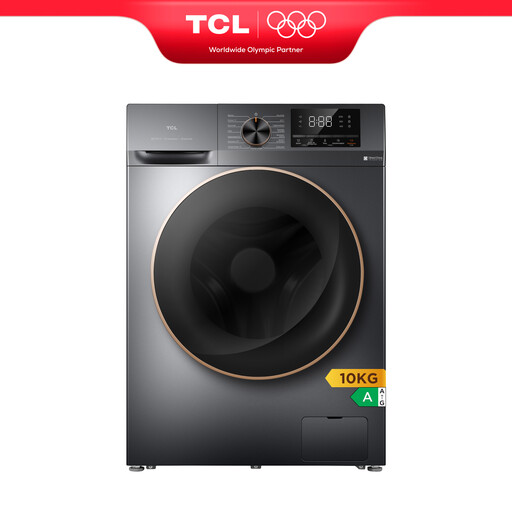
TCL FP2210SA0AMDE washing machine

TCL FP2210SA0AMDE washing machine

A washing machine for households with a suitable place to air-dry their pyjamas afterwards.

10 kg capacity; A energy rating according to the product name.

View at Joybuy
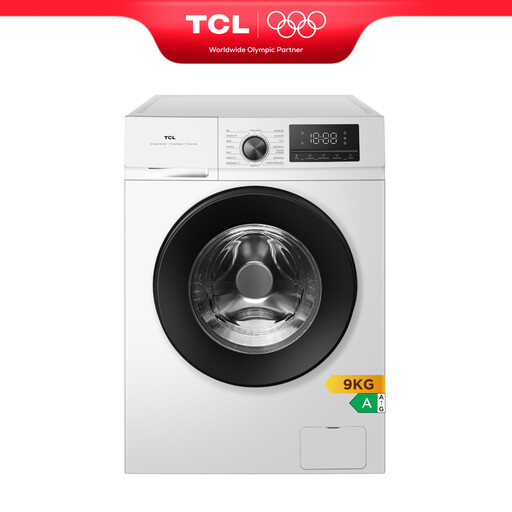
TCL FF0109WA2AMDE washing machine

TCL FF0109WA2AMDE washing machine

A washing machine for households with a suitable place to hang their pyjamas after washing.

9 kg capacity; A energy rating according to the product name.

View at Joybuy

LG WT1210EGF WashTower with washing machine and heat pump tumble dryer

LG WT1210EGF WashTower

A combined washing and drying solution for households whose pyjamas can be tumble-dried according to the care label.

12 kg washing capacity and 10 kg drying capacity; heat pump tumble dryer according to the product name.

The drying capacity is lower than the washing capacity. Keep your drying load within the lower limit.

View at Joybuy

LG WT1210WWF washer-dryer

LG WT1210WWF washer-dryer

A wash-and-dry solution in one appliance if you have nowhere suitable to hang clothes and the care label allows tumble drying.

12 kg washing capacity and 10 kg drying capacity; heat pump technology according to the product name.

The drying capacity is lower than the washing capacity. Plan your drying load accordingly.

View at Joybuy
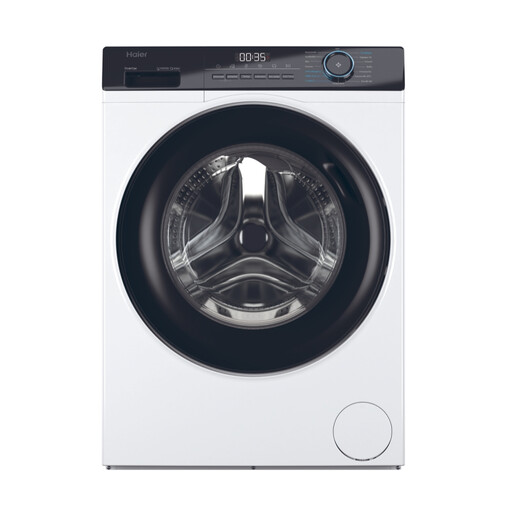
Haier I-PRO SERIES 3 washing machine

Haier I-PRO SERIES 3 washing machine

A washing machine for households that can air-dry their pyjamas after washing.

9 kg capacity, maximum spin speed of 1,400 rpm and A energy rating according to the product name.

Also compare spin-drying efficiency and choose a setting that suits the care label.

View at Joybuy

Frequently asked questions

Is 40 °C or 60 °C right for every pair of cotton pyjamas?

No. The number in the wash tub on the care label shows the maximum temperature allowed for that garment; an underline indicates a gentler wash. The Eco 40-60 programme is intended for normally soiled cotton garments with the relevant care label, so it isn’t suitable for every pair of pyjamas by default.

Can a washer-dryer dry a full wash load straight away?

Not necessarily. According to AEG, the L9WEF80690 has a 9 kg washing capacity and a 6 kg drying capacity. Check both figures for the specific model and split a larger load before drying it.

What should I bear in mind when drying clothes indoors?

The German Environment Agency recommends avoiding drying clothes in living areas where possible. If you need to, make sure you air the room more frequently to remove the extra moisture.

How do I compare the energy figures for a washing machine and a washer-dryer?

Compare figures for the same type of use. The German consumer advice centre lists kWh per 100 Eco wash cycles among the figures for washing machines; the EU label for washer-dryers shows wash-only and complete wash-and-dry cycles separately. Check the water consumption for each cycle too.

Can I put an old washing machine in household rubbish in Germany?

No. Electrical appliances must be collected separately and can, for example, be taken to a local collection point. According to the stiftung elektro-altgeräte register, retailers must, under certain legal conditions, take back a similar old appliance free of charge when supplying a new one; other services are treated separately.