Households with no drying space
If there’s nowhere to put a clothes airer, a washer-dryer can wash and dry small loads of towels in the same appliance footprint. Pay particular attention to its drying capacity.


If you can dry towels in a small, usable, well-ventilated space, a suitably sized washing machine with air-drying is enough; the German Environment Agency recommends air-drying as an energy-efficient method. If you don’t have the space, a washer-dryer can wash and dry small loads in the same appliance footprint – but check its lower drying capacity and the energy use of a complete wash-and-dry cycle. If you dry clothes in a machine frequently, it’s also worth comparing the exact models’ energy label figures and, if you have room for two appliances, considering a separate washing machine and tumble dryer.
If there’s nowhere to put a clothes airer, a washer-dryer can wash and dry small loads of towels in the same appliance footprint. Pay particular attention to its drying capacity.
If you can hang towels up but want to use as little space as possible, a suitably sized washing machine with air-drying could be a good option. The German Environment Agency recommends ventilating rooms when drying clothes indoors.
If you use a tumble dryer regularly, compare washer-dryers with a separate washing machine and tumble dryer – provided you have space for two appliances. The key factors are their capacities and the energy label figures for the cycles you actually use.
A good fit if: you can hang towels in a suitable space and ventilate the room when drying them indoors.
Bear in mind: Your laundry will need time and space to dry.
A good fit if: you only have space for one appliance and want to dry small loads without transferring them.
Bear in mind: Drying capacity is often lower than washing capacity; the Verbraucherzentrale (Germany’s consumer advice centre) notes that many washer-dryers use more electricity and water than separate appliances.
A good fit if: you dry clothes in a machine frequently and want a washer-dryer whose energy figures you can compare by exact model.
Bear in mind: Heat pump technology alone doesn’t tell you a specific model’s energy use or programme duration.
A good fit if: you have space for two appliances and regularly dry larger loads of laundry.
Bear in mind: You’ll need space for both appliances; compare the energy figures for the specific models.
| Priority | What to check before buying | Who is it important for? |
|---|---|---|
| Drying without needing extra space | Check the washing and drying capacities separately; your towel load must fit within the permitted drying load. | If there’s no room for a clothes airer, I want to dry small loads of towels without needing a separate drying space. Around 40% of consumers put drying without extra space at the top of their list. |
| Low energy use when air-drying | For washing machines, compare the kWh per 100 Eco wash cycles and choose a drum capacity that suits your laundry load; also consider drying space and ventilation. | If I can hang towels up, I don’t want to need a drying cycle for every load. Around 30% of consumers prioritise air-drying and low running costs. |
| Energy use and capacity when drying frequently | For washer-dryers, check the kWh per 100 complete wash-and-dry cycles and the drying capacity; if you have enough space, compare a separate tumble dryer too. | If towels regularly go in the tumble dryer, the energy use of a complete cycle and a suitable load size matter to me. Around 20% of consumers focus mainly on frequent machine drying. |
| Towel washing and care | Check the care label, wash programme and temperature; adjust the detergent to the load size and how soiled the laundry is. | If cleaning my towels properly is my priority, I want to choose a wash programme and temperature that suit how they’re used. Around 10% of consumers put towel care first. |
For many washer-dryers, the permitted drying load is smaller than the washing load. For example, Bosch lists a 9 kg washing capacity for the WNC244070, but 6 kg for the combined wash-and-dry cycle.
If you want to dry towels without taking them out, first check the stated drying capacity and compare it with the size of your usual load.
If the washing load is larger than the drying capacity, some of the laundry will need to be dried elsewhere or put through another cycle later.
The energy label shows separate figures for washing only and for the complete wash-and-dry cycle. For example, LG gives the W4WR32963 an A rating for washing and a D rating for washing and drying together.
If you dry clothes regularly, compare the label figures for complete cycles on the same basis, rather than looking only at the wash-cycle figures.
If you use the drying cycle frequently, ongoing electricity and, depending on the appliance, water costs can add up.
Drying technology is no substitute for a suitable wash programme or following the care label. Advice on washing temperature may also vary depending on whether you’re washing everyday household towels or tea towels.
Check the care label, wash programme and permitted temperature separately from the drying capacity. The Verbraucherzentrale gives different advice for household towels and tea towels.
AEG’s range includes the 9000 AbsoluteCare LWR9W81609 and 9000 SensiDry L9WEF80690 washer-dryers, both with heat pump technology and a drying capacity of 6 kg.
The Bosch WNC244070 is a washer-dryer with separate figures for washing and drying capacity.
LG documents models with different capacities and drying systems, including the W4WR32963 washer-dryer and the HPWD096C.
The WD2PA1X64ADAAW/DE is a freestanding washer-dryer listed by Gorenje with a 10.5 kg washing capacity and a spin speed of 1,400 rpm.
The Miele WT1 WTR870WPM is a washer-dryer with an 8 kg washing capacity and a 5 kg drying capacity.
The models below include washing machines for air-drying afterwards, as well as combined washing and drying solutions. A separate heat pump tumble dryer is also included as an alternative if you have enough space.
 No image available
For households looking to combine washing and drying functions in a single tower unit.
12 kg washing capacity; 10 kg drying capacity; Dual-Inverter heat pump; 1,350 rpm.
 No image available
For anyone looking to combine washing and subsequent drying in one appliance.
12 kg washing capacity; 10 kg drying capacity; Dual-Inverter heat pump; Smart Pairing.
 No image available
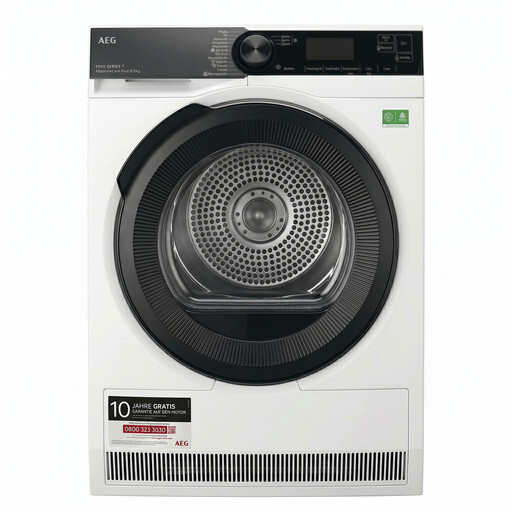
This model could work as a separate tumble dryer if you have room for another appliance alongside your washing machine.
8 kg drying capacity; heat pump tumble dryer.
 No image available
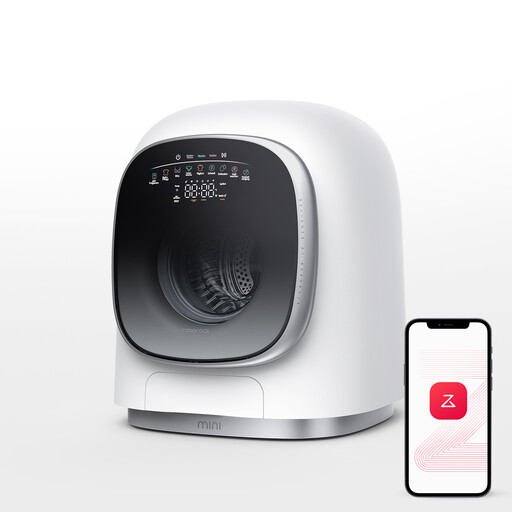
For very small towel loads, provided the stated drying capacity of 0.5 kg per cycle is enough.
1 kg washing capacity; 0.5 kg drying capacity; more than 20 wash and dry programmes; low-temperature drying cycle.
 No image available
For households looking for a slim-fit washing machine and able to dry towels afterwards in a suitable space.
9 kg washing capacity; 1,200 rpm; Slim Fit; energy efficiency class A.
No, the right temperature depends on how the towels are used. The Verbraucherzentrale says that 40 °C is sufficient in households with healthy members and recommends washing at 60 °C occasionally, preferably with a heavy-duty detergent. Its food hygiene advice recommends washing tea towels regularly at a minimum of 60 °C. Always check the care label too.
Yes, if you have a suitable place to dry them; remember to allow for extra ventilation. The German Environment Agency recommends avoiding drying laundry in living spaces where possible and ventilating more when drying indoors can’t be avoided.
If you want to dry clothes in the machine after washing, compare the energy label figure in kWh per 100 complete wash-and-dry cycles. The figure for 100 wash-only cycles relates to a different type of use; check the washing and drying capacities separately too.
The stated drying capacity is the figure to follow, and it may be lower than the washing capacity. For example, Bosch lists 9 kg for washing and 6 kg for the combined wash-and-dry cycle on the WNC244070; compare the figures for the specific model with the size of your usual towel load.
Measure the space for the specific appliance and check the installation instructions, as well as the required water, drainage and electrical connections. For example, Bosch lists dimensions of 848 × 598 × 622 mm for the WNC244070; these measurements don’t apply to other models and may not include the clearance needed for connections.