Families with several duvet covers
If you regularly have several large items to wash, the drum should suit your usual loads. The rated capacity alone doesn’t tell you how much laundry is allowed in a particular programme.


Choose the drum capacity to suit your family’s usual loads, and check that large duvet covers will have enough room in the wash programme you plan to use. The capacity in kilograms alone won’t tell you this. Then compare energy and water consumption, as well as the machine’s dimensions, and choose the temperature and programme according to the care label on each cover.
If you regularly have several large items to wash, the drum should suit your usual loads. The rated capacity alone doesn’t tell you how much laundry is allowed in a particular programme.
If you use your washing machine regularly, it’s worth comparing energy and water consumption on a like-for-like basis and looking for controls that are easy to use every day.
If you wash cotton covers as well as more delicate fabrics, for example, choose programmes and temperatures according to the care labels on each item.
Start with your usual loads and the care labels on your bedding. Then compare consumption, the space you have available and the features that matter for where you’ll install the machine.
| Buying priority | What to check | Who it matters most to |
|---|---|---|
| Room for duvet covers and family laundry | Compare your usual loads with the rated capacity and the load limit for your chosen programme. | If I wash several covers with the rest of the family laundry, I want to be able to plan the right load. Around 31% of consumers put available drum space first. |
| Energy and water consumption | Compare kWh per 100 Eco cycles and litres per Eco cycle using the same labelling basis. | If I wash frequently, I want to be able to estimate running costs rather than focus only on the purchase price. Around 25% of consumers prioritise ongoing energy and water costs. |
| Programmes for different fabrics | Compare care labels with the available programmes, temperatures and load limits for each programme. | If cotton covers and more delicate fabrics are part of my regular laundry, I need a choice of programmes that takes care instructions into account. Around 19% of consumers put suitable fabric care first. |
| Installation and machine dimensions | Check the space, route into your home, door opening and connections against the machine’s full dimensions. | If space is limited, I want to be sure in advance that the machine will actually fit where I plan to put it. Around 13% of consumers consider space the most important buying criterion. |
| Spin noise and water protection | Check the stated noise level during the spin cycle and the specific water protection system fitted to the model. | If the machine will be near living or sleeping areas, or water protection is especially important where it will be installed, I’ll check these details. Around 12% of consumers give the greatest weight to quiet operation or water protection. |
Large covers and more delicate programmes may need a different practical load size from the machine’s maximum rated capacity.
Check the load limit for the programme you actually plan to use, and follow the care label on the cover.
The stated consumption figures are for the Eco cycle. The European Commission sets requirements for energy efficiency, water consumption and programme duration for the Eco 40–60 programme.
Compare machines using the same labelling basis, and also consider the programmes you’re likely to use day to day.
According to the Verbraucherzentrale, washer-dryers use more energy and water than separate machines, and can dry only half of a wash load straight away.
If you also want to dry your laundry, compare the washing and drying capacities, as well as the combined consumption. A smaller drying capacity may mean you need to run extra drying cycles.
The examples below relate to specific model ranges and manufacturer information; they aren’t a blanket assessment of each brand’s entire range.
AEG describes the LR6F5E495 from its 6000 series as having a rated capacity of 9 kg and a programme for a full load at 30 °C.
For the F4WX709YC, LG lists a rated capacity of 9 kg, as well as AI Wash and TurboWash 360°.
Bosch lists the WUU28T71 as an 8 kg Series 6 front-loading washing machine suitable for installation under a worktop.
For the WSD383 WCS PWash&Steam&9kg, Miele lists a rated capacity of 9 kg and a spin speed of 1400 rpm.
This selection includes front-loading washing machines with rated capacities of 8 to 10 kg, suitable for bedding and other family laundry. For your specific load, also check the load limit for your chosen programme and the care labels.
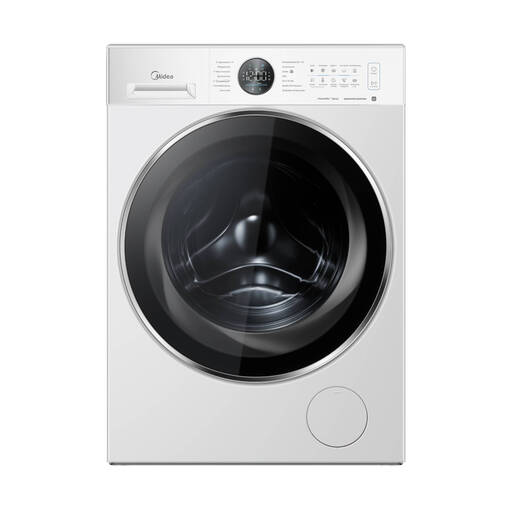 No image available
The stated capacity gives you a comparison point for typical family loads; check the load limit for your chosen programme.
Front-loading; 8 kg; 1400 rpm; energy class A; Wi-Fi SmartHome; Steam Care; 15-minute quick wash; Turbo Wash; AquaStop; inverter motor.
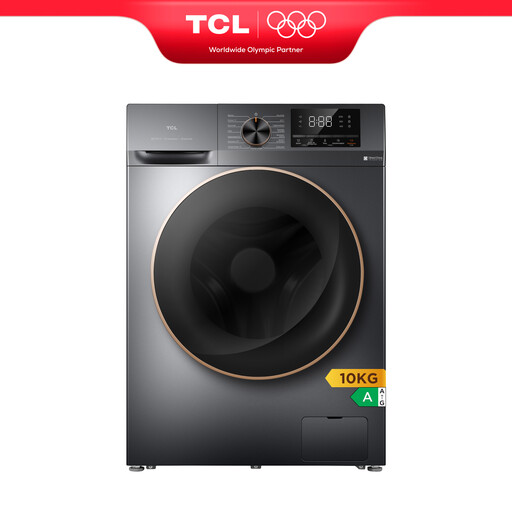 No image available
The stated 10 kg capacity is a useful comparison point for larger loads; the permitted load may vary by programme.
10 kg; Smart DD motor; steam wash; 15-minute quick wash; child lock; delay end; energy class A.
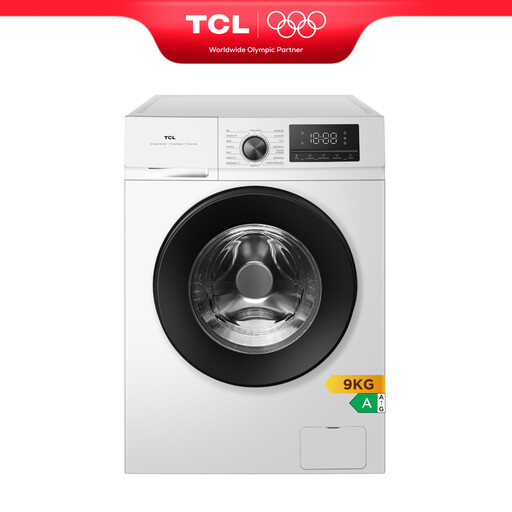 No image available
The product information gives bedding as an example of bulky laundry. Check the load limit for your chosen programme against the load you plan to wash.
9 kg; BLDC motor; steam wash; 15-minute quick wash; child lock; honeycomb drum; energy class A.
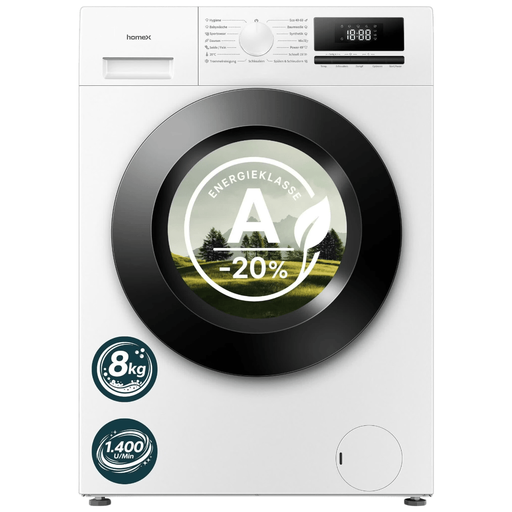 No image available
The 8 kg capacity helps you compare it with typical family loads; check the programme limits against the care label on your bedding.
Front-loading; 8 kg; 1400 rpm; steam function; inverter; AquaStop; energy class A.
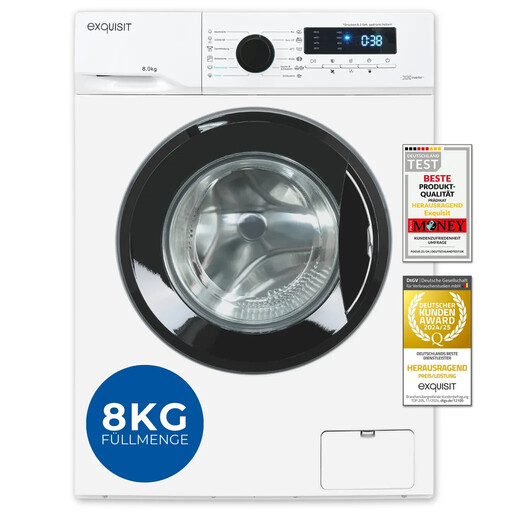 No image available
The stated capacity is a starting point for comparing it with family loads; also check the load limit for each programme.
8 kg; maximum 1400 rpm; 13 programmes; delay start; child lock; energy class A.
No, not as a rule. Choose the temperature and programme according to the care label on the specific cover. In its care advice, Bosch distinguishes between cotton and more delicate fabrics, among other things.
The consumption figures relate to the Eco 40–60 programme; they won’t necessarily match those of a quick or delicate wash. The European Commission also sets requirements for energy efficiency, water consumption and programme duration for this programme.
Before you buy, check the machine’s full dimensions, the route into your home and the connections against the installation location, and confirm what installation services are available. The Verbraucherzentrale also distinguishes between the statutory guarantee and a voluntary warranty.
The Umweltbundesamt says you can return a corresponding large old appliance free of charge when buying a new one. Before completing your order, check how the return will be arranged with your delivery.