For cotton tablecloths, neither the biggest drum nor a stain-removal programme is automatically the deciding factor. Choose a washing machine based on your usual load size, the care label and the programmes you actually need. For normally soiled cotton that the care label says can be washed at 40 or 60 °C, Eco 40–60 is the relevant point of comparison. Manufacturers’ claims about stain-removal and steam functions are not independent performance comparisons. Also check the dimensions, connections and water protection features of the specific model.
Which approach is right for you?
Households with stained table linen
If you often wash cotton tablecloths after meals, check that the available programmes are suitable and follow the garment’s care instructions, rather than relying solely on advertising claims about stain removal. Consumer information and Beko’s guidance cover these considerations.
Households with large tablecloths
If you wash several tablecloths at once or have particularly large ones, check that your usual load is suitable for the rated capacity and that there’s enough room where you plan to install the machine. The consumer advice centre recommends choosing a machine size to suit your actual needs; AEG lists a maximum appliance depth of 660 mm for one 9 kg model.
Households looking to save on washing
If you mainly wash normally soiled cotton, you can compare the Eco 40–60 programme’s consumption figures on the EU energy label. The German Environment Agency points out that shorter programmes don’t necessarily use less energy simply because they take less time.
What should you consider when buying?
Cotton and stain-removal programmes
A good fit if: your tablecloths regularly get food stains and the care label allows the programme you plan to use.
What to consider: Beko lists StainExpert for certain types of stains. This is a manufacturer’s claim, not an independent comparison of cleaning performance.
Eco 40–60 for normally soiled laundry
A good fit if: your cotton laundry is normally soiled and the care label says it can be washed at 40 or 60 °C. The European Commission describes Eco 40–60 as suitable for cotton laundry labelled accordingly.
What to consider: The label figures apply to the specified Eco programme and can’t be directly compared with figures for special or quick programmes.
A higher rated capacity
A good fit if: you regularly wash several large tablecloths together and will make use of the extra capacity in everyday use.
What to consider: The capacity in kilograms doesn’t tell you on its own whether a single large item will fit comfortably in the drum. The appliance’s depth and the available space are still important.
| Buying priority |
What to check |
Who is this important to? |
| Stains and cotton programmes |
Check the programmes available on the specific model and the temperature allowed by the care label. |
If coffee or sauce stains are left on my table linen after meals, I want to choose a suitable programme without relying solely on advertising. Around 33% of consumers put stain treatment first. |
| Load size |
Compare your usual load with the rated capacity and appliance dimensions. |
If you regularly wash several large tablecloths, you’ll want to fit your usual load in the machine without using up space for capacity you rarely need. Around 27% of consumers prioritise the right load size. |
| Everyday consumption |
Compare kWh per 100 Eco cycles, litres per Eco cycle and programme duration on a like-for-like basis. |
If most of my washes are for normally soiled cotton, I want to be able to make sense of the consumption figures for the relevant Eco programme. Around 20% of consumers put running costs first. |
| Installation and water protection |
Check the appliance dimensions, access route, connections and the model-specific water protection features. |
If space is limited or there’s a risk of leaks, I want to be sure the machine will fit and that the installation location has been taken into account. Around 20% of consumers prioritise installation and water protection. |
Common buying mistakes
-
Assuming the energy rating guarantees the same consumption on every programme
The label figures apply to Eco 40–60 and don’t automatically apply to other programmes. The German Environment Agency points out that a quick programme mainly saves time; it doesn’t necessarily use less energy.
Compare the label figures on a like-for-like basis and also consider which programmes you normally use.
-
Always choosing the largest drum for individual tablecloths
The right rated capacity depends on your usual load. A larger machine may also take up more space, and the kilogram figure alone won’t tell you whether a particular tablecloth will fit comfortably.
Think about your usual load and check the appliance dimensions, door opening and load limits for the relevant programme.
-
Assuming steam or stain-removal claims prove better cleaning performance
Steam refresh and stain-removal programmes are different functions. Manufacturers’ claims about how they work don’t prove a comparative benefit for every tablecloth.
Check the specific programme and its conditions separately, and follow the care label.
-
Looking only at the machine, not installation and water protection
Dimensions, connections and protection systems vary by model. If the machine or its connection won’t work in the space you have in mind, even a suitable wash programme won’t help.
Check that the appliance dimensions suit the installation location, and confirm the connection requirements, what installation involves and the water protection features before ordering.
Key brands at a glance
Beko
The BM3WFU4841N front-loader may appeal to households looking for a dedicated stain-removal function.
- Beko lists an 8 kg capacity, up to 1400 rpm and 76 dBA during the spin cycle for this model.
- The claims about stain removal and EnergySpin come from Beko. The stated energy comparison is against a specific Beko reference model, not every alternative.
Bosch
According to Bosch, the Series 4 WAN28271 has an 8 kg rated capacity and an AquaStop system.
- Bosch lists dimensions of 845 × 598 × 590 mm and AquaStop for this model.
- These specifications don’t establish a brand-wide comparison of washing performance or water protection.
AEG
The 7000 ProSteam LR7F75695 is a 9 kg option for larger usual loads.
- AEG lists a maximum appliance depth of 660 mm and Aqua Control with an alarm. Steam anti-crease can be selected as an option.
- The steam feature is described by the manufacturer; make sure the space available and care label suit your needs.
Siemens
The iQ300 WM14N271 is an 8 kg front-loader. Check that its dimensions and programmes suit your needs.
- Siemens lists a maximum spin speed of 1400 rpm for this model.
- Capacity and spin speed alone don’t prove better stain removal.
Miele
The W1 WWE380 WPS PWash&Steam&8kg is an 8 kg option featuring Miele’s SteamCare function.
- Miele lists a spin speed of 1400 rpm and SteamCare for this model.
- These manufacturer specifications don’t prove an advantage when washing stained tablecloths.
Washing machines at Joybuy
The front-loaders below offer different load sizes and, depending on the model, list programmes for cotton, Eco 40–60 or stain removal. Compare the rated capacity, programme selection and dimensions with your usual table linen and the space where you plan to install the machine.
 No image available
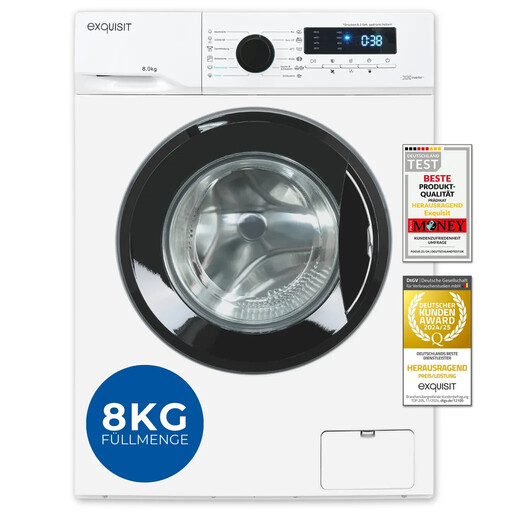
Exquisit WA58014-020A, 8 kg
May suit cotton laundry if 8 kg matches your usual load.
8 kg; Cotton Care programme; Eco mode; AquaStop; 84,5 × 59,5 × 52,5 cm; up to 1400 rpm; 13 programmes.
View at Joybuy
 No image available
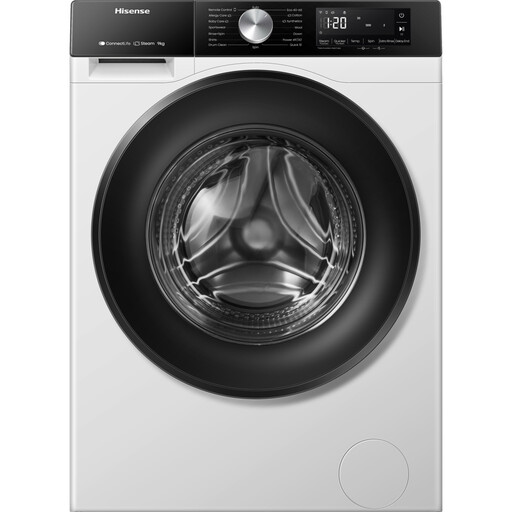
Hisense WF3S9043BW3, 9 kg
Eco 40–60 is an option for normally soiled cotton, provided the care label allows it.
9 kg; Eco 40–60; 0,342 kWh and 39 l per Eco cycle according to the product information; 85 × 60 × 55 cm; up to 1400 rpm.
View at Joybuy
 No image available
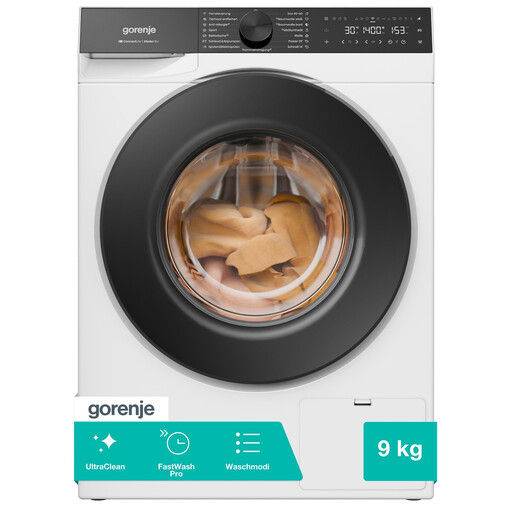
Gorenje W5G694A1T1, 9 kg
The rated capacity may suit larger loads. StainExpert is listed as a programme, but that alone doesn’t guarantee a particular level of stain removal.
9 kg; StainExpert; Eco 40–60; Total AquaStop; 600 × 850 × 540 mm; up to 1400 rpm; 15 programmes.
View at Joybuy
 No image available
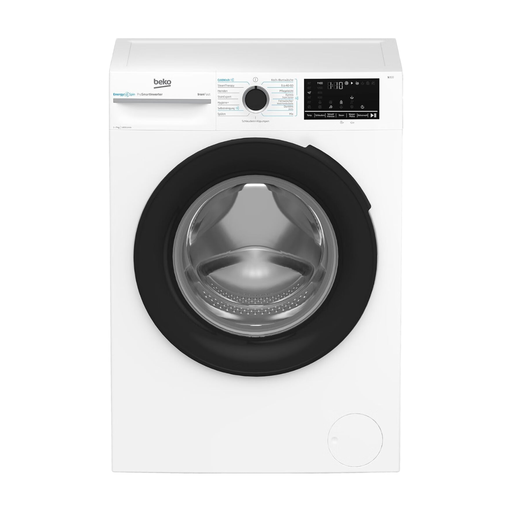
Beko BM3WFU4841N, 8 kg
StainExpert is listed as a stain-removal programme for suitable cotton laundry. Follow the care instructions and check the programme conditions.
8 kg; cotton/coloureds; Eco 40–60; StainExpert; 84,5 × 60 × 54,6 cm; up to 1400 rpm; 15 programmes.
View at Joybuy
 No image available
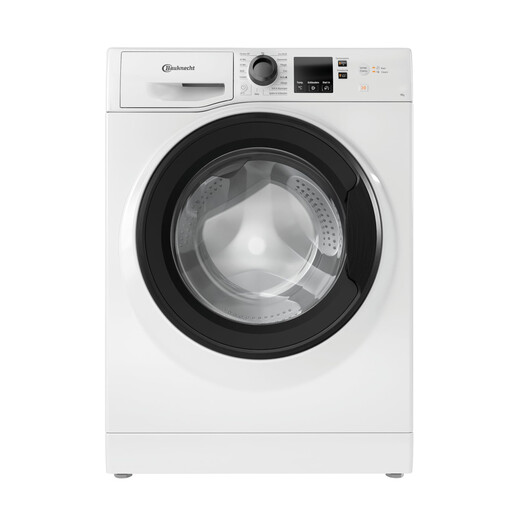
Bauknecht WAM 914 A, 9 kg
The rated capacity may be useful for larger loads. The listed Stain 40 programme doesn’t replace checking the care label.
9 kg; cotton programme; Eco 40–60; Stain 40; 60,5 × 59,5 × 85 cm; up to 1400 rpm; 17 programmes.
View at Joybuy
Frequently asked questions
Is Eco 40–60 right for every cotton tablecloth?
No. The European Commission describes the programme as suitable for normally soiled cotton labelled as washable at 40 or 60 °C. Always follow the care label on the individual tablecloth.
How do I compare consumption if I often use stain-removal programmes?
Compare the label figures only on the stated Eco 40–60 basis. They aren’t a direct comparison of consumption for other programmes. The German Environment Agency says a quick programme isn’t energy-efficient simply because it has a shorter running time.
What should I check before installing a machine in a utility room?
Check the dimensions and water protection features of the specific appliance against the room, and follow the model’s instructions for connections and installation. If you rent your home, the consumer advice centre also recommends discussing your specific situation with your landlord and checking protection against water damage. This doesn’t mean tenants are automatically prohibited from installing a washing machine.
Will a steam programme remove food stains without washing?
The available manufacturer information doesn’t establish that. Check steam and stain-removal programmes separately, and follow the care label rather than treating a refresh function as equivalent to a stain-removal wash.
What should I do with my old washing machine?
Electrical appliances must not go in household waste. The German Federal Ministry for the Environment lists local collection points as one way to return old appliances; retailers have to meet certain legal requirements to take them back. If you’re arranging delivery, check in advance whether collection of your old machine is available.


