Households with lots of small loads
If you often wash individual cotton tablecloths or small loads, your washing machine’s drum should suit this routine while still having room for the occasional larger load.


Choose a washing machine with a drum that suits both your usual small loads and your largest tablecloths, and check the permitted load for the relevant programmes on the specific model. Load adjustment information may be useful when comparing machines; however, the EU energy label is based on Eco 40–60 and does not show the consumption of every quick or partial-load programme. Choose the temperature and spin speed according to the care label, not simply because the tablecloth is made of cotton.
If you often wash individual cotton tablecloths or small loads, your washing machine’s drum should suit this routine while still having room for the occasional larger load.
If your tablecloths are often stained, check that the programme suits the care label and that the load is within its permitted limit.
If space is tight, the machine’s design, dimensions, clearance for opening the door and connections all need to fit.
| What matters when buying | What to check | Who is this important for? |
|---|---|---|
| Drum size and small loads | Compare your usual laundry load and largest tablecloth with the programme load limits; check the model’s load adjustment information. | If I usually wash individual tablecloths, I want a machine that suits this while still accommodating the occasional larger load. Shoppers whose main concern is small loads account for around 36%. |
| Food stains and fabric care | Check the care label, as well as the specific model’s programme, stain types and load limit. | If food stains are frequent, I want to be able to use a suitable programme without ignoring the tablecloth’s care instructions. Shoppers whose main concern is stain removal account for around 29%. |
| Electricity and water consumption | Compare kWh per 100 Eco 40–60 cycles and litres per Eco cycle on the same basis; don’t assume quick programmes are automatically economical. | If I wash frequently, I want to compare consumption figures and know which programme they refer to. Shoppers who prioritise running costs account for around 21%. |
| Installation space and water protection | Check the specific model’s dimensions, door clearance, connections and water protection features. | If space is limited, the machine, door clearance and connections all need to fit in the intended area. Shoppers whose main concern is where the machine will go account for around 14%. |
The Verbraucherzentrale recommends choosing a drum size that suits your household and opting for an integrated water protection system. Bosch says the WAN28271 model adjusts water use for smaller loads; this is a manufacturer’s claim, not a measurement of your wash cycle. The EU energy label lets you compare machines on the basis of Eco 40–60, not any other programme.
The kilogram figure alone doesn’t tell you how much water or energy a single small load will use in everyday washing.
Make a note of your usual laundry load and the size of your largest tablecloth. Then compare the permitted loads for relevant programmes and the specific model’s information on load adjustment.
The Umweltbundesamt points out that quick programmes save time, but not necessarily energy. They may also have limits on load size and suitability for different levels of soiling and fabric care.
Choose a quick or stain-removal programme only if it suits the care label, the level of soiling and the programme’s load limit.
The Verbraucherzentrale’s 2019 checklist still uses the old A+++ scale. The A-to-G rating for washing machines was introduced on 1 March 2021.
Compare current machines using their current label figures and the same Eco 40–60 basis.
Bosch lists a rated capacity of 8 kg, a spin speed of 1,400 rpm and AquaStop for the WAN28271 front-loading washing machine.
Beko lists a StainExpert programme and an Xpress programme for loads of up to 2 kg, with a stated duration of 14 minutes, for its 8 kg WTC81465S model.
AEG lists a rated capacity of 10 kg for the LR6FA410FL front-loading washing machine, with ProSense adjusting time, water and energy to the load.
Miele lists a rated capacity of 9 kg, automatic dosing and QuickPowerWash for the WWG880 WCS PWash&TDos&Steam model.
This selection at Joybuy includes front-loading washing machines with information on cotton programmes or load adjustment, as well as models with additional quick or stain-removal programmes.
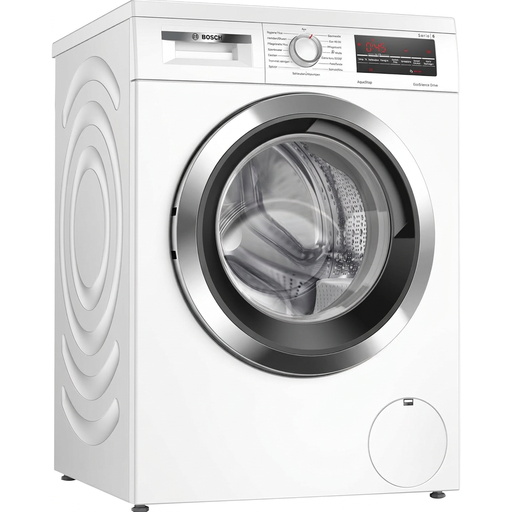 No image available
If you wash small loads, the product description’s information about adjusting water use to the load may be useful.
8 kg front-loading washing machine; cotton and Eco 40–60 programmes are listed. The description also mentions ActiveWater Plus and AquaStop.
 No image available
The product description says it adjusts to fabric type and load weight; check which programmes are suitable for your tablecloths.
9 kg front-loading washing machine with a spin speed of 1,200 rpm; described as Slim Fit, with a depth of 53.5 cm. A cotton programme is listed.
 No image available
The description lists a 15-minute wash for lightly soiled small loads; before using it, check that it is suitable for the care label.
Freestanding 7 kg front-loading washing machine with a stated depth of 400 mm. A cotton programme is listed.
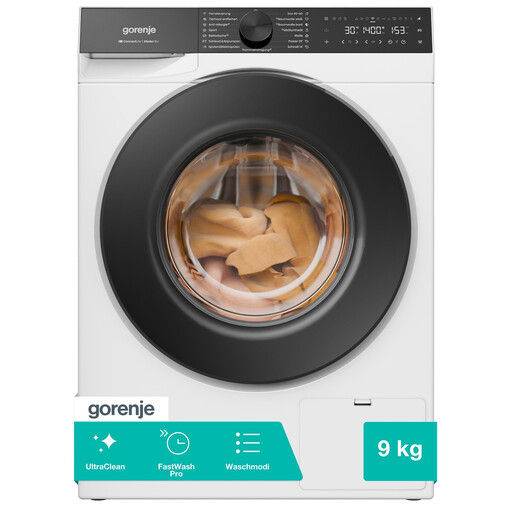 No image available
If stain removal is a key consideration, the listed StainExpert programme may be worth looking at; check the care label and programme load limit.
9 kg front-loading washing machine with a spin speed of 1,400 rpm; cotton and Eco 40–60 programmes, as well as AdaptTech, are listed. The description also mentions Total AquaStop.
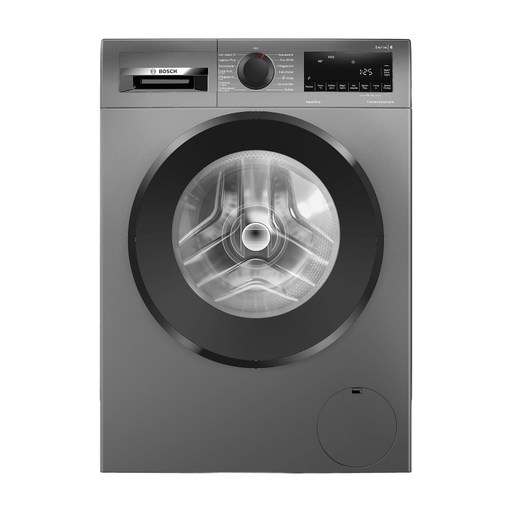 No image available
For small or lightly soiled loads, the product description mentions SpeedPerfect; a stain-removal programme is also listed.
Freestanding 9 kg front-loading washing machine with a spin speed of 1,400 rpm; cotton and Eco 40–60 programmes are listed. The description also mentions water consumption adjustment according to the load.
No. First check the care label, the level of soiling and the specific programme’s permitted load. The Umweltbundesamt points out that quick programmes save time, but not necessarily energy. Beko’s stated 14-minute cycle on the WTC81465S is limited to loads of up to 2 kg.
Adjust the detergent dose according to water hardness and how soiled the laundry is, and check the load limit for the programme you choose. The Umweltbundesamt recommends filling the machine as much as possible for regular whites and coloureds; the tablecloths’ care instructions still apply.
Check the machine’s dimensions, connections and water protection features, and discuss the installation with your landlord. The Verbraucherzentrale also recommends checking your insurance cover for water damage; this does not mean that washing machines are universally prohibited in rented homes.
Household washing machines use the EU A-to-G energy label. Among other information, it shows kWh per 100 wash cycles and litres per cycle, based on Eco 40–60. Older A+++ ratings are not a current basis for comparing new machines.
Electrical waste must not go in household rubbish. The Umweltbundesamt lists local collection points, as well as free take-back of larger old appliances when you buy a similar new one, subject to the applicable take-back conditions. Check separately with the relevant provider whether collection and possible disconnection are available.