If you can hang your pillowcases in a small space and ventilate the room to remove moisture, a suitable washing machine with a good spin cycle is a straightforward choice. If you don’t have space for that either, a washer-dryer could help. Check its drying capacity, the energy consumption for a complete wash-and-dry cycle, and the care labels on your pillowcases.
Which option is right for you?
No space to dry
If there’s no room for either a clothes airer or a separate tumble dryer, a washer-dryer may be an option – provided the care label says your pillowcases can be tumble dried. The Verbraucherzentrale (German consumer advice centre) notes that a washer-dryer’s drying capacity may be lower than its washing capacity.
A little drying space
If you can hang up individual pillowcases and ventilate the room to remove moisture, you can avoid using a machine drying cycle. The Umweltbundesamt (German Environment Agency) recommends choosing a drum size that suits your household.
Frequent small loads
If you often wash pillowcases individually or in small batches, check the load limits for the relevant programmes and choose a machine size that suits the amount of laundry you usually wash overall. The Umweltbundesamt specifies different load sizes for different programmes; you should also follow the care instructions on your textiles.
What should you look for when buying?
Washing machine with air drying
A good fit if: You have some space to hang your laundry and can ventilate the room regularly.
Consider: Your pillowcases will need space to dry and release moisture into the room. The Verbraucherzentrale recommends making sure you have a practical way to ventilate the room.
Washer-dryer
A good fit if: Neither a clothes airer nor a separate tumble dryer is practical, and your pillowcases are suitable for tumble drying.
Consider: The Verbraucherzentrale notes that combination appliances may use more energy. Compare the figures for washing and for a complete wash-and-dry cycle separately.
Washing machine with a separate tumble dryer
A good fit if: You have space for two appliances and want to wash and dry separately.
Consider: You’ll need space for both appliances. The Verbraucherzentrale says heat-pump tumble dryers are more energy-efficient than conventional condenser dryers; this doesn’t mean they will always cost less to run than every washer-dryer.
| Buying concern |
What to check |
Who it matters to |
| Drying without floor space |
Compare the appliance dimensions, drying capacity and energy consumption for a complete wash-and-dry cycle; check the care labels. |
If you can’t hang your pillowcases up to dry and want to dry them in the machine, a lack of drying space is a key concern. Around 33% of consumers put this first. |
| Air drying in a small space |
Check the spin performance and energy consumption of your chosen wash programme; consider the space available for drying and ventilation. |
If you can hang up individual pillowcases and avoid a machine drying cycle, space and ventilation are especially important. Around 27% of consumers prioritise this energy-saving approach to air drying. |
| Frequent small loads |
Choose a drum size that suits the amount of laundry you usually wash overall, and check the load limits for each programme. |
If you often wash just a few pillowcases, you’ll want to choose a programme and load size to suit. Around 20% of consumers put small loads first. |
| Fabric care |
Read the care labels and check that the specific appliance has suitable wash and, where relevant, drying programmes. |
If your pillowcases are made from different materials or have different care instructions, your appliance should be able to handle them appropriately. Around 20% of consumers prioritise caring for each fabric correctly. |
Avoid common buying mistakes
-
Assuming washing and drying capacities are the same
The figures may differ. If you want to wash and dry a load in one go, the lower drying capacity will limit how much you can put in.
Size your load according to the stated drying capacity and check whether you might need an additional drying cycle.
A larger wash load may therefore need to be split across several drying cycles.
-
Applying the washing energy figure to a complete wash-and-dry cycle
The EU energy label lists energy consumption for washing and for a complete wash-and-dry cycle separately.
Only compare figures based on the same cycle, and check the information that matches how you plan to use the appliance.
-
Planning to air dry without removing moisture
Drying laundry releases moisture into the room. The Verbraucherzentrale notes that poor ventilation increases the risk of mould.
Before choosing an appliance, check that you can ventilate the room regularly as well as making space for drying.
Brands to consider
AEG
The 9000 Series includes heat-pump washer-dryers. The L9WEF80690 model is listed with a capacity of 9,0 kg for washing and 6,0 kg for drying.
- AEG lists energy consumption for this model as 252 kWh per 100 complete wash-and-dry cycles and 49 kWh per 100 wash cycles.
- These separate energy figures apply to this model and standardised cycles, not to an individual small load.
LG
The W4WR7096YB washer-dryer is listed with a washing capacity of 9 kg and a drying capacity of 6 kg.
- LG lists Steam and TurboWash features for this model; the stated quick wash is for a half load.
- The manufacturer’s claims about fabric protection have not been independently verified specifically for pillowcases.
Bosch
According to Bosch, the WNC244070 washer-dryer is designed for 9 kg of washing and a maximum of 6 kg for continuous washing and drying.
- Bosch lists this model’s dimensions as 848 × 598 × 622 mm and its noise level as 70 dB(A).
- Also check the connections available at your property and the clearance needed where you plan to install it.
Miele
The W1 washing machine WWA120 WCS 8kg Active offers a washing-only solution, with no integrated drying function.
- Miele lists this model with an 8 kg capacity and a spin speed of 1400 rpm.
- The washing machine won’t dry your pillowcases; these specifications apply to this particular model, not the entire W1 range.
Suitable products at Joybuy
This selection includes washer-dryers for integrated drying, as well as washing machines for households where air drying is an option.
 No image available
LG WT1210EGF WashTower, 12 kg washing / 10 kg drying
This combined washing and drying appliance may suit you if drying space is limited and you size your load according to the drying capacity.
12 kg washing capacity and 10 kg drying capacity; spin speed of 1350 rpm.
View at Joybuy
 No image available
LG WT1210WWF front-loading washer-dryer, 12 kg washing / 10 kg drying
If you want to wash and dry without transferring the laundry, remember to allow for the lower drying capacity when planning your load.
12 kg washing capacity, 10 kg drying capacity and heat-pump technology; the product listing states a spin speed of 1400 rpm.
View at Joybuy
 No image available
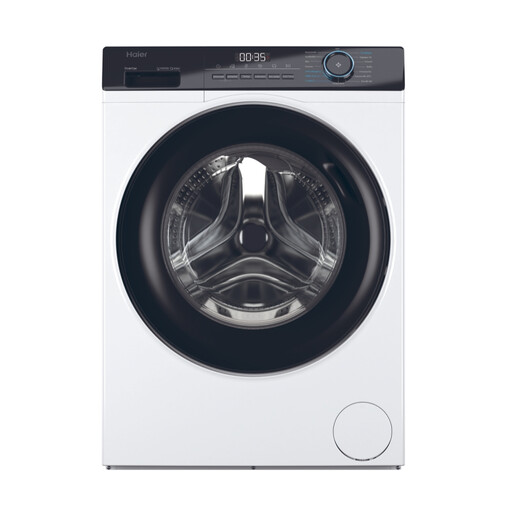
Haier I-PRO SERIES 3 front-loading washing machine, 9 kg
A washing machine without an integrated drying function may suit you if you can hang your pillowcases up to dry and need suitable wash programmes.
A 9 kg washing capacity is listed for cotton; the maximum stated spin speed is 1330 rpm. Programmes for delicates and down are also listed.
View at Joybuy
 No image available
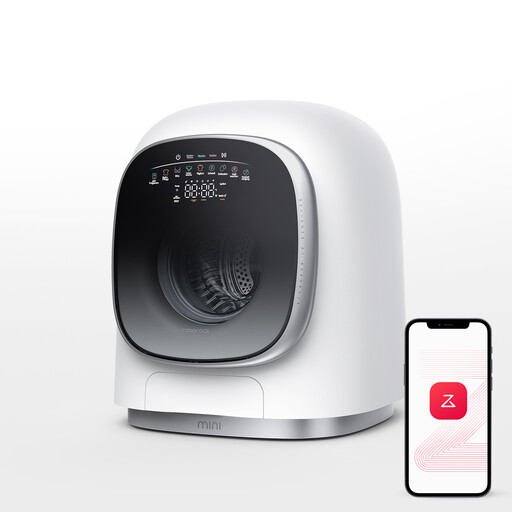
Roborock Zeo Mini washer-dryer, 1 kg washing / 0,5 kg drying
Its compact capacity may be useful for very small loads; check that it suits the amount of laundry you actually need to wash.
The stated washing capacity is 1 kg and the drying capacity is 0,5 kg.
View at Joybuy
 No image available
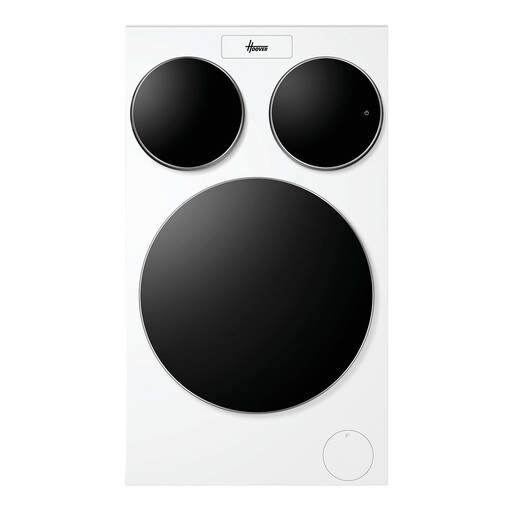
Hoover MultiWash HMQD 410CBL9-84 washing machine with three drums
Separate drums may be useful if you want to wash different types of laundry or small loads separately.
The product name lists drum capacities of 10 + 1 + 1 kg.
View at Joybuy
Frequently asked questions
Can I dry any pillowcase in a washer-dryer?
No, check the tumble-drying symbol on each pillowcase. Only choose a suitable drying programme if the care label allows tumble drying; the label also determines the right washing temperature.
What should I check when installing the appliance and running the first spin cycle?
Check the dimensions of the specific appliance and follow its installation instructions. Remove the transit bolts before use and make sure the appliance is level on a stable surface; individual bulky items can cause an unbalanced load.
How do I compare a washer-dryer’s energy consumption?
Compare the washing cycle and complete wash-and-dry cycle separately on the EU energy label. The kWh figures are each based on 100 standardised cycles; actual consumption also depends on how you use the appliance and which programme you choose.
Should an old washing machine in Germany go in the household rubbish?
No, old electrical appliances must be collected separately. When you buy a new appliance, Section 17 of the German Electrical and Electronic Equipment Act (ElektroG) requires certain retailers to take back an equivalent old appliance free of charge. Before ordering, check the retailer’s terms and how the return will be arranged.
Is a manufacturer’s guarantee the same as the statutory warranty?
No. The statutory warranty covers claims against the seller if goods are faulty; a manufacturer’s guarantee is an additional voluntary promise with its own terms and conditions.


