
Lieferung heute & morgen

Qualitätsgarantie

Willkommens-Angebote freischalten: KOSTENLOSE Lieferung | Bis zu 80 % RABATT | Kostenlose 30-Tage-JoyPlus-Testphase
App herunterladen
A washing machine is one of those appliances that runs regularly in everyday life and is expected to work reliably for many years. That is why choosing the right model involves more than just its energy efficiency rating and capacity. Drum size, noise level, dimensions, spin speed and the practical usefulness of additional programmes all affect whether a model is right for your household.
A washing machine with an energy efficiency rating of A can reduce consumption per wash cycle. However, running costs also depend on how often the machine is used, which programme is selected and how much laundry fits into each load. So compare the energy consumption figure per 100 cycles, rather than looking only at the letter on the energy label.
Manufacturer claims such as “A-10%” or “A-30%” should also be interpreted carefully. Depending on the model, they refer to a comparison with the limit for energy class A. This does not automatically guarantee a saving in your individual household.
A washing machine with a steam function can be used, depending on the programme, to freshen up clothes, reduce creasing or treat fabrics. Steam is not a substitute for the correct temperature, detergent dosage or load size, however. Care instructions on the label still apply to delicate fabrics.
When considering claims about allergens or bacteria, pay attention to the specific programme name and the evidence provided. According to a TCL SGS report, certain 99.99% claims refer to tested bacteria such as Staphylococcus aureus and Escherichia coli. This does not support a general claim about every load of laundry, every programme or any health benefits.
A quiet washing machine will only remain comparatively quiet if it is correctly levelled and placed on a stable, load-bearing surface. Before buying, check the stated noise level during the spin cycle in dB(A). Values of around 71 to 76 dB(A) have been documented for the appliances listed; even so, the operating noise may be perceived differently in your home depending on the floor, distance from walls and load size.
A washing machine for families should not constantly be run half empty. At the same time, an oversized appliance can take up unnecessary space. Also bear in mind that the maximum capacity does not apply to every specialist programme.
A washing machine with 1400 rpm can remove more water from laundry than a model with 1200 rpm. This can shorten the subsequent drying time. The actual spin performance is also determined by the spin efficiency class, the fabric and the load size. A lower spin speed is often advisable for delicate clothing.
Before buying, measure:
A slim washing machine can be suitable for small bathrooms or rented homes. However, the term “Slim” is not used consistently. Always check the technical dimensions of the specific model. For example, the CHiQ JW85883G is described as having a compact casing with a depth of around 52 cm and a large 530-mm drum; check the exact installation width and connection requirements in the product details again before ordering.
An inverter motor, also known as a BLDC motor, operates without traditional carbon brushes. Depending on its design, this can reduce wear and enable precise control. Warranty and service conditions are also important when choosing a washing machine.
A quick programme is useful for lightly soiled laundry and small loads. The stated duration does not automatically apply to a full drum, however. Check which load size the short programme is designed for.
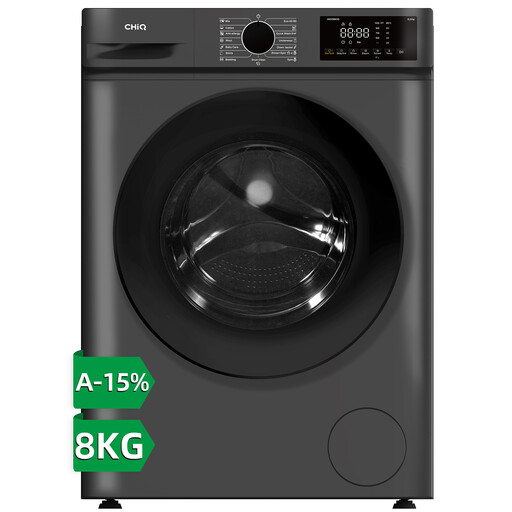
Why this product suits this profile: With an 8 kg capacity, 1400 rpm and a compact casing, this model is aimed at households with regular laundry loads and limited space.
The selection combines the advertised additional features with clear information about capacity, spin speed and the number of programmes. Check the dimensions against the available alcove before buying.
8 kg drum, 1400 rpm, 16 programmes, steam programme and 15-minute quick wash according to the product details.
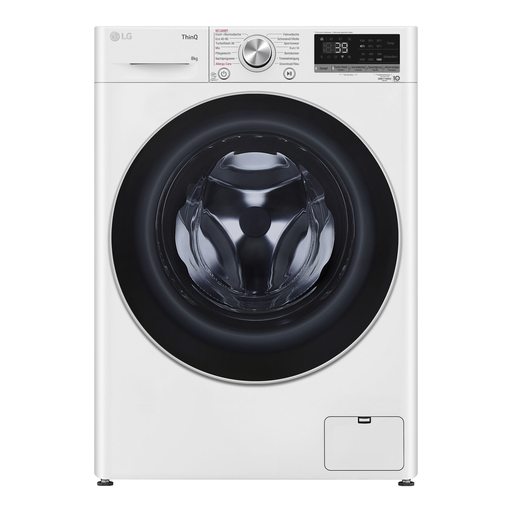
Why this product suits this profile: Suitable for users who want to combine app control, a steam programme and a direct-drive inverter motor in one front-loading machine.
The app feature complements the controls, but does not replace checking consumption, noise level and dimensions. These values are stated as 48 kWh per 100 cycles and 71 dB during the spin cycle.
8 kg, 1400 rpm, energy efficiency rating A, Steam AllergyCare, Wi-Fi and Aqua-Stop according to the product details.
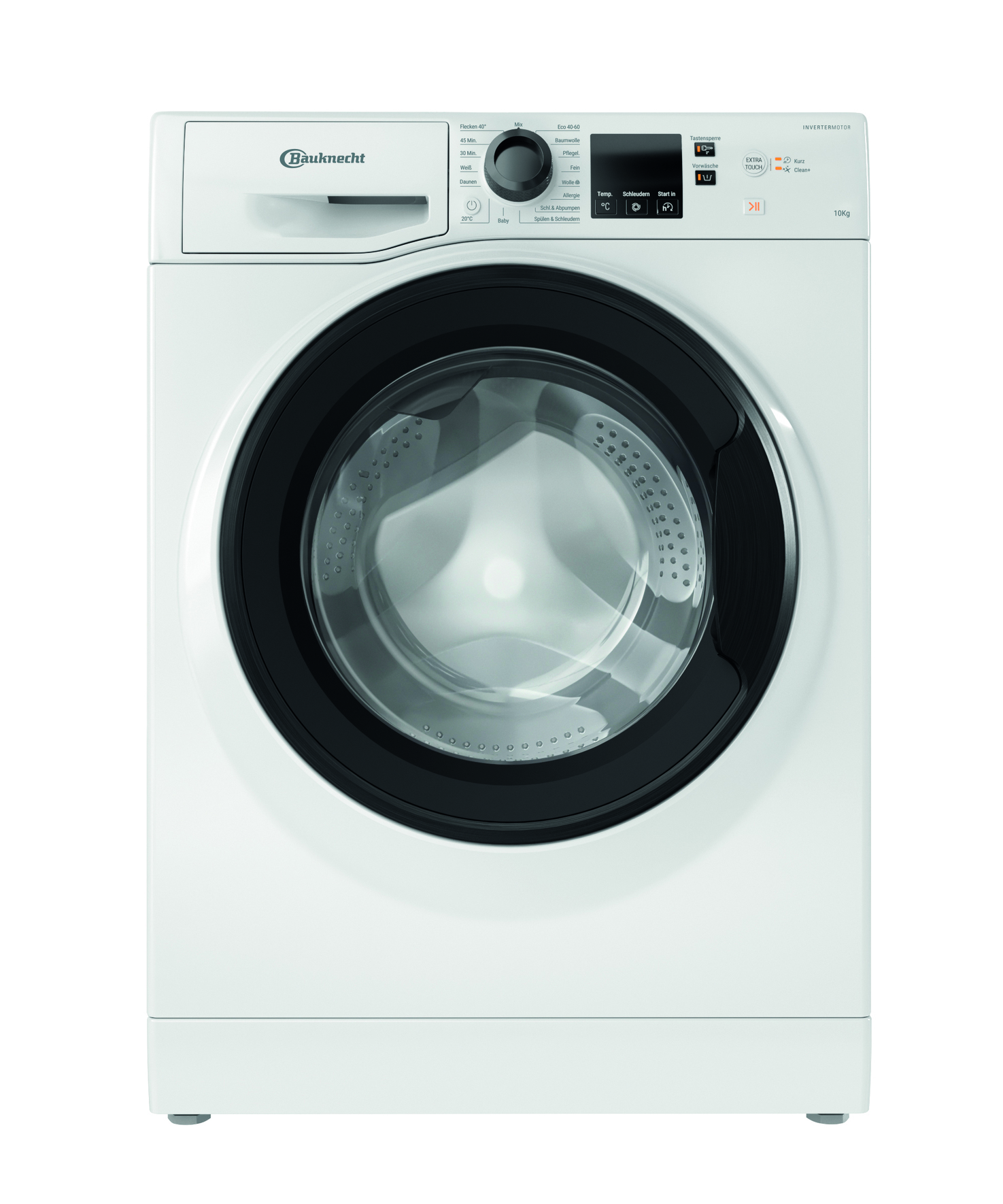
Why this product suits this profile: The 10 kg capacity is designed for larger laundry loads. The anti-allergy programme may be relevant for households with specific programme requirements.
The larger drum reduces the need for several small wash cycles. Even so, the 10 kg capacity should not be assumed for every programme.
10 kg, 1400 rpm, energy efficiency rating A, inverter motor, Stains-40-Degree and Anti-Allergy programmes according to the product description.
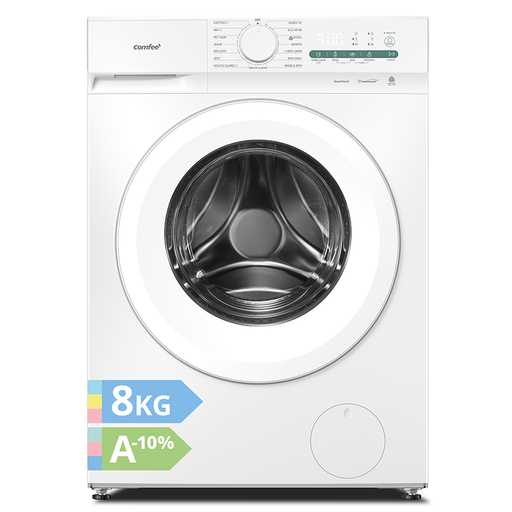
Why this product suits this profile: With a stated depth of 48 cm and a pet-hair programme, this model is an interesting option for homes with limited space and households with pets.
The dedicated programme tackles pet hair directly, while the compact design can make it easier to plan the installation space. Check the current product information for the actual load limit.
16 programmes, steam option, add-laundry function, stated depth of 48 cm and pet-hair programme according to the product description.
We have put together a complete, regularly updated list of products that fully meet these strict selection criteria and the safety regulations applicable in the EU.
For individuals and couples, 6 to 8 kg is often sufficient. Families or households with larger laundry volumes generally benefit from 9 to 10 kg. The key is to ensure that the machine is regularly loaded to a sensible level.
1400 rpm refers to the maximum spin speed. It can reduce residual moisture, but it is not suitable for every fabric. For delicate laundry, select the spin speed according to the care label.
Compare energy consumption per 100 wash cycles and water consumption per cycle. Multiply these figures by your expected number of wash cycles per year. Quick programmes, temperature selection, load size and washing frequency all affect the actual costs.