For a tight close-up, a compact light that’s easy to position and dim is a sensible starting point. If you need to light both your hands and the work surface, consider a larger panel, provided there’s room beside the bench for its stand and cable. Nikon highlights reflections as a lighting challenge when photographing small, shiny subjects. So check the light’s angle and diffusion in your camera view, and record a test clip with your camera rather than relying on a CRI rating or a flicker-free claim alone.
Which solution suits you?
Close-ups of reflective watches
When filming glass, hands or polished metal at close range, the angle of the light and reflections matter just as much as seeing the small details clearly. Nikon describes shiny surfaces and intricate details as a particular lighting challenge.
Filming at a cramped workbench
If you need to keep your hands and tools free, the light, its mount and cable routing all need to fit into the limited space. Ulanzi, SmallRig and NEEWER list different sizes, mounting options and versions, which you can compare with your setup.
Filming longer repair processes
For longer recordings, your white-light settings, camera view and power supply all need to work together. The amaran manual, Godox guide and NEEWER product information describe different settings and power options for their respective models.
What to consider when buying
At a small watchmaker’s workbench, controlling reflections and keeping the work surface clear are just as important as light colour, the camera view and power supply.
Compact light for close-ups
A good fit if: You mainly film the movement and the tip of your tool, and have very little free space on the bench.
Trade-off: A small light source can create prominent reflections on glass or polished metal; diffusion takes up extra space.
Larger panel for your hands and work surface
A good fit if: Your shot includes your hands and several areas of the workbench, and you can position the light securely beside it.
Trade-off: The panel, stand and cable need more room. What’s included and how it’s powered can vary by model or version.
Panel for a dedicated filming space
A good fit if: You regularly make longer recordings and have enough room for the panel and its power supply.
Trade-off: Manufacturers’ brightness and flicker-free operation claims apply to the specific model. They don’t replace testing it with your camera and setup.
| What matters |
What to check before buying |
Who is this especially important to? |
| Reflections and details |
Diffusion and adjustable positioning; check reflections in a test clip. |
When filming glass and polished metal close up, I want to control reflections without losing sight of the hands and small components. Around 29% of consumers put reflection control first. |
| Space and positioning |
Check the light’s dimensions and mount, and make sure they fit the available bench edge and your setup. |
At a cramped workbench, I want to move my hands and tools freely without constantly repositioning the light or its cable. Around 23% of consumers say space and secure positioning are their top priorities. |
| White-light colour |
Check whether the white light is fixed or adjustable, and verify the specifications for the exact model. |
If I want several repair steps to have a consistent colour appearance, I need to be able to adjust the white-light colour to suit my setup. Around 18% of consumers put adjustable white-light colour first. |
| Banding in the image |
Record a test clip using your intended frame rate, shutter speed and several dimming levels. |
When recording repair steps, I don’t want distracting bands in the camera view. Around 18% of consumers put band-free footage first. |
| Power supply and setup |
Check whether it runs on batteries or mains power, and whether the power adapter, batteries and stand are included with the specific version. |
For longer recordings, I want to film with as few interruptions as possible and avoid changing my setup because a part is missing. Around 12% of consumers put power supply and a complete setup first. |
Common buying mistakes
-
Comparing lux readings taken at different distances
Godox gives readings for the LEDP260C at 0.5 m; the amaran manual gives a reading for the P60x at 1 m and 5600 K. Without matching test conditions, these figures don’t give you a reliable comparison for your own workbench.
Check the distance and colour temperature given for each manufacturer’s reading, and see how the light looks in your own shot.
-
Assuming similar model names mean identical products
Ulanzi offers a VL49 version with fixed white light and a separate VL49 RGB with adjustable colour temperature. One Joybuy listing with a VL49 RGB title also has specifications that contradict the title.
Check the full model name against the technical specifications. Don’t rely on the title if the product details don’t match the same version.
-
Buying a larger panel without leaving room for its stand
According to NEEWER EU, the NEEWER NL660 measures 280 × 265 × 48 mm. A stand is included only with the version specifically listed as including one.
Check the bench edge, camera position, light dimensions and what’s included with your chosen version.
-
Assuming it’s ready to use on battery power
The Godox guide lists a power adapter as standard and says batteries for the LEDP260C must be bought separately.
If you want to film without cables, check that the batteries you need are included with the specific version.
Brands worth considering
SmallRig
Compact, versatile lights; the P96 is worth considering for a tight close-up setup.
- SmallRig lists 2700–6500 K, CRI >95, a built-in battery and a Cold Shoe mount for the P96.
- These specifications don’t tell you how reflections will look on a watch or how the light will attach to a particular bench arm.
Ulanzi
Compact battery-powered lights; the VL49 and VL49 RGB are different product versions.
- Ulanzi describes the VL49 as having fixed 5500 K white light. The manufacturer lists adjustable colour temperature for the separate VL49 RGB.
- Similar model names aren’t enough to assume the lights have the same features or are the same version.
NEEWER
Larger panels such as the NL660, suited to shots that include your hands and work surface.
- NEEWER lists a diffuser and mains power for the NL660; NP-F batteries are available as an optional extra.
- The EU product page lists versions with and without a stand. Which one suits your workbench depends on the space available.
Godox
Larger panels such as the LEDP260C, with adjustable white light.
- The Godox guide lists 3300–5600 K and an included power adapter.
- Batteries must be bought separately. At intermediate colour-temperature settings, the guide gives a different minimum dimming level from the one for the end settings.
amaran
More powerful panels such as the P60x, suited to a setup with enough space and a planned power supply.
- The amaran manual lists 3200–6500 K, CRI 95+ and flicker-free operation for the P60x, according to the manufacturer.
- The stated reading of 5070 Lux applies at a distance of 1 m and 5600 K; it isn’t directly comparable with readings taken under different conditions.
Joybuy products for close-up shots
Here you’ll find compact LED camera and video lights described as suitable for close-up shots in tight spaces.
 No image available
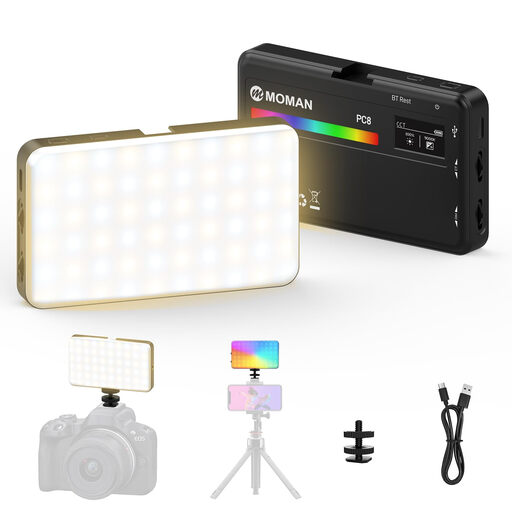
MOMAN PC8 RGB camera light
A compact camera light for filming at a small workbench, with adjustable light colour and brightness.
According to the product description, it has adjustable colour temperature and brightness, a built-in battery, and 1/4-inch and Cold Shoe mounts.
The stated run time is up to 80 minutes at full power. For longer recordings, make sure you have a suitable power supply.
View at Joybuy
 No image available
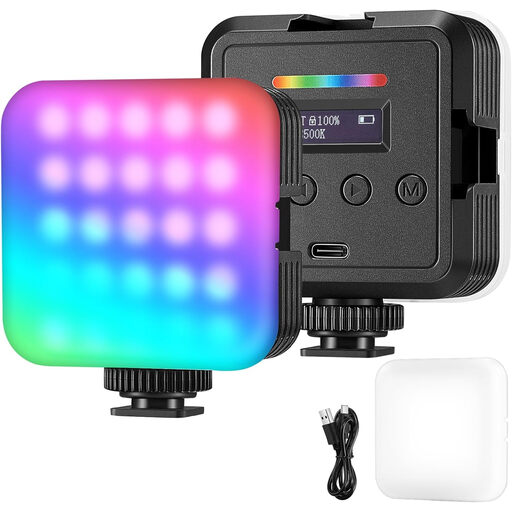
RGB LED camera light
A portable camera and video light for photography and filming, with adjustable light colour and brightness.
The description lists adjustable colour temperature and brightness, as well as RGB, white-light and warm-light modes.
Power options listed are battery or USB.
View at Joybuy
 No image available
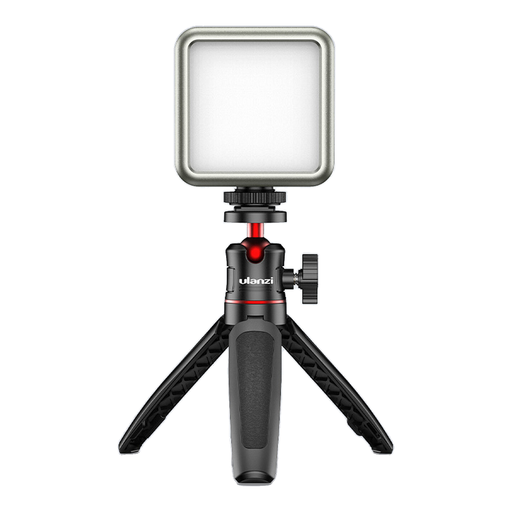
RGB LED video light – check the model details
The listing describes a compact video light for macro and product photography.
Before choosing, check the model name against the technical specifications to make sure both refer to the same light.
Purchase link unavailable
Frequently asked questions
How should I position the light to avoid glare on watch glass and metal?
Start by positioning the light to one side of your work area, then check in your camera view where its light source is reflected. Adjust the angle or diffusion without obscuring your hands or tools. Nikon describes reflections on small, shiny subjects as a lighting challenge that can’t be solved by a single panel alone.
What can I do if bands appear in my video?
Record a test clip at the dimming level you plan to use, then try changing the shutter speed. Sony notes that the right settings depend on your camera and recording conditions, so check the results with your specific setup.
Are the power adapter, battery and stand always included?
No, what’s included varies by model and version. According to its EU product page, NEEWER offers the NL660 with or without a stand, and NP-F batteries aren’t included. For the Godox LEDP260C, the guide lists a power adapter as standard and says batteries must be bought separately. Always check what’s included with the version you choose.
Are the Ulanzi VL49 and VL49 RGB the same model?
No, they’re different product versions. Ulanzi describes the VL49 as having fixed 5500 K white light, while the separate VL49 RGB has adjustable colour temperature. When viewing a listing, check that the model name and specifications refer to the same version.


