
Lieferung heute & morgen

Qualitätsgarantie

Willkommens-Angebote freischalten: KOSTENLOSE Lieferung | Bis zu 80 % RABATT | Kostenlose 30-Tage-JoyPlus-Testphase
App herunterladen
A good water bottle is a daily companion—at the office, during sports, or on the go. But the search for the right model can quickly become overwhelming. Many products promise more than they deliver, leading to frustration instead of practical benefits. Before you make a decision, it's helpful to know the typical pitfalls that often only become apparent after the purchase.
The 3 Most Common Annoyances with Reusable Water Bottles:
To avoid these problems, you should pay attention to a few fundamental parameters. These objective criteria will help you see through the marketing hype and find a durable and functional reusable water bottle.
The BPA-free label is a basic standard today, but the material itself makes the crucial difference in terms of durability, taste, and robustness.
The lid and its seal are the most critical components for preventing leaks. Making a leak-proof sports bottle requires precision engineering.
Not every bottle is suitable for every purpose. Two common special requirements are suitability for carbonated drinks and integrated water filters.
Based on these objective criteria, we have identified some models that are well-suited for specific use cases.
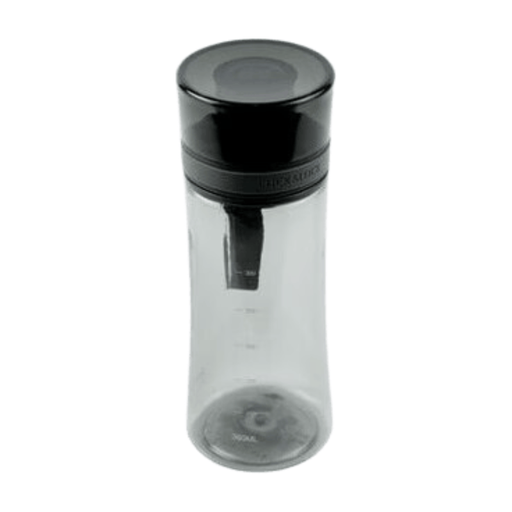
Why This Fits Their Persona: Ideal for the commute or the office desk. Its compact size fits into standard car cup holders and backpack side pockets. The spout lid allows for easy one-handed operation.
The secure lid with a silicone seal prevents leaks (Pitfall 1). The Tritan material ensures taste neutrality (Pitfall 2), and the design is optimised for practical handling (Pitfall 3).
Compact, cup-holder-friendly design; shock-resistant and lightweight Tritan material.
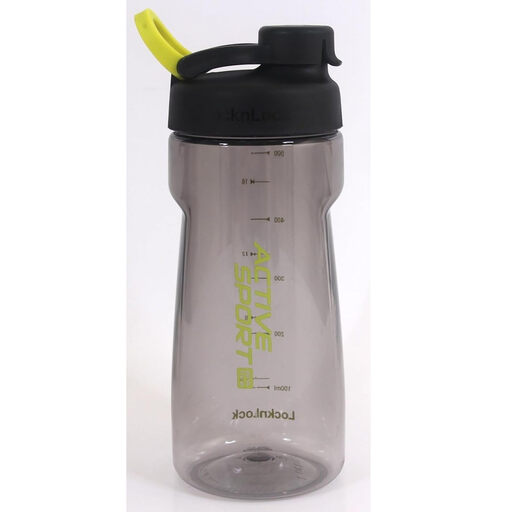
Why This Fits Their Persona: With a 730 ml capacity, this bottle provides enough hydration for longer workouts. The one-handed flip-top lid with a locking clip is ideal for a quick sip without interrupting your training.
The additional locking clip secures the lid, making the bottle reliably leak-proof, even during movement (Pitfall 1). The wide opening makes cleaning and filling easy (Pitfall 3).
Large capacity; secure one-handed closure with a lock; durable Tritan material.
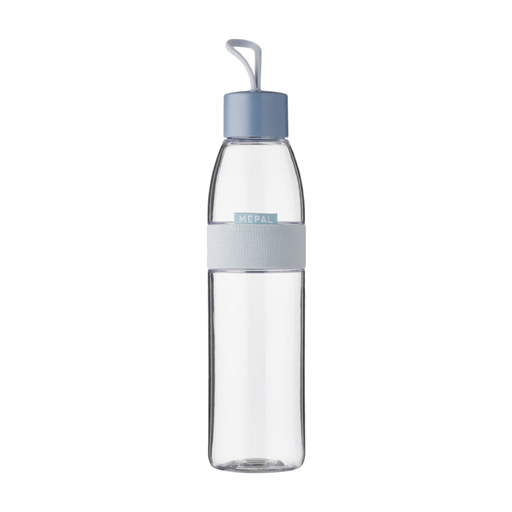
Why This Fits Their Persona: For anyone who doesn't want to give up their sparkling water on the go. This model from Mepal is explicitly designed for use with carbonated drinks and can withstand the pressure.
It bypasses the risk of a leaky or damaged lid from pressure build-up, as it's specifically engineered for it (a specific form of Pitfall 1). The lid always stays with the bottle thanks to a loop (Pitfall 3).
Explicitly suitable for carbonated drinks; dishwasher-safe (without the rubber band); BPA-free.
We have compiled a complete, up-to-date list of products that fully meet these strict selection criteria and relevant safety regulations.
The best method is daily cleaning with warm water and mild washing-up liquid. Use a bottle brush to reach the bottom and inner walls. Let the bottle and lid air-dry separately to prevent moisture build-up. For stubborn odours, a mixture of warm water and a spoonful of baking soda, left to soak for a few hours, can help.
BPA (Bisphenol A) is an industrial chemical that was used to make certain plastics. There are concerns that BPA can seep from containers into food and beverages. A water bottle labelled as BPA-free has been manufactured without this chemical, which is considered a safety standard for food-contact products.
Most manufacturers of Tritan bottles specify a maximum temperature range, often around 60°C to 80°C (140°F to 176°F). They are generally not designed for boiling hot liquids, as this can cause deformation or a pressure build-up that could be dangerous when opening. Always check the manufacturer's specific instructions before filling with hot beverages.