
Lieferung heute & morgen

Qualitätsgarantie

Willkommens-Angebote freischalten: KOSTENLOSE Lieferung | Bis zu 80 % RABATT | Kostenlose 30-Tage-JoyPlus-Testphase
App herunterladen
A water bottle is part of many people’s everyday essentials for commuting, the office, school, university, sport and travel. Reusable models can replace single-use bottles and, depending on the design, are easy to carry. However, not every water bottle automatically makes a good choice for everyday use. The important factors are often details that are easy to miss in product images or short marketing descriptions.
The term leak-proof water bottle is only useful if the lid, silicone ring and closure work together correctly. A twisted or displaced seal can cause water to leak into your bag. With screw tops, the sealing ring should sit fully in the groove provided. With drinking closures and spouts, the folding mechanism and safety lock must also close properly.
Even a model described as leak-proof may not be suitable for every type of liquid. Carbonation can build up pressure inside sealed containers. Always check the manufacturer’s instructions before using a water bottle with carbonated drinks.
A BPA-free water bottle contains no bisphenol A according to the product information. However, this does not automatically mean that it is suitable for hot drinks, microwaves, freezers or dishwashers. Plastic models such as a Tritan water bottle can be transparent and durable, but they still require clearly defined temperature limits.
For example, the LocknLock Eco Water Bottles with a capacity of 550 ml are specified for use between -20 °C and 60 °C. The supplier recommends hand washing and excludes use in the microwave or dishwasher, as well as with hot or carbonated drinks. Information like this is more important for the product’s actual service life than general claims about durability.
A 500 ml water bottle is often sufficient for short journeys, the office and school. If you spend longer periods away from home or want to take more liquid with you during training, a 700 ml water bottle may be a better option. Larger models do, however, require more space and naturally weigh more when full.
Also pay attention to the diameter and height. A bottle may fit in your rucksack but not in your car or bike holder. For commuters, compact models measuring around 6 to 7 cm in diameter are often easier to accommodate.
A screw top is generally easy to clean and can close securely when the seal is fitted correctly. An integrated drinking closure or spout, on the other hand, allows you to drink one-handed, for example while exercising, driving or commuting. It does contain additional components, however, which should be cleaned regularly.
A carrying loop or handle makes transport easier. If you carry the bottle frequently, check that the loop is firmly attached to the lid or bottle neck. A closure with a folding mechanism should also be lockable to prevent accidental opening.
A dishwasher-safe water bottle saves time, but it is not always completely dishwasher-proof. For the Mepal Ellipse bottles, the product description states that the bottle itself is dishwasher-safe without the elastic or rubber band. Seals and loops may need to be cleaned separately by hand.
Bottles with a narrow neck, spout or straw require a suitable brush. After washing, the lid and container should be left open to dry completely. If the bottle is damaged or cracked, or develops a persistent smell, it should no longer be used.
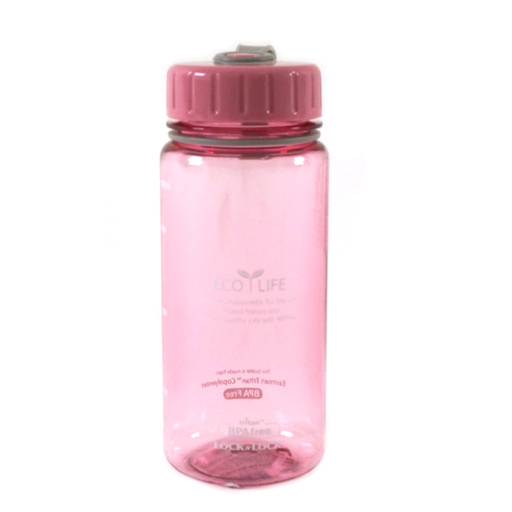
Why this product suits this profile: This compact model is designed for short journeys, school, the office and light everyday hydration.
The 400 ml size keeps unnecessary weight to a minimum. According to the product information, the bottle is BPA-free and intended for cold drinks.
Compact dimensions, low carrying volume and a transparent or lightweight plastic body.
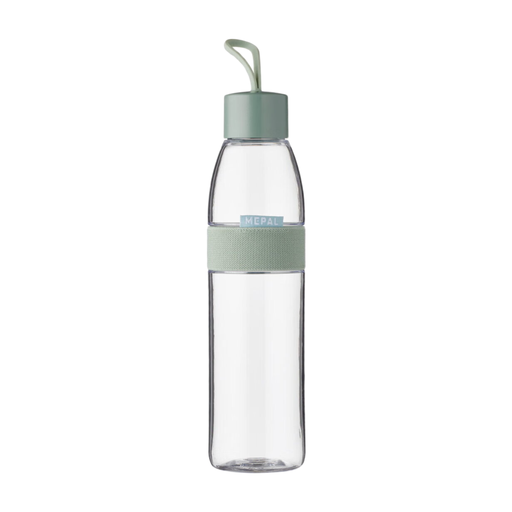
Why this product suits this profile: The larger capacity is ideal for working days, travel and longer training sessions.
The product information specifies a leak-proof closure, BPA-free material and dishwasher cleaning without the rubber band.
700 ml capacity, carrying loop and, according to the product description, suitability for carbonated drinks provided it is not filled to the brim.
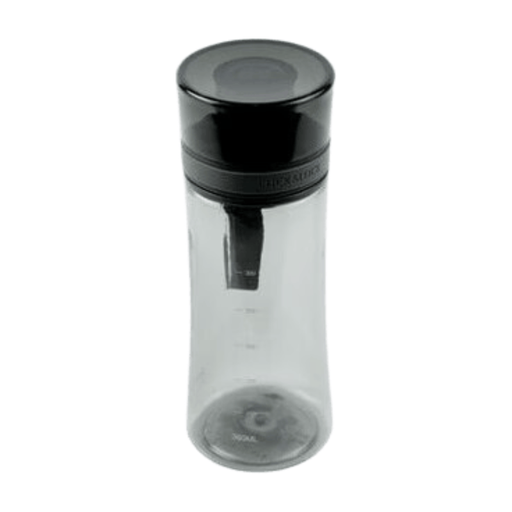
Why this product suits this profile: According to the product description, the integrated spout allows you to drink one-handed while exercising, driving or working in the office.
The closure is designed for use on the go; the silicone seal should be checked regularly and the spout cleaned thoroughly.
380 ml capacity, cup-holder-friendly shape and BPA-free plastic according to the product description.
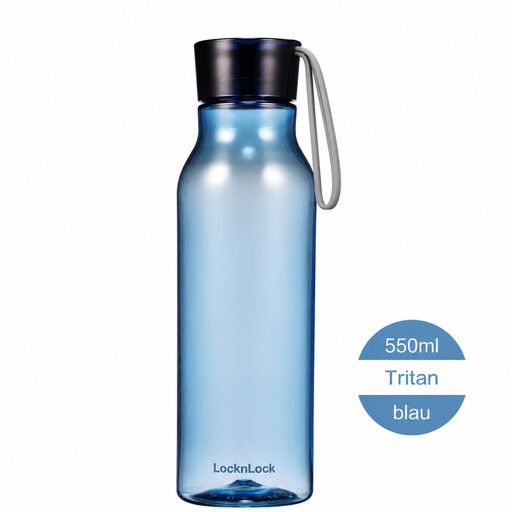
Why this product suits this profile: The combination of 550 ml capacity, carrying loop and transparent Tritan bottle is well suited to commuting and everyday use.
The seal is identified as a separate selection criterion. The manufacturer’s instructions limit use to cold or otherwise suitable drinks.
550 ml capacity, approximately 110 g weight, 65 mm diameter and BPA-free Tritan copolyester according to the product information.
We have put together a complete, regularly updated list of products that fully meet these strict selection criteria and the safety regulations applicable in the EU.
For the office and school, 400 to 550 ml is often sufficient. A lightweight water bottle for the office and school should fit in side pockets or drinks holders and have a lid that closes securely. For children, simple operation, low weight and clear guidance on hot drinks are also important.
Its service life depends on the material, use and care. A reusable water bottle should be cleaned after every use and dried completely. Seals may be wear parts. If there are cracks, deformation, damaged closures or a persistent smell, replacing the bottle is advisable. The relevant manufacturer’s instructions take precedence.
Not necessarily. Even with a dishwasher-safe water bottle, sealing rings, loops or rubber bands may need to be cleaned separately. Before buying, check which individual parts can go in the dishwasher and whether the lid can be fully dismantled. In everyday use, this information often has a greater impact on cleaning effort than the bottle material itself.