
Lieferung heute & morgen

Qualitätsgarantie

Willkommens-Angebote freischalten: KOSTENLOSE Lieferung | Bis zu 80 % RABATT | Kostenlose 30-Tage-JoyPlus-Testphase
App herunterladen
A water bottle is part of many people’s everyday essentials: at the office, on the way to work, during exercise or while travelling. The choice ranges from lightweight plastic water bottles and stainless steel bottles to glass water bottles with straws or water-filter functions.
However, product names and advertising claims do not always make comparisons easier. A supposedly leakproof water bottle can still lose liquid if the seal is fitted incorrectly. A thermal bottle is not automatically suitable for carbonated drinks. And a large capacity can mean more weight and take up more space when you are out and about.
Leak protection does not depend solely on the bottle body. The lid, closure mechanism and correct positioning of the silicone ring are crucial. With screw tops, the seal should sit completely inside the groove provided. A twisted or dirty ring can reduce the effectiveness of the seal.
Water bottles with straws also require special attention. The straw makes drinking during training easier, but it is an additional component that needs to be cleaned regularly. On some models, the lid is only completely watertight when the straw has been removed or the drinking opening is closed.
An insulated bottle with vacuum insulation can keep drinks hot or cold for longer periods. However, this does not mean that every model is suitable for boiling drinks or carbonated liquids. Pressure build-up can cause leaks or loosen the lid.
A single-wall stainless steel water bottle does not have an insulating double wall. It is generally lighter, but offers less protection against warm or cold external temperatures. This may be sufficient for water in the office or gym; for long commutes, a thermal bottle may be more suitable, depending on your needs.
A water bottle with a narrow neck is more difficult to clean with a brush. Wide-mouth models make it easier to add ice cubes and clean the inside. With lids featuring straws, flip tops or multiple seals, check whether all the parts can be taken apart.
The manufacturer’s cleaning instructions are binding for the particular bottle. Some products are dishwasher-safe, while others may only be washed by hand with a mild cleaning agent. Drinks containing milk, fruit juices and carbonated drinks may require additional care or may be unsuitable according to the product information.
A BPA-free water bottle made from Tritan or another plastic can combine low weight with high transparency. Pay attention to the specified temperature range. According to the product description, the LocknLock Eco Water Bottle is intended for cold drinks from -20 to 60 °C and is not suitable for the dishwasher, microwave or carbonated drinks.
A stainless steel water bottle is robust and opaque. Double-wall models also offer vacuum insulation. Stainless steel bottles should not automatically be considered suitable for every liquid: the manufacturer’s guidance on acidity, carbonation, heat and cleaning remains decisive.
Glass can preserve the original taste of drinks, but is heavier and more prone to breaking than plastic. A glass water bottle with a silicone sleeve or carrying strap can make transport easier, but does not replace careful handling.
For short journeys, 400 to 600 ml may be enough. If you are out for longer or drink regularly during exercise, you may prefer a capacity of 650 to 720 ml. A 1-litre bottle reduces the need for refills, but takes up more space.
Also check:
A sports bottle with a squeeze function is suitable for drinking quickly during exercise. A screw top is often simpler in design and may be suitable for commuters and students. A flip-top closure can be operated with one hand, but should be fully locked before transport.
Water-filter bottles involve ongoing costs for replacement filters. According to the product information, the MicroDisc filter in the BRITA Vital water filter bottle should be replaced after around 60 litres or approximately one month with daily use. This should be factored into the overall cost.
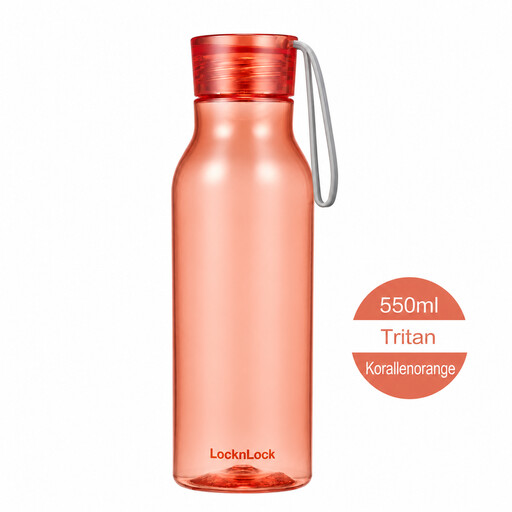
Why this product suits this profile: Weighing around 110 g and with a compact design, it is suitable for the office, university and short journeys. The screw top with carrying strap has a straightforward design.
The product information explicitly states that the silicone ring must be positioned correctly to ensure a watertight seal. The temperature range for cold drinks is also clearly defined.
550 ml capacity, BPA-free Tritan and a screw top explicitly described as leakproof.
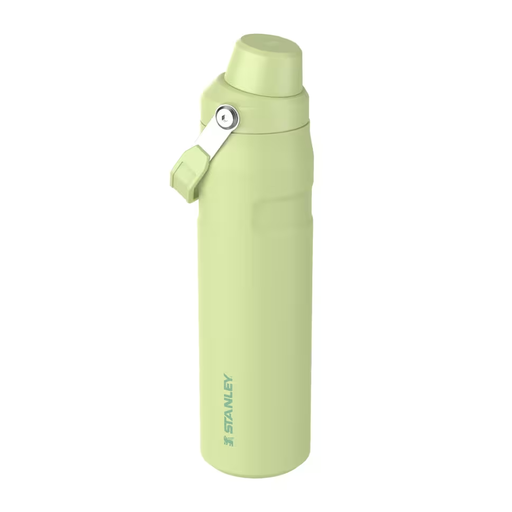
Why this product suits this profile: The double-wall stainless steel construction with vacuum insulation is designed for cold drinks and longer days on the go. The wide bottle mouth makes filling and cleaning easier.
The product description specifies clear usage limits: do not use it with carbonated drinks, and stop using it if the bottle is damaged. This keeps the choice focused on its actual intended use.
600 ml capacity, 18/8 stainless steel containing 90% recycled stainless steel according to the product information, dishwasher-safe and suitable for many cup holders.
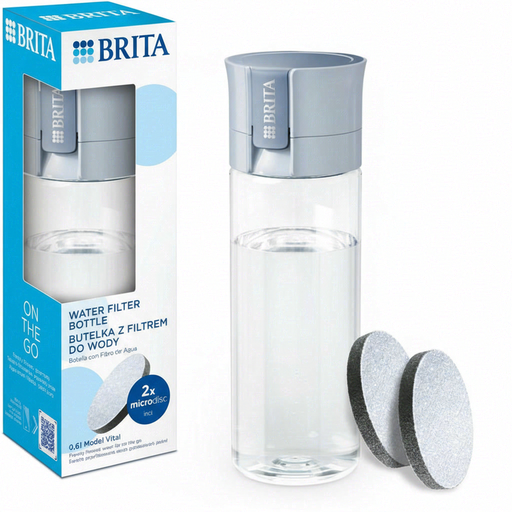
Why this product suits this profile: For commuters, travellers and anyone who wants to filter cold tap water while out and about, this model combines a 600 ml bottle with a MicroDisc filter.
The filter replacement intervals are clearly specified: around 60 litres or approximately one month with daily use. The bottle is intended for cold water only.
Two MicroDisc filters included, 170 g weight, BPA-free design and a dishwasher-safe bottle when the filter is removed.
We have put together a complete, regularly updated list of products that fully meet these strict selection criteria and the safety regulations applicable in the EU.
A reusable water bottle stays more hygienic and functional when you follow a few simple habits:
For commuters, a capacity of around 500 to 700 ml, a secure closure and a format suitable for a rucksack or cup holder are practical criteria. A lightweight Tritan water bottle reduces the weight you have to carry. For hot or cold drinks, consider a double-wall insulated bottle, provided the manufacturer permits the intended use.
Ideally after every use, especially when it contains drinks other than water. Lids, seals and straws should be cleaned separately. With filter bottles, the filter must be replaced according to the manufacturer’s instructions and removed before washing.
This depends on the material thickness, closure, usage and care. Stainless steel is opaque and can be robust when suitably designed. Plastic models such as Tritan are often lighter. The decisive factors are the manufacturer’s specific instructions on temperature, cleaning, damage caused by drops and replacement parts.