
Lieferung heute & morgen

Qualitätsgarantie

Willkommens-Angebote freischalten: KOSTENLOSE Lieferung | Bis zu 80 % RABATT | Kostenlose 30-Tage-JoyPlus-Testphase
App herunterladen
A water bottle should be reliably leakproof, comfortable to hold and suited to how you plan to use it. But eye-catching designs and vague advertising claims don’t always help you choose the right one. What really matters is clear information about the material, lid, capacity and cleaning.
A leakproof water bottle is only practical if the lid, sealing ring and closure mechanism are suited to how you’ll carry it. A simple screw cap may work well in a rucksack, while a one-handed lid is more convenient for sport. Also check whether the manufacturer lists any restrictions, for example on fizzy drinks or filling the bottle too full.
A BPA-free water bottle isn’t automatically suitable for hot drinks, the microwave or the freezer. Plastic models such as a Tritan water bottle are often intended for cold or room-temperature drinks, according to the product information. Stainless steel models may be insulated, depending on their construction, but not every stainless steel water bottle is a thermal bottle.
A narrow neck, straw or multiple seals can make a bottle more difficult to clean. ‘Dishwasher-safe’ often applies only to the bottle itself, or excludes individual seals and elastic bands. If you use your bottle every day, check these details before buying.
For short journeys or a car cup holder, 380 to 550 ml may be enough. For longer commutes, walks or extended training sessions, 650 to 980 ml gives you more to drink. However, a larger capacity often means extra weight and takes up more space. So check the diameter and height, not just the capacity in millilitres.
A water bottle for on the go should fit in your rucksack’s side pocket, bike cage or cup holder. Compact models are often easier to pack for school or the office; for sport, a larger bottle can be useful if you won’t be able to refill it.
A flip-top lid with a lock is handy for one-handed drinking during a workout. A wide screw-top lid makes it easier to add ice cubes and clean the bottle. Bottles with a straw are convenient to drink from, but need extra care when cleaning.
Before ordering, check:
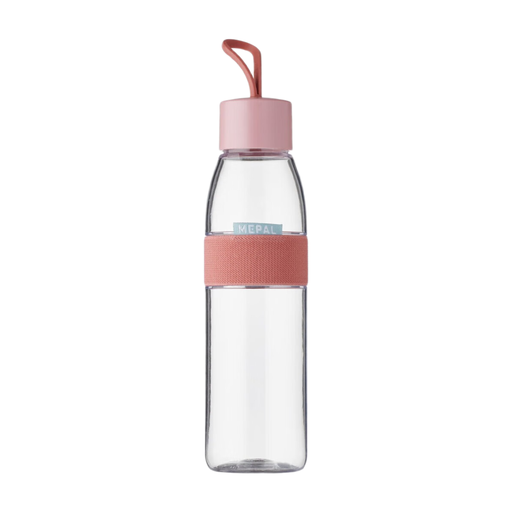
Why this product suits this profile: According to the product information, this compact reusable water bottle has a 500 ml capacity, an attached carry loop on the lid and BPA-free materials, making it suitable for work, school and leisure.
The product information describes the lid as leakproof and also advises against filling the bottle to the brim with fizzy drinks.
500 ml capacity, weighs 110 g and, according to the product information, is dishwasher-safe when the elastic band is removed.
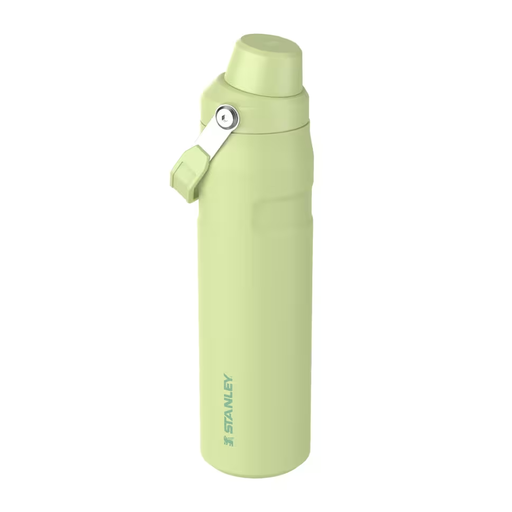
Why this product suits this profile: According to the product information, its double-wall stainless steel construction with vacuum insulation is designed for people who prefer a robust bottle and cold drinks on the go.
The product description specifies a leakproof lid and advises against filling the bottle with fizzy drinks.
600 ml capacity, 18/8 stainless steel, vacuum insulation and, according to the product information, dishwasher-safe.
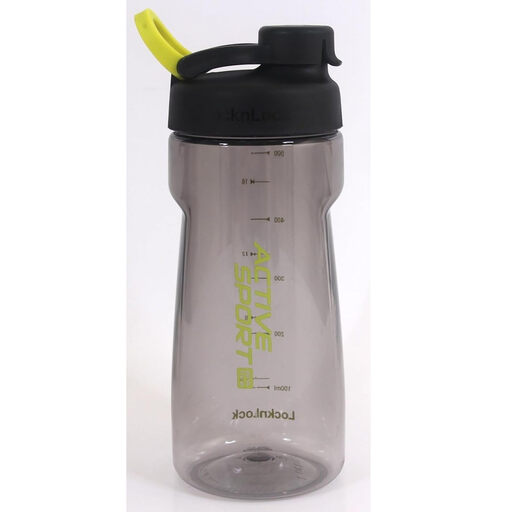
Why this product suits this profile: According to the product description, this Tritan water bottle has a one-handed flip-top lid with a safety lock and is suitable for cold and room-temperature drinks from -20 °C to 60 °C.
The product information specifies a silicone seal and highlights the importance of positioning the ring correctly to prevent leaks.
550 ml capacity, weighs around 145 g, BPA-free Tritan according to the product information, and one-handed operation with a safety clip.
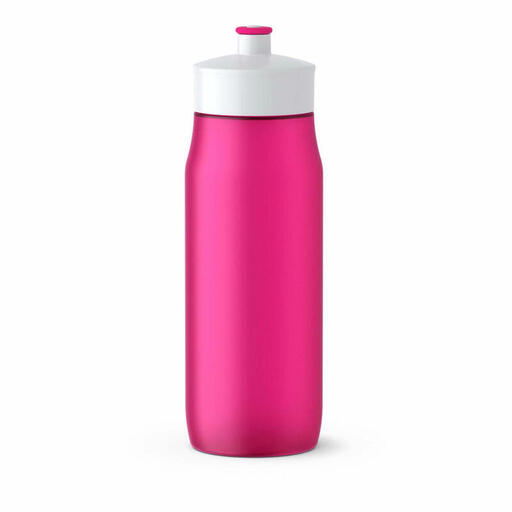
Why this product suits this profile: According to the product information, this sports bottle is designed for one-handed drinking, outdoor activities and standard bike bottle cages.
The squeeze mechanism is paired with a nozzle and closure. According to the product information, the bottle is dishwasher-safe and not intended for hot liquids.
600 ml capacity, BPA-free PE according to the product information, a soft-touch finish and dishwasher-safe design.
We’ve put together a complete, regularly updated list of products that meet these strict selection criteria and the safety regulations in force in the EU.
For commuters, 500 to 700 ml is often a practical capacity. Look for a leakproof lid, a size that fits your bag or cup holder, and a bottle that’s easy to clean as part of your everyday routine. For cold drinks, a plastic or Tritan water bottle is usually sufficient; if you want to keep drinks at a particular temperature, consider an insulated water bottle.
Its lifespan depends on the material, knocks and drops, exposure to different temperatures and how well it’s cared for. Sealing rings may wear out before the bottle itself. Check your bottle regularly for cracks, deformation, odours and a lid that no longer fits securely. If it’s damaged, stop using it.
Aside from the purchase price, the main costs are water, cleaning and, if needed, replacement seals. A dishwasher-safe bottle can reduce the effort involved in cleaning, while models with straws or multiple seals have more separate parts. Refilling with tap water can help you avoid buying single-use bottles, but be sure to clean your bottle thoroughly after each use and let it dry completely.