
Lieferung heute & morgen

Qualitätsgarantie

Willkommens-Angebote freischalten: KOSTENLOSE Lieferung | Bis zu 80 % RABATT | Kostenlose 30-Tage-JoyPlus-Testphase
App herunterladen
A water bottle is part of the daily essentials for many adults, students, professionals and sportspeople. However, not every model is suitable for every situation. A bottle that is practical in the office may feel awkward during training. A lightweight plastic bottle may not be suitable for hot drinks, while a vacuum-insulated water bottle is often heavier and requires more care.
Before buying, it is therefore worth checking the actual product specifications rather than relying on general advertising claims.
A leak-proof water bottle is only reliable when the lid, silicone seal and closure work together correctly. With screw-top lids, a seal that has shifted or been inserted while damp can affect the bottle’s suitability for transport.
You should therefore check:
Even a closure that appears leak-proof when first used may start to lose liquid later if it is assembled incorrectly or becomes worn.
A thermos flask or vacuum-insulated water bottle is designed for hot and cold drinks, but is not automatically suitable for every liquid. Carbonated or fermenting drinks, as well as dry ice, can create pressure inside a sealed container. Many plastic models also exclude temperatures above 60 °C.
The manufacturer’s specifications are crucial when it comes to:
A 720 ml sports bottle provides more capacity when hiking or training, but takes up more space. For a handbag, rucksack or car cup holder, 380 to 550 ml may be more practical. You should also make sure that the diameter fits the bag compartment or cup holder.
A BPA-free plastic water bottle is usually lightweight and convenient for cold drinks. Tritan copolyester is often used for its transparency and impact resistance. Claims such as “BPA-free” should refer specifically to the product itself, not just to its packaging.
Glass does not affect the taste of drinks, but is more vulnerable to impacts. A thermal sleeve can make transport easier, but does not replace full protection against damage.
A stainless steel water bottle is durable and suitable for everyday use. With double-walled models featuring vacuum insulation, drinks can stay hot or cold for longer. However, these bottles are often heavier and, depending on the design, may need to be washed by hand.
For the office and the commute, a tightly sealing screw-top lid is often sufficient. During sport, a bottle with a straw or an integrated spout can make drinking easier while you are on the move. A carrying handle or strap is useful if you frequently take the bottle out of your rucksack, hang it up or carry it by hand.
Also pay attention to how easy the drinking opening is to clean. Narrow straws and spouts need thorough cleaning to prevent drink residue from being left behind.
A reusable water bottle will stay functional for longer if it is rinsed after every use and left to dry fully with the lid open. Seals should be checked regularly and replaced if you notice cracks or deformation.
Follow the care instructions for the specific model: some bottles are dishwasher-safe, while others are intended for hand washing only. Scouring agents, metal brushes and harsh cleaning products can damage surfaces or seals.
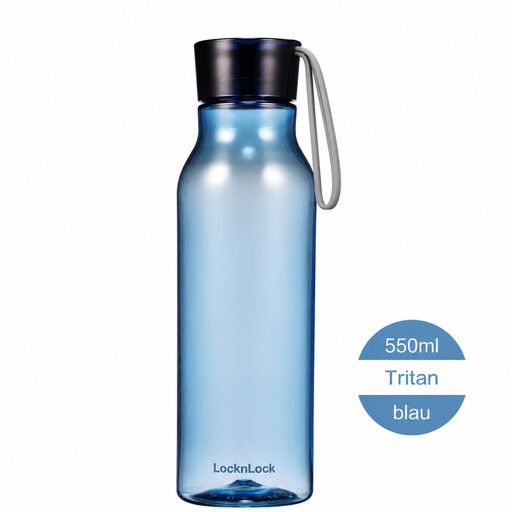
Why this product suits the profile: This compact Tritan water bottle holds 550 ml, weighs approximately 110 g according to the product specifications and has a carrying strap. It is designed for cold drinks at temperatures from -20 °C to 60 °C.
The product specifications mention a silicone seal and explicitly state that it must be positioned correctly in the lid. This makes it clear what matters for leak-proof performance.
BPA-free Tritan, 550 ml capacity, transparent bottle body and low weight.
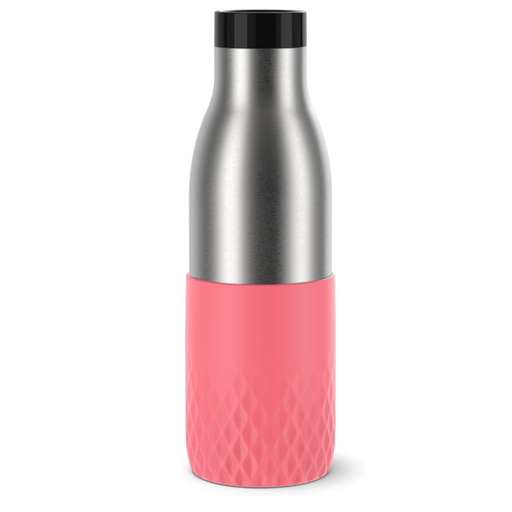
Why this product suits the profile: This stainless steel bottle combines vacuum insulation with a Quick-Press-360° drinking closure. According to the product specifications, it is suitable for hot and cold drinks and holds 0,5 l.
The specifications state both the insulation technology and the type of closure. This allows you to compare temperature requirements and ease of use more precisely.
Stainless steel construction, vacuum insulation, leak-proof closure and, according to the product specifications, a dishwasher-safe design.
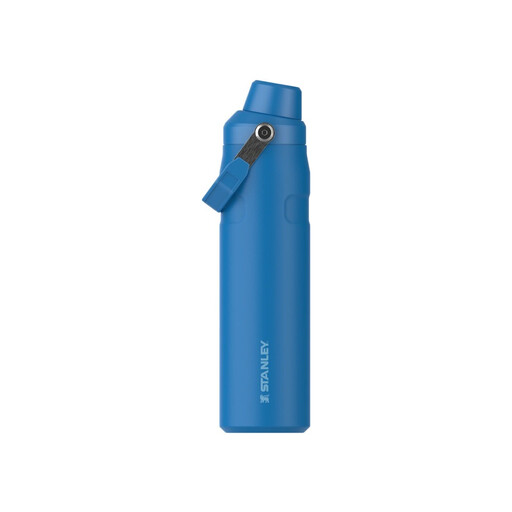
Why this product suits the profile: For training, travel and outdoor activities, this sports bottle offers a 600 ml capacity, double-walled vacuum insulation, a Fast-Flow lid with straw and a foldable carrying handle.
Its intended use is clearly defined: according to the product specifications, this model is designed for cold drinks. Guidance on carbonated drinks, overfilling and closing the lid correctly helps prevent misuse.
BPA-free stainless steel, Fast-Flow drinking opening, carrying handle, double-walled vacuum insulation and, according to the product specifications, dishwasher-safe construction.
For the gym and office, 500 to 650 ml is a well-balanced capacity. A lightweight plastic bottle with a carrying handle is suitable for cold drinks and short journeys. If you want to carry tea or coffee, choose a stainless steel or thermos flask with clearly stated insulation.
For travel and outdoor activities, a secure closure, robust outer wall and comfortable handle are important. When cycling or training, a bottle with a straw or spout can make it easier to drink. For families, you should also consider small individual parts, cleaning requirements and whether hot drinks are excluded.
We have put together a complete, regularly updated list of products that fully meet these strict selection criteria and the safety regulations applicable in the EU.
For short journeys, the office and the car, 380 to 550 ml is often sufficient. For sport, hiking or long working days, 600 to 720 ml may be more suitable. Weight, storage space and the ability to refill the bottle are also important considerations.
Its lifespan depends on the material, how it is used and how well it is cared for. Replace a bottle if you notice cracks, deformation, odours or damaged seals. Even with stainless steel bottles, the lid and sealing rings should be checked regularly.
Not every stainless steel bottle is automatically designed for hot drinks. Check the manufacturer’s specifications for the temperature range, closure and risk of burns. With vacuum-insulated models, the outer wall may remain comparatively cool, while the contents can still be very hot.