
Lieferung heute & morgen

Qualitätsgarantie

Willkommens-Angebote freischalten: KOSTENLOSE Lieferung | Bis zu 80 % RABATT | Kostenlose 30-Tage-JoyPlus-Testphase
App herunterladen
A water bottle should stay leak-proof in your rucksack, be easy to clean hygienically and suit your daily routine. However, eye-catching designs and bold product claims do not automatically lead to the right purchasing decision. The key factors are technical details such as capacity, closure, material, temperature range and cleaning.
A leak-proof water bottle is only practical when the lid, seal and drinking opening work well together. A closure may remain sealed during normal transport while the drinking opening itself is still open. For models with a straw or spout, you should therefore check whether the lid can be closed completely for transport.
A correctly fitted silicone seal is also important. With the LocknLock Eco Water Bottle, for example, the silicone ring must sit correctly in the designated groove so that the closure seals tightly. A damaged or displaced seal can affect how well it works.
An insulated water bottle or thermal bottle is generally suitable for drinks that need to be kept at a particular temperature. However, the actual duration depends on the fill volume, starting temperature, surroundings and how often the bottle is opened. Claims such as “cold for up to 24 hours” should therefore be understood as product specifications under certain conditions, not as a blanket guarantee for every use.
Not all insulated bottles are suitable for carbonated drinks either. With many models, pressure can cause the closure to come loose or liquid to escape. Check the relevant warnings before buying and before using the bottle for the first time.
A lid with a straw, narrow mouthpiece or several seals can be more time-consuming to clean in everyday use than a simple water bottle. Residue tends to collect around threads, silicone rings and drinking attachments in particular. Claims such as “dishwasher-safe” do not always apply to every individual part either. For example, the Stanley GO ICEFLOW FAST FLOW BOTTLE is specified as dishwasher-safe, while other products are intended for hand washing only.
For short journeys, 350 to 550 ml is often sufficient. A water bottle for on the go with a capacity of 600 to 750 ml is more suitable for work, university, commuting or longer training sessions. Large tumblers holding around 900 ml to 1.2 l reduce the number of refills, but may be heavier and bulkier.
When carrying a bottle in a rucksack, diameter and weight matter alongside capacity. A slim model fits more easily into side pockets and car cup holders. A wider tumbler, on the other hand, often offers greater stability but requires more space.
A stainless steel water bottle is generally robust and neutral in taste. Double-walled models with vacuum insulation are suitable for cold or hot drinks. However, stainless steel bottles cannot automatically be used in the microwave or dishwasher; the care instructions for the specific model are the deciding factor.
A BPA-free plastic water bottle is usually lightweight and practical for sport, school or commuting. Tritan and similar plastics provide a clear view of the fill level. However, some models are intended only for cold drinks or limited temperature ranges. According to the product information, the LocknLock Eco Water Bottle is designed for liquids from -20 °C to 60 °C.
Glass can be neutral in taste, but is more susceptible to damage from impacts. A thermal sleeve can make transport easier, but does not replace careful handling.
A sports bottle with a wide opening can be filled quickly and used with ice cubes. A mouthpiece or drinking straw allows you to drink while walking or exercising without having to tilt the bottle very far. With a water bottle with a straw, however, you should check whether it is intended only for cold drinks and how the straw can be cleaned.
Only models whose product information expressly permits it are suitable for carbonated drinks. The Mepal Ellipse Water Bottle is designed for this purpose, but must not be filled to the brim. Many other water bottles advise against carbonated drinks.
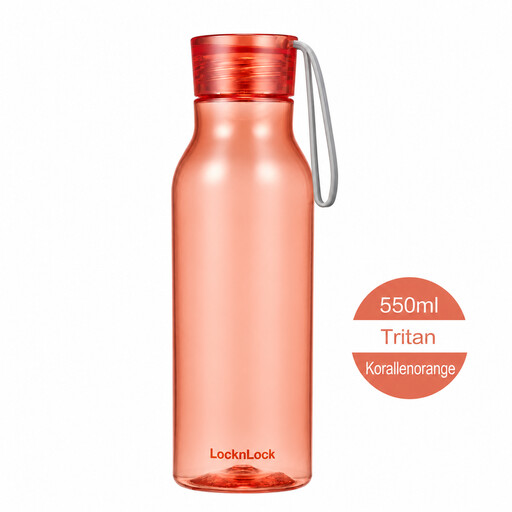
Why this product suits this profile: This lightweight 550 ml Tritan model is suitable for the office, commuting and short trips. The carrying strap makes it easier to transport.
The product information states a clearly defined temperature limit and points out how to position the silicone ring correctly. This makes the sealing requirements easy to understand.
550 ml capacity, approximately 110 g weight, BPA-free Tritan and a screw lid with silicone seal.
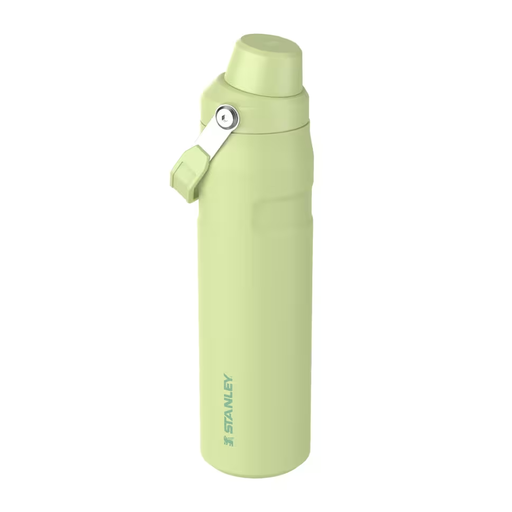
Why this product suits this profile: This double-walled stainless steel bottle combines a 600 ml capacity with vacuum insulation and a wide Fast-Flow mouthpiece for sport, work and travel.
The product description gives specific insulation details: according to the manufacturer, drinks stay cold for up to 10 hours and ice for up to two days. It is expressly not intended for carbonated drinks.
Double-walled 18/8 stainless steel, 370 g weight, wide bottle neck, carrying handle and dishwasher-safe according to the product information.

Why this product suits this profile: This 24 oz thermal tumbler is aimed at people who regularly enjoy larger quantities of cold drinks while driving, in the office or on the go.
The product information distinguishes between drinking through the straw and fully leak-proof transport without the straw inserted. According to the guidance, the model is not intended for carbonated or hot drinks.
18/8 stainless steel, double-walled vacuum insulation, tapered base for many car cup holders and a non-slip standing surface.
We have put together a complete, regularly updated list of products that fully meet these strict selection criteria and the safety regulations applicable in the EU.
For the office, university and commuting, 500 to 750 ml is usually a practical range. Plastic models are lightweight, while stainless steel bottles are often more robust. If you want to keep cold or hot drinks for longer periods, choose double-walled insulation.
The lifespan depends on the material, use and care. Seals and drinking attachments may wear out more quickly than the bottle itself. You should stop using a bottle if it develops cracks, deformation, damaged threads or leaking seals. Regular cleaning and allowing it to dry completely without the lid screwed on can help maintain its suitability for everyday use.
In addition to the purchase price, consider cleaning effort, replacement parts and whether individual seals or lids can be bought separately. Dishwasher-safe models can make cleaning easier, while thermal bottles with several components generally require more care. It is therefore worth checking the care instructions and the intended type of drink before buying.