
Lieferung heute & morgen

Qualitätsgarantie

Willkommens-Angebote freischalten: KOSTENLOSE Lieferung | Bis zu 80 % RABATT | Kostenlose 30-Tage-JoyPlus-Testphase
App herunterladen
A reusable water bottle should work reliably in everyday life: it needs to fit in your bag or cup holder, seal securely and be easy to clean. However, product claims such as “leak-proof”, “particularly lightweight” or “keeps drinks cold for a long time” do not automatically lead to the right buying decision.
Three common pitfalls occur particularly often:
A stainless steel water bottle is resistant to odours and is often well suited to everyday transport. Double-walled models with vacuum insulation are sold as insulated bottles or thermos flasks and are designed for cold and, in some cases, hot drinks. The manufacturer’s specific approval is crucial: some bottles must not be used with carbonated drinks or very hot liquids.
Plastic models made from Tritan or other explicitly BPA-free materials are generally lighter. However, a BPA-free water bottle initially only tells you something about the plastic used, or that bisphenol A has not been used. You should also check temperature limits, cleaning instructions and whether the bottle is suitable for hot drinks.
A glass bottle can help preserve the original taste of drinks, but it is more vulnerable to knocks and falls. For transport, it should have a protective sleeve or a sturdy outer coating.
For your desk, short journeys or commuting, 350 to 600 ml is often sufficient. If you are out for several hours or drink during exercise, you may prefer a capacity of 650 to 750 ml. A 1-litre bottle reduces the need for refilling, but increases both weight and the amount of space required.
Pay attention to the diameter. A water bottle for on the go should fit in your car’s cup holder, the side pockets of backpacks or the compartments provided. Product details such as a diameter of 65 to 80 mm make direct comparisons easier.
A screw cap is generally simple in design. Drinking attachments, flip-top lids and a water bottle with a straw, on the other hand, make it more convenient to drink while walking or exercising. At the same time, they create more individual parts that need to be cleaned regularly.
Before buying, check the following:
A water filter bottle also involves filter replacements and ongoing costs. According to the product details, the MicroDisc filter in the BRITA model should be replaced after approximately 60 litres or around one month when used daily. These costs should be taken into account when making your purchase decision.
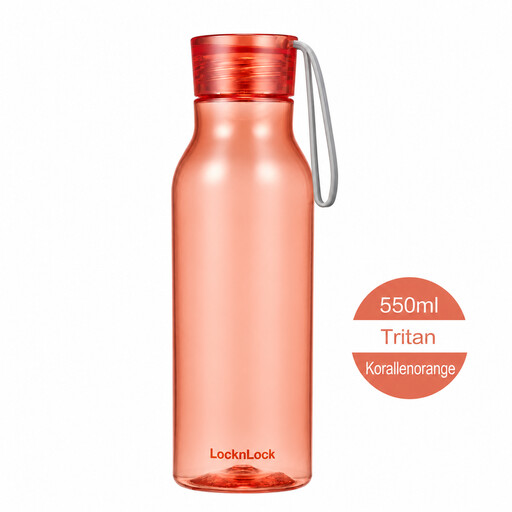
Why this product suits this profile: With a capacity of 550 ml and a stated weight of around 110 g, it is suitable for the office, commuting and carrying in a backpack. The screw-top lid and carry strap focus on the basic requirements of a water bottle.
The product details specify the correct position of the silicone ring and recommend hand washing. This makes it easier to assess the cleaning requirements realistically before buying.
Tritan body, stated BPA-free material, 550 ml capacity and a temperature range of -20 °C to 60 °C.
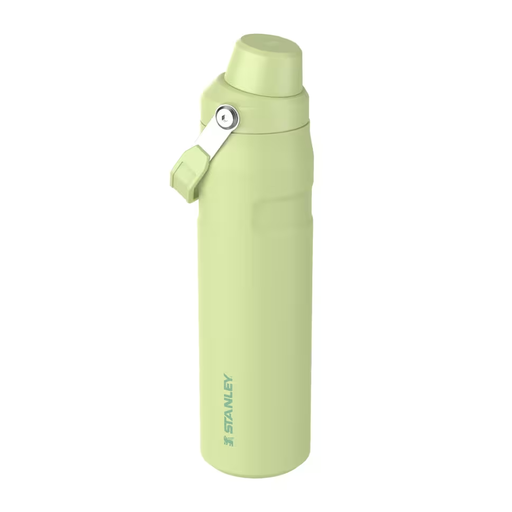
Why this product suits this profile: This double-walled stainless steel bottle with vacuum insulation is designed for sport, commuting and car journeys. The 600 ml capacity, carry handle and compatibility with standard cup holders support an active lifestyle.
The wide opening makes filling and cleaning easier. At the same time, the product description expressly states that carbonated drinks should not be used.
90% recycled 18/8 stainless steel according to the product details, vacuum insulation, dishwasher-safe bottle and a stated weight of 370 g.
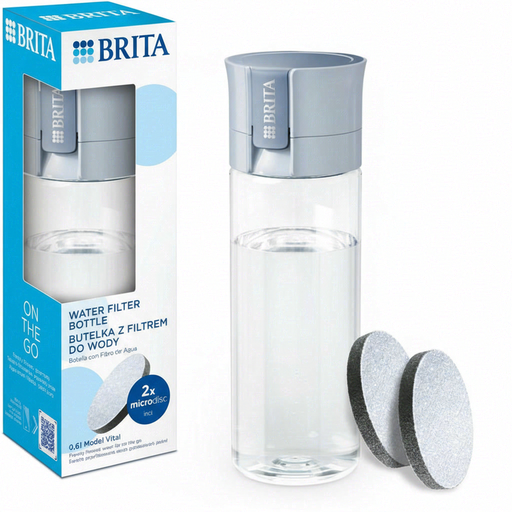
Why this product suits this profile: For people who want to filter cold tap water while out and about, this model combines a 600 ml capacity with an integrated MicroDisc system.
The filter lifespan and replacement schedule are clearly specified. This keeps ongoing costs and maintenance requirements visible, rather than focusing only on taste benefits.
Two MicroDisc filters included, 170 g weight, flip-top closure and dishwasher-safe bottle; designed exclusively for cold water.

Why this product suits this profile: With a 710 ml capacity, this 18/8 stainless steel tumbler is aimed at sport, travel, the office and car journeys. According to the product details, its tapered base is designed to fit many cup holders.
The description distinguishes between use with the straw and transport without it. It also specifies hand washing for the lid and straw.
Double-walled vacuum insulation, BPA-free lid materials, silicone tip on the straw and a non-slip base.
We have put together a complete, regularly updated list of products that fully meet these strict selection criteria and the safety regulations applicable in the EU.
Rinse a new bottle with warm water and mild washing-up liquid before using it for the first time. Seals, lids and straws should be cleaned separately and dried thoroughly on a regular basis. Whenever possible, leave the bottle open while it dries so that moisture does not collect in the closure.
Avoid using the dishwasher if the manufacturer specifies hand washing. Carbonation can create pressure inside closed containers. If you notice cracks, damaged seals or a change in the closure, stop using the bottle. Thermos flasks must not be placed in the microwave or freezer.
For the office, commuting and short journeys, 500 to 700 ml is generally a practical range. Plastic is lightweight, while stainless steel offers a durable alternative. The key factors are a suitable diameter, a lid that closes securely and manageable cleaning requirements.
The lifespan depends on the material, how the bottle is used and how well it is cared for. Stainless steel can last for a long time when treated carefully. With plastic, you should pay particular attention to scratches, deformation and cracks. Sealing rings and straws can be wear parts and may need to be replaced.
In addition to the purchase price, you will need to pay for replacement filters. According to the product details, a filter for the BRITA model mentioned is designed to last for approximately 60 litres or around one month of daily use. Before buying, compare the filter price, replacement interval and your actual water consumption.