
Lieferung heute & morgen

Qualitätsgarantie

Willkommens-Angebote freischalten: KOSTENLOSE Lieferung | Bis zu 80 % RABATT | Kostenlose 30-Tage-JoyPlus-Testphase
App herunterladen
While the quality of tap water is generally high, many households are looking for ways to further improve its taste, odour, and the concentration of certain substances. A water filter can be an effective solution to enhance water quality at home while also reducing the consumption of plastic bottles. However, the range of available systems is vast, from a simple water filter pitcher to a permanently installed reverse osmosis system.
This article serves as a guide to help you navigate your options. We will introduce different filter types, explain key purchasing criteria, and present a selection of models to make it easier for you to choose the right drinking water filter.
The right system for you depends on your individual needs, living situation, and budget. Consider the following points to make an informed decision.
Water filtration systems can be roughly divided into three categories, which differ in their installation complexity:
Not every filter removes the same substances. Pay close attention to the product description to understand which contaminants are reduced. Common filtration targets include chlorine, heavy metals (e.g., lead and copper), pesticides, and limescale.
An important quality indicator is NSF-certified performance. NSF International is an independent organisation that tests and certifies products for public health and safety. Common standards include:
A water filter for limescale typically uses ion-exchange resin to reduce the calcium and magnesium ions responsible for water hardness.
Here is a selection of models that cater to different needs and applications.
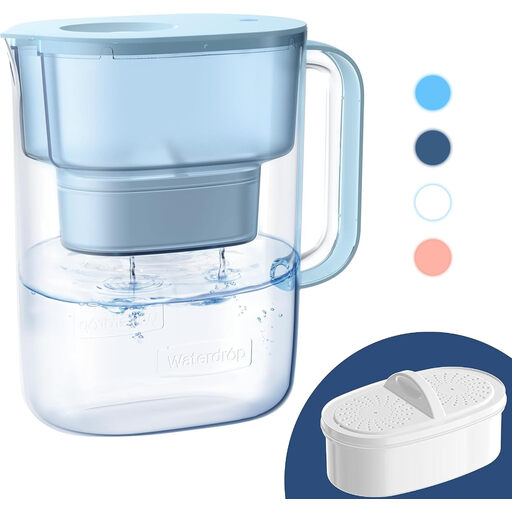
Why It Stands Out The Waterdrop Lucid is a classic water filter pitcher that combines functionality with a high filter capacity. It is NSF 42 and NSF 372 certified, confirming the reduction of chlorine, taste, and odour, as well as the use of lead-free materials. The filter cartridge has a long lifespan and requires less frequent replacement than many other pitcher models.
Pros
Who It's For Ideal for individuals, couples, and small families in rental homes who are looking for a straightforward and effective solution to improve the taste of their tap water without permanent installation.
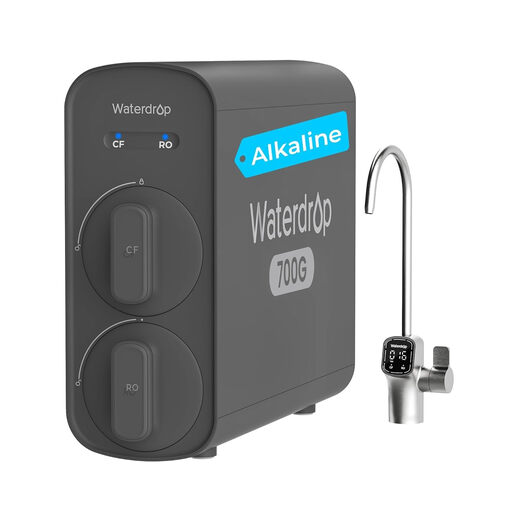
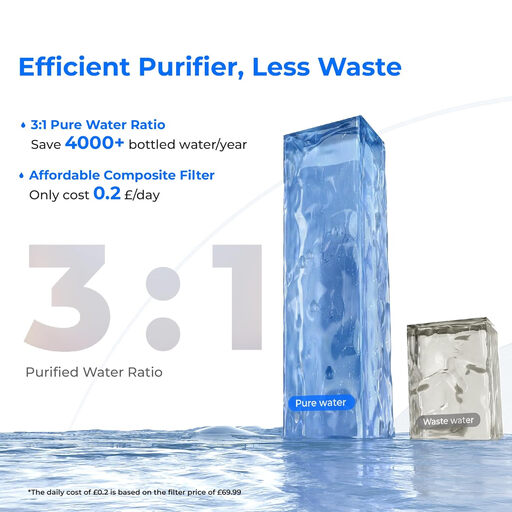
Why It Stands Out This under-sink system is a high-performance reverse osmosis system that offers comprehensive 8-stage filtration. Its core technology is a 0.0001 μm RO membrane that effectively reduces a wide range of contaminants. A standout feature is its subsequent alkalisation and remineralisation technology, which reintroduces beneficial minerals to the water and raises its pH level.
Pros
Who It's For Perfect for homeowners and discerning users who want maximum contaminant reduction and value mineralised, alkaline water straight from the tap.
Why It Stands Out The WD-A2 countertop water filter from Waterdrop combines 5-stage reverse osmosis filtration with the convenience of a hot and cold water dispenser. The unit requires no installation and is ready to use out of the box. It offers six adjustable water temperatures from 15°C to 95°C (60°F to 203°F), making it extremely versatile.
Pros
Who It's For An excellent choice for anyone who wants the high filtration performance of a reverse osmosis system without the hassle of installation. It's especially practical for offices, families, and anyone who appreciates the convenience of temperature-controlled water on demand.
Haven't found the right model for you yet? Choosing a water filter is a very personal decision that depends on many factors. If you are looking for other alternatives or specialised systems, you may find the right solution in our wide range of products.
Explore our full range of Water Dispensers & Filters and find the ideal solution for your home.
1. How often do you need to change the filter in a water filter? Replacement intervals vary greatly depending on the filter type, manufacturer, and your local water quality. For water filter pitchers, the frequency is often between 1 and 3 months. For under-sink and countertop systems, the different filter stages have varying lifespans, ranging from 6 months to 24 months or longer. Always refer to the manufacturer's specifications in the user manual.
2. Does a water filter reduce limescale in water? Yes, certain water filters can reduce limescale. Models specifically designated as a water filter for limescale typically contain an ion-exchange resin. This resin exchanges the calcium and magnesium ions responsible for hardness for sodium ions, thereby softening the water. Not all filter types offer this function; activated carbon filters primarily focus on reducing chlorine and organic compounds.
3. What does NSF-certified mean for a drinking water filter? An NSF certification means that a drinking water filter has been tested by the independent organisation NSF International against strict standards for safety and performance. The certification confirms that the product actually reduces the contaminants claimed by the manufacturer to the specified degree and is made from materials that do not leach harmful substances into the water. It is a reliable indicator of a filter system's quality and effectiveness.