
Lieferung heute & morgen

Qualitätsgarantie

Willkommens-Angebote freischalten: KOSTENLOSE Lieferung | Bis zu 80 % RABATT | Kostenlose 30-Tage-JoyPlus-Testphase
App herunterladen
Tap water is extensively regulated in Germany. Even so, taste, odour, water hardness or the condition of the household plumbing may prompt you to consider additional filtration. A water filter for the home should therefore be chosen based on its intended use, filtration technology, space requirements and ongoing costs—not on marketing claims.
The TDS value indicates the total amount of dissolved substances in water. This may include minerals and other dissolved components, but on its own it does not show whether the water poses a health risk. A TDS reading is therefore primarily useful for monitoring changes over time, rather than as the sole basis for a purchase.
A high number of filter stages may sound impressive, but the filter media used and the documented testing standards are what really matter. Activated carbon, for example, can reduce chlorine, odours and substances that affect taste. A reverse osmosis membrane, on the other hand, uses an extremely fine membrane and can significantly reduce the TDS value. The two technologies serve different purposes.
In addition to the purchase price, you may need to budget for a water filter replacement cartridge, electricity, wastewater and, where applicable, installation. Check the recommended replacement interval, the availability of suitable cartridges and compatibility. With some systems, only original filters may be used.
A simple drinking water filter with activated carbon is often suitable for reducing chlorine, odours and unpleasant tastes. A reverse osmosis water filter is designed to reduce dissolved substances more extensively. This process generally also produces wastewater, so the ratio of filtered water to wastewater should be clearly stated in the technical specifications.
Manufacturer information about standards must be read carefully. The Waterdrop G3P600, for example, lists NSF/ANSI 58 for TDS reduction, NSF/ANSI 42 for chlorine, taste and odour, and NSF/ANSI 372 for lead-free materials. Such information relates to the specific function listed and should not be interpreted as a blanket statement covering every possible contaminant.
A compact countertop filter may be sufficient for one person. Families or offices, however, need greater capacity. Figures such as 600 or 700 GPD come from technical specifications and should not be treated as the actual flow rate under all conditions. Water temperature, inlet pressure and the condition of the filters all affect practical performance.
An under-sink water filter saves worktop space, but may require drilling, a wastewater connection and a power socket. Check the following before buying:
A water filtration system for the kitchen should only be connected to the designated cold-water supply. If you live in rented accommodation, you should also check whether drilling or modifications to the water connection are permitted.
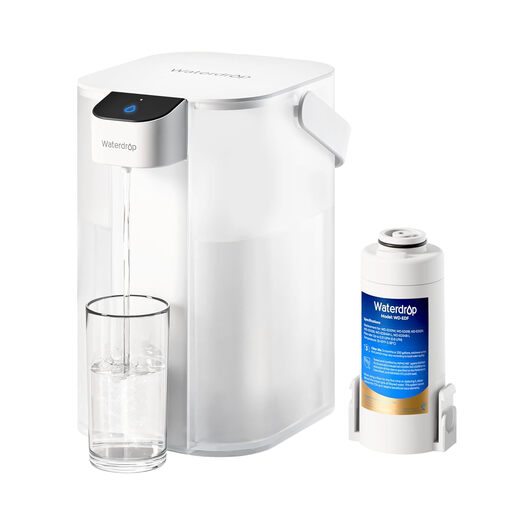
Why this product suits this profile: This portable electric filter jug requires no permanent installation, making it suitable for the kitchen, office or camping.
The replacement interval is specified as 757 litres or three months. This makes it easier to plan ongoing costs and maintenance time before buying.
3.5-litre capacity, USB-C charging and a stated filtration rate of 0.21 GPM.
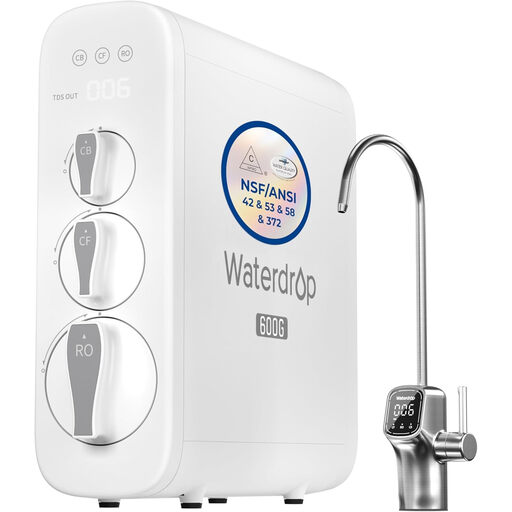
Why this product suits this profile: This tankless under-sink system is designed for regular use and features an LED tap with a TDS display and filter life indicator.
The stated ratio of filtered water to wastewater is 2:1. The dimensions, weight and need for an under-sink power socket are also clearly specified.
8-stage filtration, 600 GPD according to the product specifications and tool-free filter replacement when indicated.
Why this product suits this profile: This compact countertop solution combines reverse osmosis with six temperature settings from 15 to 95 °C, making it suitable for the kitchen, office or motorhome.
No permanent installation means no drilling beneath the sink. However, the 1.1-litre water tank must be filled and cleaned regularly.
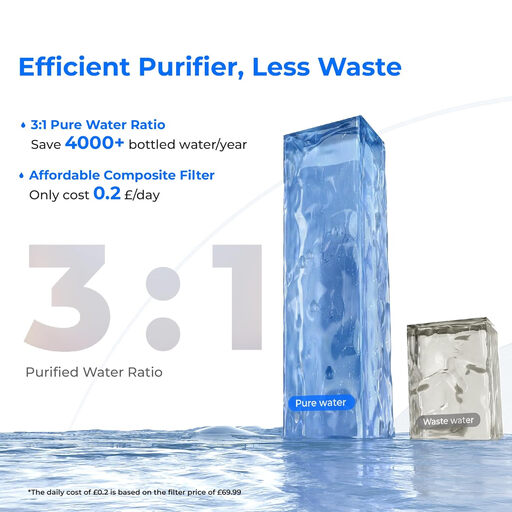
5-stage reverse osmosis filtration, touchscreen, five volume options and a stated filtered water-to-wastewater ratio of 3:1.
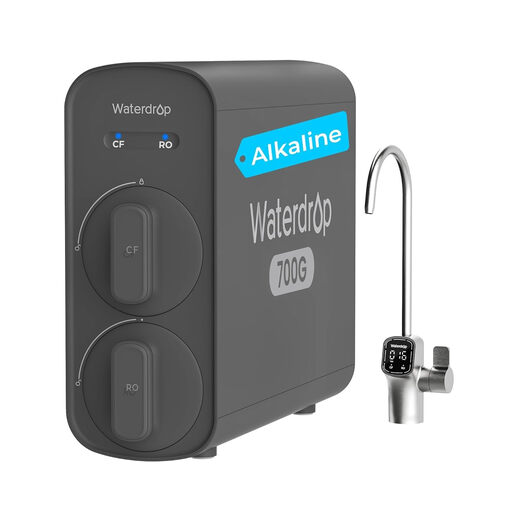
Why this product suits this profile: This tankless under-sink system is designed for larger daily volumes and, according to the product information, requires no power supply.
The specifications state 700 GPD, a ratio of 2:1 and individual replacement intervals for the cartridges. Before buying, check the available installation space and cold-water connection.
8-stage filtration, 700 GPD according to the product description and a 2:1 filtered water-to-wastewater ratio.
We have put together a complete, regularly updated list of products that fully meet these strict selection criteria and the safety regulations applicable in the EU.
A filter replacement should be planned based not only on the calendar, but also on usage and the manufacturer’s recommendations. With a countertop water filter, capacity is important; with an under-sink system, consider the number and service life of the individual cartridges. Also check whether replacement filters will remain available over the long term.
Appliances with a hot-water function are subject to additional safety requirements. Children should not be allowed to access them unsupervised. Water tanks and drip trays must be cleaned regularly to prevent deposits from building up. A filtered water dispenser can make everyday life easier, but it requires space, electricity and a regular cleaning routine.
There is generally no requirement to filter ordinary tap water further. A filter may nevertheless be useful if you want to change the taste or odour, or if your household plumbing has particular requirements. If you have specific concerns about water quality, an analysis by a suitable laboratory is more informative than a simple TDS meter.
This depends on the filter type, water quality and level of use. Product specifications range, for example, from three months or 757 litres for an electric filter jug to 12 to 18 months for a compatible under-sink cartridge. The relevant manufacturer’s instructions and the filter replacement indicator should always take priority.
In addition to replacement cartridges, you may incur electricity and wastewater costs. Daily usage, the filtered water-to-wastewater ratio and the prices of original filters are therefore key considerations. A system with a higher flow rate is not automatically more cost-effective if only small quantities are filtered in the household.