
Lieferung heute & morgen

Qualitätsgarantie

Willkommens-Angebote freischalten: KOSTENLOSE Lieferung | Bis zu 80 % RABATT | Kostenlose 30-Tage-JoyPlus-Testphase
App herunterladen
A water flosser, also known as an oral irrigator, can be an excellent addition to your daily oral hygiene routine. It uses a targeted jet of water to clean interdental spaces and the gumline—areas a toothbrush often struggles to reach. However, the market is crowded, and many devices fail to deliver on their promises. Before you make a decision, it's crucial to understand the typical weaknesses that can quickly turn a promising tool into an unused gadget.
As your Joybuy Product Recommendation Officer, I have analysed the most common frustrations to provide you with clear guidance.
Many devices look convincing at first glance but reveal their weaknesses only through daily use. Pay close attention to these three points to avoid a bad purchase:
To avoid the problems mentioned above, you should check three core technical features before buying. These define the practicality and longevity of a device.
The capacity of the water tank determines how long you can use the device without interruption. A complete cleaning of the teeth typically requires 60 to 90 seconds.
Battery performance is a critical factor for convenience.
The water pressure, measured in PSI (Pound-force per square inch), indicates the strength of the water jet. A good electric interdental cleaner offers several adjustable levels.
Based on the criteria above, we have identified several models that are well-suited for different user groups.
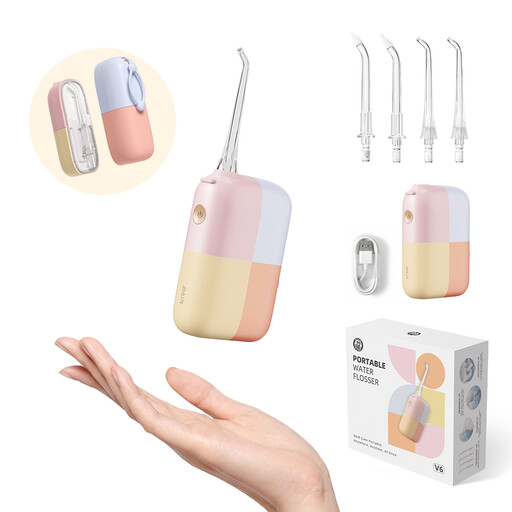
Why This Fits Their Persona: Ideal for anyone who values maximum portability. The device folds down to the size of a smartphone and weighs only 145g. It fits effortlessly into any bag, making it the perfect companion for business trips or holidays.
The innovative, magnetically detachable water tank solves the cleaning problem. A battery life of up to 30 days and the USB-C port make it a reliable travel water flosser.
Extremely compact and lightweight; nozzles can be stored inside the device; beginner-friendly pulse mode for precise control.
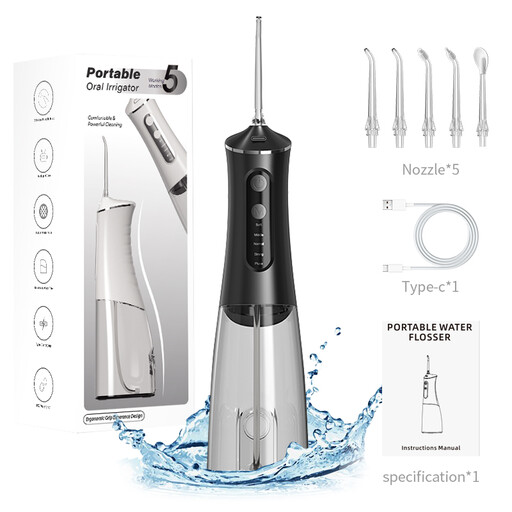
Why This Fits Their Persona: For users seeking a powerful and straightforward solution for their daily routine. The large water tank and long battery life minimise maintenance and make it convenient to use.
With a 350 ml water tank, constant refilling is a thing of the past. The manufacturer-stated battery life of up to 90 days and the USB-C port solve the typical issues with power and charging cables.
Large water tank; 5 pressure settings for different needs; very long battery life.
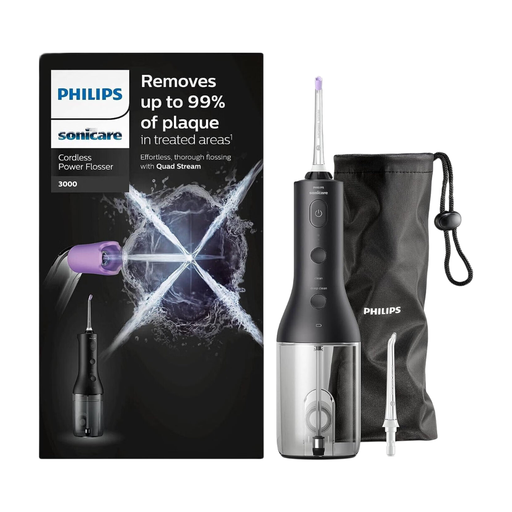
Why This Fits Their Persona: Suitable for users with braces, implants, or sensitive gums who need precise and customisable cleaning. The special nozzle technology and adjustable intensities allow for targeted and gentle care.
This model bypasses the problem of incorrect water pressure with 2 modes and 3 intensity levels. The Quad Stream nozzle distributes the water jet more efficiently, making it easier to clean around brackets and in hard-to-reach areas.
Quad Stream technology for a faster and more thorough cleaning; customisable modes and intensities; 360-degree nozzle for hard-to-reach areas.
We have compiled a complete, real-time list of products that fully satisfy these strict selection criteria and UK safety regulations.
For an effective addition to your oral hygiene, one use per day is generally recommended, ideally after brushing your teeth in the evening. This helps remove any remaining food particles from between the teeth.
A water flosser is a very effective electric interdental cleaner that removes plaque and food debris with a jet of water. Whether it can completely replace dental floss depends on your individual tooth alignment and your dentist's recommendations. Many users find it a convenient and thorough supplement or alternative, especially for braces, bridges, or tightly spaced teeth.
Hygiene is crucial. Empty the water tank completely after each use and let it air dry. Clean the tank regularly according to the manufacturer's instructions, often with a mild soap solution or a vinegar-water mix, to prevent limescale and bacteria buildup. The nozzles should also be rinsed regularly and replaced as recommended by the manufacturer (usually every 3-6 months).