
Lieferung heute & morgen

Qualitätsgarantie
App herunterladen
Kategorien
A water flosser, also known as an oral irrigator, is a device designed to supplement your daily oral hygiene routine. It uses a pulsating stream of water to remove food particles and plaque from between teeth, along the gumline, and from periodontal pockets. Its mechanical cleaning action supports a toothbrush in areas that are difficult to reach. This article serves as a technical guide to help you select a suitable model and presents a curated selection of devices.
The selection of an electric water flosser should be based on objective technical parameters that meet your individual needs.
The type of water stream produced is crucial for cleaning performance.
The ability to adjust the water pressure is a key feature for customised gum care. Individuals with sensitive gums, implants, or a tendency for periodontitis require a gentler mode, while a higher pressure is beneficial for intensive cleaning between teeth. Typically, there are 3 to 10 pressure settings. Some models offer special modes, such as for gum massage or cleaning braces.
The volume of the water reservoir, specified in millilitres (ml), determines the duration of use per fill. A reservoir capacity of 200 ml is sufficient for about 60 seconds of use, which is generally enough for a complete cleaning cycle. A detachable and easy-to-fill reservoir simplifies handling and hygienic cleaning.
Compatibility with various nozzles expands the device's functionality. Standard nozzles are suitable for general use. Speciality nozzles, such as orthodontic tips for users with braces or tongue cleaner attachments, allow for targeted cleaning.
Based on the technical criteria mentioned above, we present three models that stand out for their specific features.
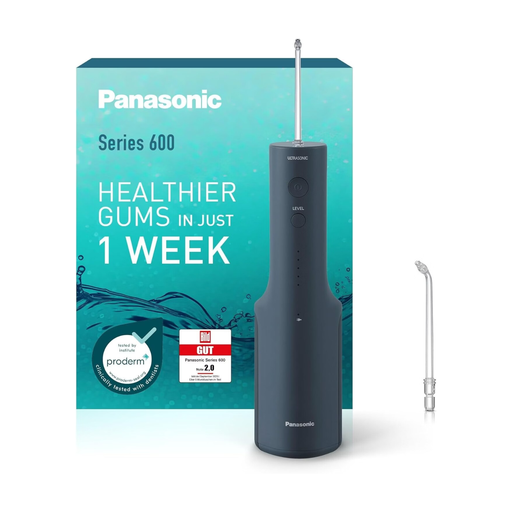
Why We Recommend It The Panasonic EW-DJ66-A303 is a cordless water flosser that utilises ultrasonic technology. This technology generates shockwaves in the water, amplifying the cleaning power of the stream to effectively remove food particles and plaque. According to the manufacturer, regular use promotes gum health. The five adjustable pressure settings allow for customisation based on individual gum sensitivity.
Pros
Best For This model is suitable for users who value advanced cleaning technology and are looking for a flexible, cordless solution for home and travel. The customisable pressure settings also make it an attractive option for individuals with sensitive gums.
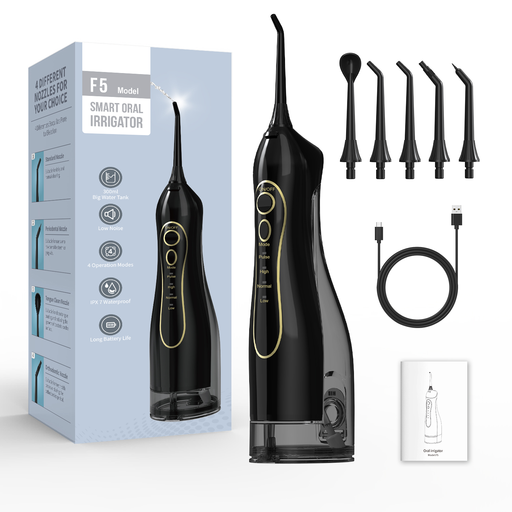
Why We Recommend It The Sunluxy F5 stands out for its high functionality in portable use. With a 2000 mAh battery, the device offers up to 40 days of operation on a single charge. The large, detachable 300 ml water reservoir reduces the need for refilling during use. Five cleaning modes and a water pressure of up to 140 PSI cover a wide spectrum, from gentle care to intensive cleaning.
Pros
Best For Ideal for frequent travellers and individuals looking for a powerful, low-maintenance travel water flosser. The long battery life and large reservoir offer great convenience. The included speciality nozzles make it a versatile option, including for those with braces.
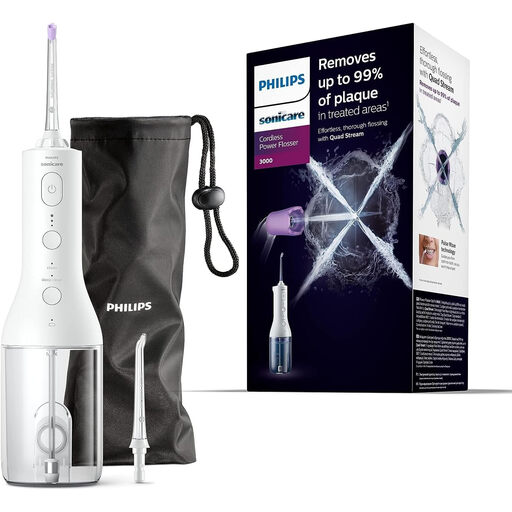
Why We Recommend It The Philips Sonicare Power Flosser 3000 uses Quad Stream technology. Its special X-shaped nozzle divides the water jet into four streams to cover a wider area between teeth and along the gumline. Pulse Wave technology guides the user from tooth to tooth with gentle pulses. The experience can be personalised with two cleaning modes and three intensity levels.
Pros
Best For This model is designed for users who prefer a guided and efficient clean in a short amount of time. The Quad Stream technology is particularly useful for a thorough interdental clean, making the device an effective interdental cleaner.
If these models don't meet your specific requirements, you can find a wider selection of devices in our main category. There, you can compare other models based on different specifications and price points.
Discover more models in the category: water flossers & oral irrigators.
1. Does a water flosser replace dental floss? A water flosser and dental floss work on different principles. The water flosser removes food particles and loose plaque with a stream of water (hydrokinetic activity). Dental floss removes adherent biofilm through mechanical friction. Many dentists recommend using both in combination, or using a water flosser in situations where flossing is difficult, such as with fixed braces, bridges, or tightly spaced teeth.
2. How often should a water flosser be used? To effectively supplement your oral hygiene, a once-daily use is generally recommended, preferably in the evening after brushing your teeth. This helps remove any food particles and bacteria that remain overnight.