
Lieferung heute & morgen

Qualitätsgarantie

Willkommens-Angebote freischalten: KOSTENLOSE Lieferung | Bis zu 80 % RABATT | Kostenlose 30-Tage-JoyPlus-Testphase
App herunterladen
As a Joybuy Product Recommendation Officer, I analyse products and market data daily. My goal is to provide you with objective, practical advice so you can make an informed purchasing decision based on facts, not marketing promises.
A high-quality pair of water pump pliers is an indispensable tool for professionals and ambitious DIY enthusiasts alike. However, the market is flooded with models whose quality differences are difficult to spot at first glance. Many buyers invest in tools that quickly prove to be unreliable. Pay close attention to these three common pitfalls:
To avoid these issues, you should check three critical technical features before making a purchase.
The functionality of water pump pliers is determined by their material, adjustment mechanism, and jaw geometry. These three aspects dictate their longevity, efficiency, and safety.
The material specification is more than just a marketing term. For durable and robust tools like plumbing pliers, Cr-V steel (Chrome Vanadium steel) has become the industry standard.
However, don't just look at the material specification; also check for an indication of heat treatment (e.g., "hardened"). This process is what gives the gripping teeth the necessary hardness to retain their shape and grip even after intensive use.
The way the jaw opening can be adjusted significantly impacts handling.
The geometry of the gripping jaws determines how securely the pliers grip various shapes (round, square, hexagonal). A good pair of water pump pliers has hardened teeth that are offset against the direction of rotation. This design creates a self-locking effect: the more force you apply, the tighter the pliers bite into the workpiece, without you needing to squeeze the handles excessively. This is a key difference from a simple pipe wrench, which often operates differently.
Based on these quality criteria, we have identified several models that are well-suited for specific user groups.
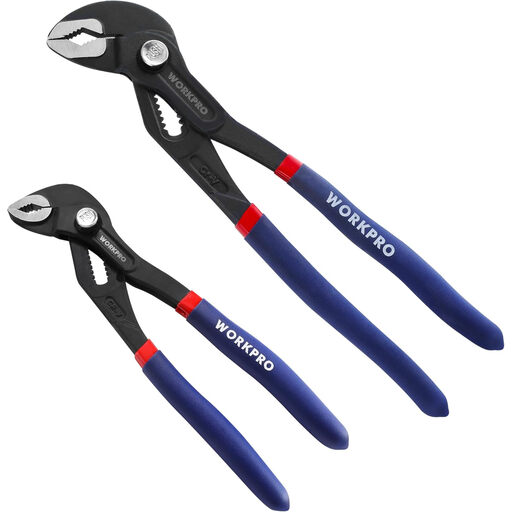
Why This Fits Their Persona: This water pump plier set is ideal for DIYers who need a flexible solution for various household tasks—from fixing a leaky tap to fitting garden hoses. The two sizes cover the most common use cases.
The heat-treated Cr-V steel construction prevents rapid wear on the teeth. The push-button mechanism ensures a stable and precise adjustment without slipping.
Two pliers (180 mm and 250 mm) for high flexibility. The push-button quick-adjust feature allows for easy, one-handed operation.
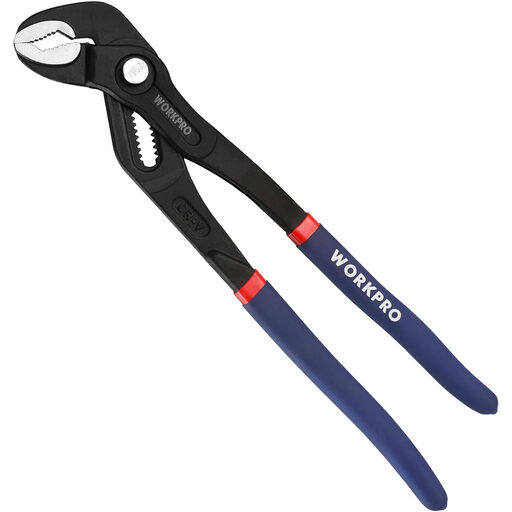
Why This Fits Their Persona: For daily use in plumbing, heating, or automotive sectors, a robust and powerful single tool is essential. The 305 mm length provides significant leverage, while the 50 mm jaw capacity is suitable for larger pipes and fittings.
The hardened Cr-V steel construction and precision teeth ensure longevity and a secure grip. The quick-release button is designed for continuous use, and the ergonomic handles prevent fatigue.
Large jaw capacity (50 mm) and high leverage from its 305 mm length. Suitable for demanding tasks and large workpieces.
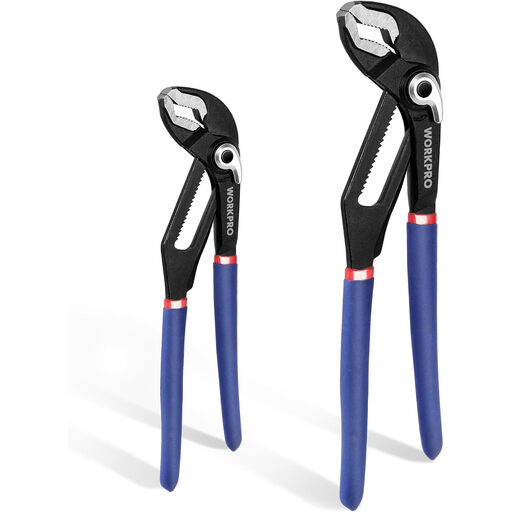
Why This Fits Their Persona: This set is aimed at users looking for a reliable tool for regular repair and assembly jobs who value ease of use. The combination of a 200 mm and 250 mm plier provides a solid foundation for the workshop and job site.
The Chrome Vanadium steel construction ensures durability. The switch-based sliding mechanism offers a secure and stable alternative to a simple groove joint, preventing accidental readjustment.
A set of two common sizes (200 mm, 250 mm). The switch-controlled sliding jaw mechanism allows for quick and secure adjustment of the jaw opening.
We have compiled a complete, up-to-date list of products that fully meet these strict selection criteria and applicable standards.
Although both are used for gripping pipes, they differ in how they function. Water pump pliers have an adjustable slip joint and grip based on the pressure the user applies to the handles. A classic pipe wrench, on the other hand, has a hook jaw and a heel jaw that self-tighten on the pipe under load. It is typically heavier and designed for rougher work on larger pipe diameters.
Maintenance is straightforward. Wipe the pliers with a dry cloth after each use, especially after contact with moisture. Store the tool in a dry place. An occasional drop of penetrating or machine oil on the joint will keep the adjustment mechanism moving smoothly.
For most household applications, a 250 mm (10-inch) plier is an excellent all-rounder. It offers a good balance of manageability and leverage. A water pump plier set that includes a smaller (e.g., 180 mm) and a 250 mm plier provides the greatest flexibility for various tasks.