
Lieferung heute & morgen

Qualitätsgarantie

Willkommens-Angebote freischalten: KOSTENLOSE Lieferung | Bis zu 80 % RABATT | Kostenlose 30-Tage-JoyPlus-Testphase
App herunterladen
Water and sand toys for children should be practical for everyday use, age-appropriate and versatile. However, the requirements vary considerably between the beach, sandpit, paddling pool and bath. A set with lots of pieces isn’t automatically a good choice, and a swimming ring is no substitute for supervision.
A large sand toy set may look impressive at first glance. What matters, though, is whether the pieces suit your child’s hands and will actually be used. For younger children, a well-sized bucket, spade, mould and sieve are often more manageable than lots of small accessories.
Also check the age recommendation. Even if a product is labelled as a toy for children aged 10 months and over, you should still consider whether it’s right for your child. Children develop at different rates, and an adult should always be present when they’re playing with sand and water.
A children’s swimming ring, a baby seat ring or armbands can help children get used to the water, but they aren’t lifesaving equipment. Even when a product is explicitly described as a buoyancy aid, it should only be used in suitable, shallow water and with constant, direct supervision.
Before each use, check the air chambers, valves, seams and surface. If you find any tears, worn patches or air loss, stop using the product. A bodyboard, such as Paw Patrol water toys, is a water toy, not a buoyancy aid.
Disney sand toys, Paw Patrol water toys and other licensed designs can make it easier to choose a toy, but they tell you little about grip, cleaning or durability. So be sure to check:
The manufacturer’s age recommendation is a useful starting point, but it doesn’t replace supervision. For toddlers, choose sturdy pieces that are easy to grip and simple cause-and-effect toys. A sand and water mill, for example, can show how water or fine sand turns the wheels. It offers a clear sequence of play without needing batteries.
For buoyancy aids, you’ll also need to consider your child’s weight and height, as well as the shape of the product. A baby seat ring isn’t the same as armbands or a traditional swimming ring for older children.
For plastic toys, smooth surfaces, rounded edges and sturdy construction are useful things to look for. Claims such as “non-toxic” should be treated as information provided by the manufacturer and checked against the product details. In most cases, it’s best to rinse toys with clean water and let them dry completely before putting them away.
Don’t leave sand toys damp in a closed bag for long periods. Keep swimming rings and other inflatable products away from heat, sharp objects and direct sunlight.
A bucket set for the garden sandpit doesn’t need to meet the same requirements as beach toys for children. At the beach, lightweight, stackable moulds and a bucket that’s easy to carry are useful. In the garden, a sturdy water run or sand mill could be a good choice. For the bath, look for toys that are easy to clean and don’t have hard-to-reach cavities.
If a product has safety markings, check the details on the packaging and product page. For example, the product information for the HAPPY PEOPLE BEMA baby seat ring mentions four separate air chambers, as well as TÜV Rheinland and GS marks. However, this product is also explicitly not lifesaving equipment.
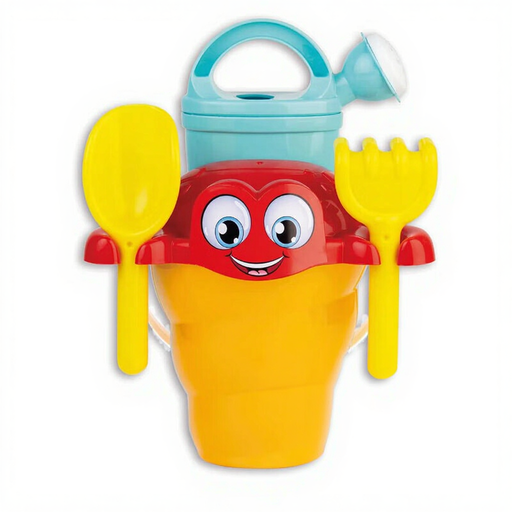
Why this product suits this group: This six-piece set is listed as suitable for children aged 10 months and over, and can be used in the garden, at the playground or on the beach. At 315 g, it’s easy to carry.
The manageable number of pieces means there’s no unnecessary clutter. You should still follow the recommended minimum age and supervise your child.
Six pieces, lightweight and no batteries or assembly required.
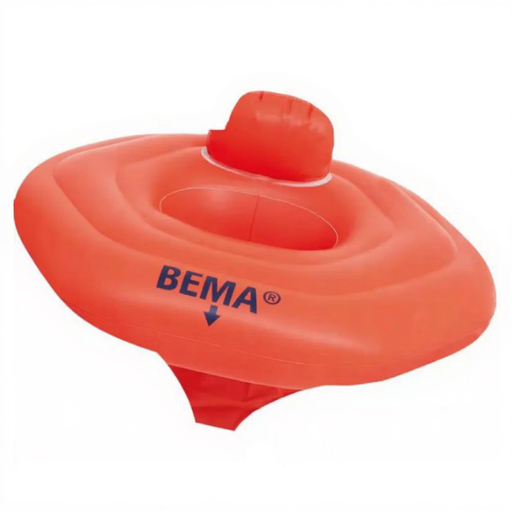
Why this product suits this group: The seat ring is designed for babies weighing up to around 11 kg, or aged around one year, and the product information lists four separate air chambers and safety straps.
The weight limit is clearly stated. Check all the air chambers and inflate them fully before every use.
Four air chambers, safety straps and the TÜV Rheinland and GS marks mentioned in the product information.

Why this product suits this group: According to the product information, this 43 cm sand and water mill is designed for children aged 12 months to 6 years and can be used indoors or outdoors.
The wide base helps reduce the risk of the toy tipping over. After play, remove all the sand and dry the product thoroughly.
The funnel, spinning wheels and seesaw create a visible sequence of play. The product measures 22 × 14 × 43 cm and weighs 390 g.
We’ve put together a complete, regularly updated list of products that meet these strict selection criteria and the safety regulations in force in the EU.
Choose age-appropriate products that are easy to grip and don’t have small parts that could come loose easily, such as a small bucket, spade, sieve or simple water mill. Your child should always be supervised during play. Don’t leave them unattended with sand or water, which could get into their mouth, nose or eyes.
Their lifespan depends on how they’re used, stored and the condition of the material. Rinse swimming rings after contact with chlorine, salt or sand, dry them completely and store them somewhere cool and dry. Check the valves, air chambers and surface for damage before each use. Don’t continue using a damaged product.
Traditional sand toys and manual water mills don’t need batteries or electricity. Inflatable products only need to be pumped up, cleaned and stored properly. Water runs and paddling pools may also add to your water bill. To use less water, only fill them with the amount you need and empty the toys after play.