
Lieferung heute & morgen

Qualitätsgarantie

Willkommens-Angebote freischalten: KOSTENLOSE Lieferung | Bis zu 80 % RABATT | Kostenlose 30-Tage-JoyPlus-Testphase
App herunterladen
A new water-saving shower head promises lower water and energy bills, plus a better shower experience. But the market is flooded with exaggerated claims and products that clog with limescale or are reduced to a trickle after just a few months. As your Joybuy Product Recommendation Officer, I'll help you identify the crucial features and make a choice that pays off in the long run. We'll highlight the most common pitfalls and show you what really matters when making your selection.
Many products don't live up to their promises. Pay close attention to these three points to avoid disappointment:
To avoid a bad buy, you should check three core technical parameters. These determine the longevity, comfort, and actual savings.
The flow rate, measured in litres per minute (L/min), is the most important indicator of water consumption.
A good pressure-boosting shower head achieves this through special technologies:
These technologies ensure you don't have to give up a powerful stream despite reduced water consumption—a crucial factor, especially in households with low water line pressure.
The longevity of a shower head depends directly on its material.
Also, look for anti-limescale nozzles made of silicone. They allow you to simply rub away limescale deposits with your finger to keep the nozzles clear.
Your personal needs will determine the right type for you:
Here are some recommendations tailored to different needs and budgets that avoid the pitfalls mentioned above.
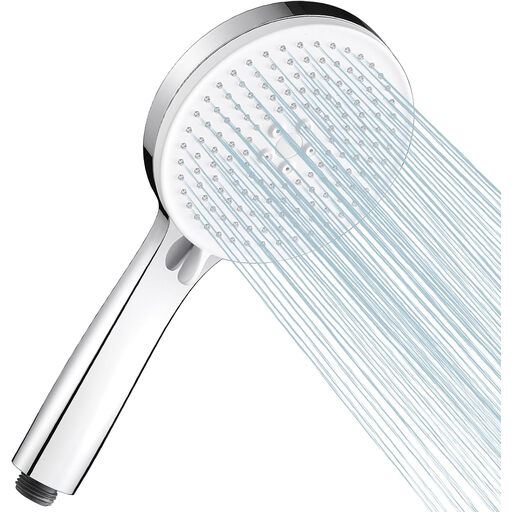
Why This Fits Their Persona: Ideal for renters or homeowners looking for a quick, straightforward, and affordable way to save water without sacrificing comfort. Its easy installation and multiple spray modes make it a practical all-rounder.
The micro-nozzle technology provides increased water pressure, avoiding the feeling of a weak stream, while saving up to 30% water according to the manufacturer—a realistic figure.
Five different spray modes (from pulse to rain) for a custom shower experience. Tool-free installation on a standard G1/2-inch connection.
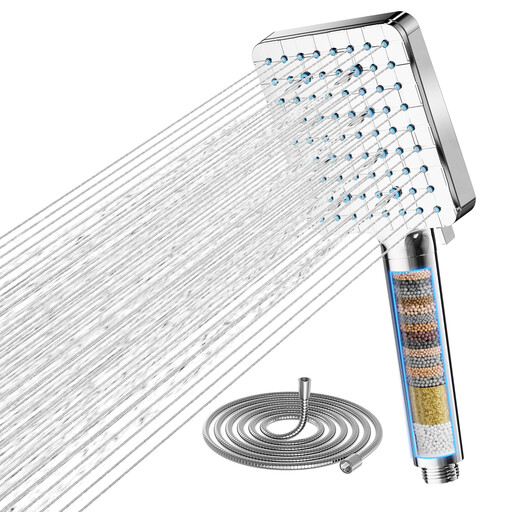
Why This Fits Their Persona: Perfect for anyone living in a region with hard, limescale-heavy water who struggles with dry skin, brittle hair, or quickly calcifying fixtures. This shower head offers a targeted solution.
Instead of just relying on silicone nozzles, this model tackles the root cause with an integrated 20-stage filter system. According to the manufacturer, it removes chlorine, heavy metals, and other impurities.
The multi-stage filter system with KDF and calcium sulfite effectively reduces limescale and contaminants. Six spray modes and a pressure-boosting design ensure comfort.
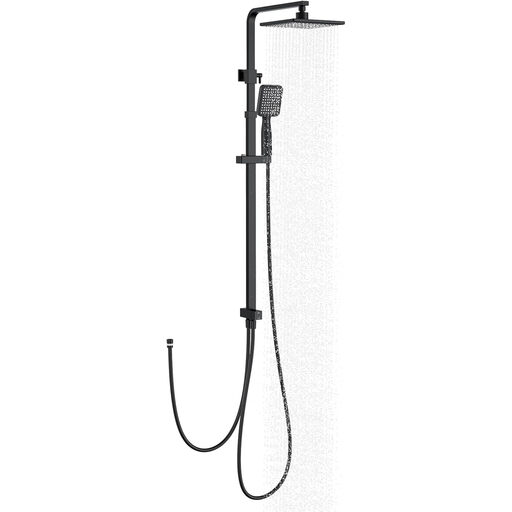
Why This Fits Their Persona: For anyone who wants to upgrade their bathroom with a modern, complete shower system without having to replace the existing thermostatic mixer. The black, angular design makes a clear statement.
This system is specifically designed for retrofitting and fits standard connections. It combines a large rain shower for a spa-like feeling with a water-saving handheld shower for everyday use.
Combination of a 20x20 cm rain shower and an efficient handheld shower. The shower rail is height-adjustable (730-1153 mm) to accommodate different user heights.
We've compiled a complete, up-to-date list of products that fully meet these strict selection criteria and German safety regulations.
1. How much water and energy does a water-saving shower head really save? A good water-saving shower head can reduce water consumption by 20% to 40%. For a daily five-minute shower, this can save several thousand litres of water per person per year. Since less water needs to be heated, energy costs also decrease accordingly, which will have a positive impact on your utility bill.
2. Does a pressure-boosting shower head work with very low water pressure? Yes, that's what they are designed for. A shower head for low water pressure uses narrower nozzles or air injection to increase the water's flow velocity. This makes the stream feel significantly more powerful, even if the incoming line pressure is low. The effect is noticeable but cannot work miracles if the base pressure is extremely low (e.g., below 1.5 bar).
3. How often should the cartridge in a shower head with a filter be replaced? The lifespan of a filter cartridge depends on the water hardness and usage. As a general guideline, most manufacturers recommend a replacement every 3 to 4 months. A noticeable decrease in water pressure is often a clear sign that the filter is saturated and should be changed to maintain filtration performance and water pressure.