
Lieferung heute & morgen

Qualitätsgarantie

Willkommens-Angebote freischalten: KOSTENLOSE Lieferung | Bis zu 80 % RABATT | Kostenlose 30-Tage-JoyPlus-Testphase
App herunterladen
A seemingly simple water-soluble transparency pen can quickly become a source of frustration in a professional setting. Whether for a presentation, in the lab, or for office organisation, the wrong choice often results in smeared surfaces, illegible notes, or permanent stains where flexibility was needed. Many products promise they are easy to wipe off, but the reality is often quite different.
As your Joybuy Product Recommendation Officer, I'll help you navigate the common pitfalls. We will focus on the crucial features that define a reliable non-permanent pen, ensuring your next purchase precisely meets its purpose.
Before you choose a pen, you should be aware of the most common issues, which often only become apparent after purchase.
To avoid these mistakes, pay attention to three technical characteristics. These define the performance and reliability of a water-soluble transparency pen.
The deciding factor is the ink. A water-soluble transparency pen uses a special ink that adheres to smooth, non-porous surfaces like glass, acrylic, laminated paper, or OHP transparencies without beading or smearing immediately. At the same time, it is designed to be completely dissolved and removed by moisture (e.g., a damp cloth). In contrast, whiteboard marker inks are formulated to be dry-erase, while permanent markers form a chemical bond with the surface.
The tip determines the application. Common designations for line widths are:
A synthetic tip, often encased in metal, offers high stability and durability.
Some professional markers offer features that extend their lifespan and reduce usage costs. A refillable marker is an eco-friendly and budget-friendly option. Models like the STAEDTLER Lumocolor can be easily refilled using a special refill station. Another useful feature is "airplane-safe" technology, which prevents the pen from leaking during a flight through automatic pressure equalization—an important detail for business travellers.
Here are some recommendations tailored to the needs of different users that meet the quality criteria mentioned.
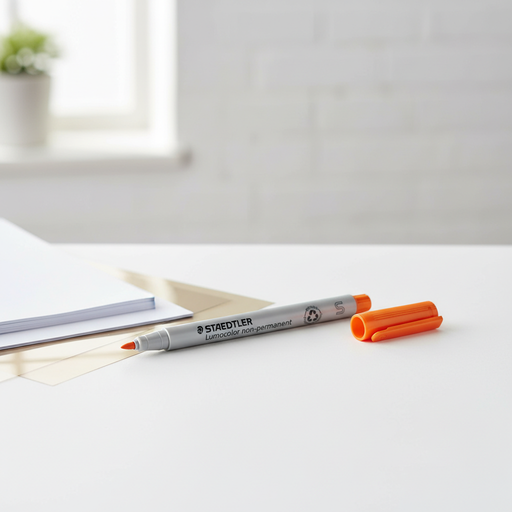
Why This Fits Their Persona: Ideal for professionals in labs, architects, or technicians who need to label slides, technical films, or small components. The 0.4 mm superfine tip allows for maximum detail.
The metal-encased synthetic tip prevents fraying (Mistake #2). The special ink is optimised for smooth surfaces, ensuring residue-free wet wiping without "ghosting" (Mistake #1).
Extremely high precision thanks to the 0.4 mm tip. Refillable and airplane-safe for professional use.
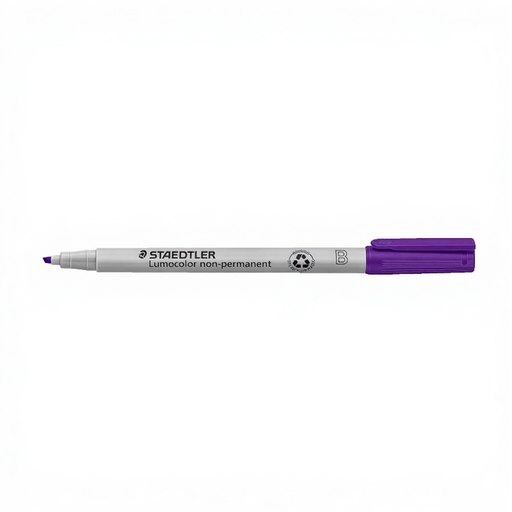
Why This Fits Their Persona: Perfect for lecturers, teachers, and speakers who need to switch between writing and highlighting during presentations with OHP transparencies or on small whiteboards. The chisel tip (B-Tip) is optimal for this.
The fast-drying, high-brilliance ink prevents smearing on transparencies and ensures excellent visibility during projections. The robust PP barrel protects it from drying out (Mistake #3).
Variable line width (approx. 1.0 mm or 2.5 mm) with the chisel tip. High colour brilliance for clear projections.
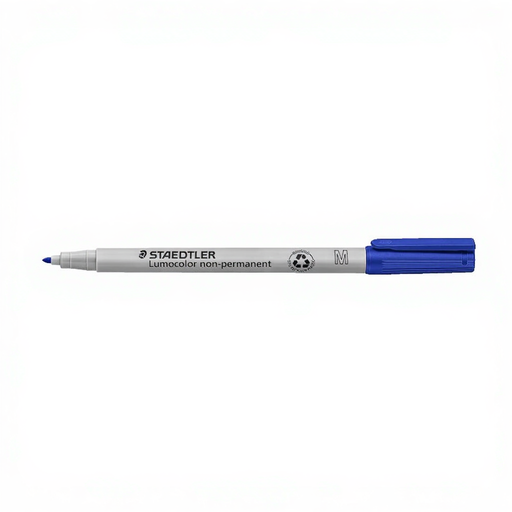
Why This Fits Their Persona: The all-purpose tool for the office: for writing on laminated documents, taking notes on glass walls during meetings, or temporarily labelling plastic boxes. The 1.0 mm medium tip is a versatile compromise.
As a universal pen, it is suitable for almost all smooth surfaces and can be reliably wiped clean with a damp cloth (Mistake #1). Its robust construction and refillability (with station 487 17) ensure a long service life, addressing the problems of unstable tips (Mistake #2) and drying out (Mistake #3).
Universally applicable on a variety of surfaces. Balanced line width for good readability.
We have compiled a complete, up-to-date list of products that fully meet these strict selection criteria and all relevant regulations.
Yes, it is possible, but with one important caveat: unlike dedicated whiteboard markers, these pens cannot be dry-erased but must be wiped off only with a damp cloth. They are a good alternative if a whiteboard marker isn't available, but they are less practical for daily use as your primary whiteboard pen.
For maximum lifespan, most manufacturers recommend horizontal storage. This ensures that the ink evenly supplies the tip and doesn't collect at one end of the pen due to gravity. Firmly replacing the cap immediately after each use is also crucial to minimise ink evaporation.
This feature refers to an automatic pressure equalization system inside the pen. A special membrane regulates the pressure in the ink reservoir, adjusting it to the ambient pressure, such as in an aircraft cabin. This reliably prevents the pen from leaking and releasing ink during pressure changes—an important quality feature for anyone who travels with their pens.