
Lieferung heute & morgen

Qualitätsgarantie

Willkommens-Angebote freischalten: KOSTENLOSE Lieferung | Bis zu 80 % RABATT | Kostenlose 30-Tage-JoyPlus-Testphase
App herunterladen
Water toys for children should keep them entertained, be easy to clean and suit their age. In practice, unclear age guidance, unsuitable materials or misjudging a child’s swimming ability can often lead to the wrong purchase. With babies and toddlers in particular, it’s also important to remember that no water toy can replace close supervision by an adult.
Inflatable water toys, baby boats, swim rings and ride-ons can help children stay afloat, but according to the relevant product information, they are not life-saving devices. Wind, currents, a faulty valve or sitting incorrectly can make them unsafe to use. Children must be supervised closely at all times in the pool, at the beach and, especially, in open water.
“From 3 years” does not automatically mean a product is suitable for every three-year-old. Small parts, the coordination required or a particular height can all be important factors. A water ball is different from a children’s bodyboard or a baby boat for the pool. As well as checking the age recommendation, look at the dimensions, weight limit and instructions for use.
Sand, chlorinated water, salt and moisture can damage plastic, foam and inflatable seams. Rinse water toys with clean water after use, dry them thoroughly and store them somewhere dry. It’s also a good idea to check inflatable water toys visually before each use.
For babies from around three months, lightweight toys they can grasp and roll are suitable for the bath or a dry surface. According to the product information, the Fisher-Price WaterMates Duck Ball is designed for 3 months to 3 years. From 12 months, toddlers may enjoy simple scooping and pouring toys, such as a sand and water mill.
For children aged 3 and over, a water ball, water capsules, beach toys or a children’s bodyboard may be suitable, depending on their stage of development. For younger children in the pool, choose toys that are easy to understand and grip, and don’t have unnecessary small parts.
Look for:
A CE marking is not a quality seal and does not replace supervision. It simply indicates that the manufacturer has declared the product meets the applicable EU requirements.
A large inflatable animal can take up a lot of space in your suitcase and needs a suitable area of water. A bodyboard measuring 84 cm in length is more suited to older children and should only be used in shallow, calm water. For the garden, choose products with wide, stable feet, as these are less likely to tip over on wet ground.

Why it suits this family: This sand and water mill is designed for water and sand play in the garden, at the beach, in the bath or in the sandpit. The stated age range is 12 months to 6 years.
The wide feet and clear description of how to use it with water or fine sand make it less likely that you’ll buy a complex or hard-to-manage toy.
Measures 22 × 14 × 43 cm, made from plastic and suitable for use indoors and outdoors.

Why it suits this family: This lightweight ball, around 10 cm in diameter, is designed for babies and toddlers from 3 months to 3 years. It can be used in shallow water under supervision.
The product information specifies the age range and size, and states that it is for use in shallow water. This makes it easier to match the toy to your child’s abilities.
A waterproof, lightweight ball with a moving duck figure and visual play features.
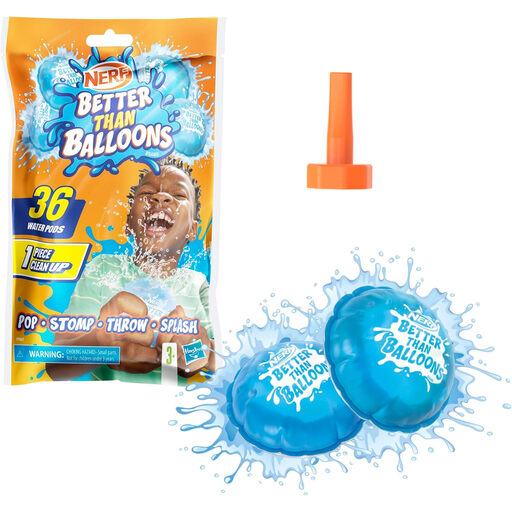
Why it suits this family: These reusable water capsules are designed for children aged 3 and over and for playing together outdoors. They’re a good fit for families looking for water toys for group activities with children aged 3 and over.
The product description says the capsules are reusable. Rinse them after play and store them somewhere dry. As they contain small parts, make sure you follow the age guidance.
36 water capsules, a stated weight of 65 g and dry storage.
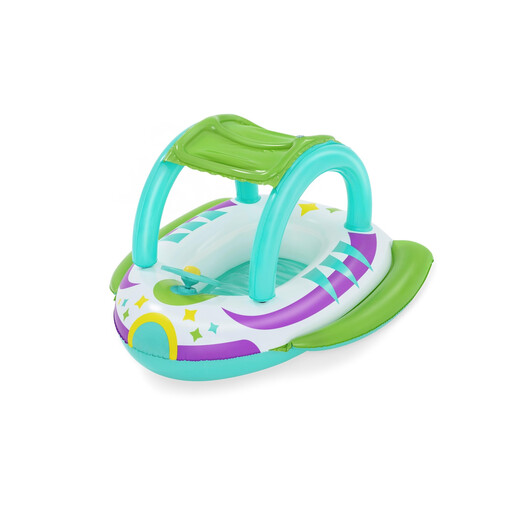
Why it suits this family: This inflatable baby boat for the pool has a removable sun canopy, a viewing window and an integrated steering wheel. It’s designed for shallow, calm water.
The warnings specifically mention the need for constant supervision, checking for leaks and using the boat in shallow, calm water.
Removable sun canopy, viewing window and compact storage once deflated.
We’ve put together a complete, regularly updated list of products that meet these strict selection criteria and the safety requirements in force in the EU.
Lightweight products that are easy to grasp and have no loose small parts may be suitable for babies. Play should take place in shallow water or out of the water, with an adult supervising at all times. Always follow the manufacturer’s specific age recommendation.
Their lifespan depends on the material, how they’re used and how they’re stored. UV rays, sharp surfaces, overinflation and damp storage can all shorten their lifespan. After each use, dry the product, check the valve and store it away from direct sunlight.
Simple bath toys usually have no ongoing costs. Inflatable products may require a hand or electric pump. Families should also allow for cleaning and replacement costs if a product wears out due to sand, chlorine or damage.