
Lieferung heute & morgen

Qualitätsgarantie

Willkommens-Angebote freischalten: KOSTENLOSE Lieferung | Bis zu 80 % RABATT | Kostenlose 30-Tage-JoyPlus-Testphase
App herunterladen
Water toys for children range from small bath toys to large water tracks. Choosing one may seem straightforward, but some product features can quickly become an issue in everyday use. A paddling pool may be unstable on uneven ground, an inflatable animal is not automatically a swimming aid, and a toy with small parts may not be suitable for every age.
This buying guide helps parents compare products objectively. It focuses on age recommendations, dimensions, materials, supervision and where you plan to use the toy – in the bathroom, garden, swimming pool or at the beach.
An age recommendation is more than a marketing claim. Bath toys for babies aged three months and over need to be designed differently from a water track for children aged three and over. Small parts, cords, decorations that could be swallowed or a high water level may not be suitable for babies and younger toddlers.
So, check:
Baby arm bands, swimming discs for children and inflatable ride-on toys support different activities. No inflatable product replaces active supervision. A ride-on is designed for sitting and playing, not for swimming independently. Swimming aids are not life-saving devices either, and do not reliably prevent drowning.
Check valves, seams and tears before every use, and make sure the product fits correctly. For swimming aids, also check any size or weight limits and the information on the packaging.
A large water toy needs a level surface with enough room. A water track can take up a lot of space in the garden, while a small paddling pool with a soft floor may be better suited to a balcony, patio or limited garden space. Empty paddling pools completely after use. Toys need to be left to dry so that moisture does not collect in hollows or recesses.
For babies, choose lightweight products that are easy to grasp and have no loose small parts. According to the product information, the Fisher-Price WaterMates Duck Ball is intended for children from three months to around three years old. It can be used on a play mat or in shallow water. The description says it should not be fully submerged. These usage instructions are just as important as the age recommendation when you’re choosing a product.
For children aged 12 months and over, options include a sand and water mill or a small paddling pool. A water track for children, such as AquaPlay Adventureland, is recommended by the manufacturer for children aged three and over and includes several figures and boats. The small parts included make the age recommendation particularly important.
For plastic toys, check the material information, care instructions and warnings on the product page and packaging. Warm water, a mild detergent and thorough drying are usually enough for cleaning. Abrasive cleaners, bleach and solvents can damage surfaces or inflatable materials.
For inflatable products, also look for:
For toys, the CE marking is an important formal check. Parents should also read the product-specific safety information. For swimming aids, details such as size, weight, buoyancy and relevant standards such as EN 13138 may be important; always follow the labelling and instructions for the specific product.
A baby paddling pool measuring 61 centimetres in diameter and 22 centimetres high is not comparable to a larger family pool. Consider the space it needs, how much water it holds, the ground it will stand on and how it can be emptied. Inflatable floors can make a pool more comfortable to sit in, but they do not remove the need for supervision.
Only set up pools on a level surface and keep water away from electrical equipment. For sand and water toys, make sure the base is wide enough to stop the toy tipping over as you fill it.

Why it suits this need: This sand and water mill is suitable for the bath, sandpit and garden, and doesn’t need batteries.
The product description specifies a wide base and recommends it for ages 12 months to 6 years. This makes it easier to match its use to the child’s age and the surface.
22 × 14 × 43 cm, 390 g, plastic, suitable for use with water or fine sand.
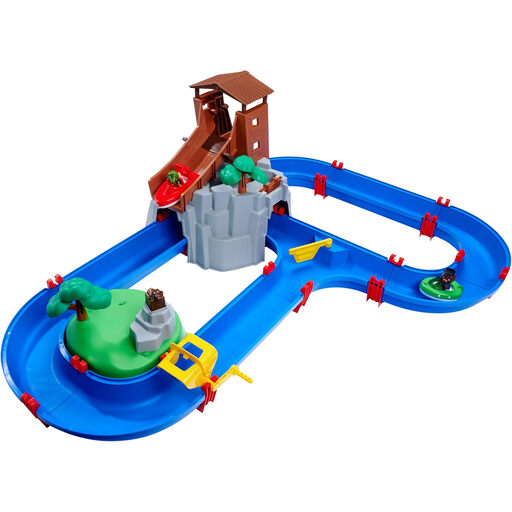
Why it suits this need: This large set is designed for families who can set aside a permanent play area outdoors.
The dimensions are clearly stated as 138 × 88 × 47 cm. You can check whether your chosen outdoor space is large enough before buying.
Reservoir, hand crank, lift, water slide, two boats and two figures; recommended for ages 3 and over.
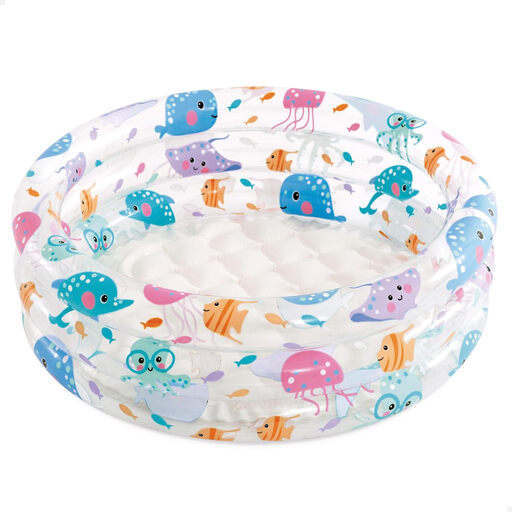
Why it suits this need: This round pool, measuring 61 cm in diameter, is designed for small outdoor spaces and shallow-water play.
The low capacity of 28 litres and the inflatable floor are clearly specified. Even so, the pool must be emptied after every use and children must be supervised.
61 × 22 cm, PVC, inflatable floor and round shape; according to the product information, it is not suitable for children under one year old.
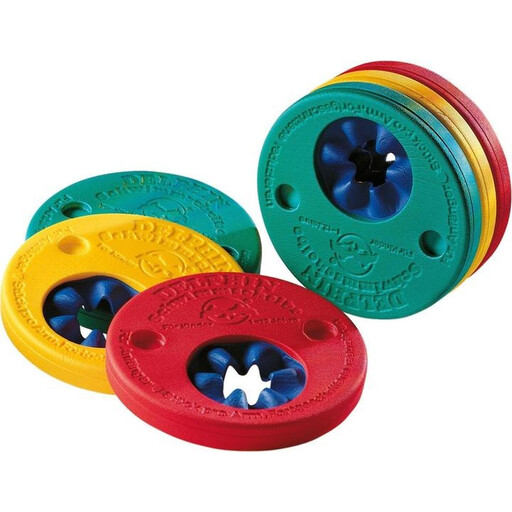
Why it suits this need: These swimming discs are designed for regular, supervised practice sessions in the pool or swimming lessons.
The buoyancy aid can be adjusted gradually using six foam discs. However, it must only be used under supervision and is not a life-saving device.
Six discs, no pump needed; according to the product information, suitable for ages 1 to 12 or up to 60 kg.
We’ve put together a complete, regularly updated list of products that meet these strict selection criteria and fully comply with the safety regulations in force in the EU.
Follow the manufacturer’s guidance on capacity and water level. Even a small amount of water presents a drowning risk. Your child should be supervised closely at all times. Empty and dry the pool completely after play.
Their lifespan depends on the material, how often they’re used, how they’re stored and how well they’re cared for. Rinse products with clean water after contact with chlorinated or salt water, let them dry completely and store them away from direct sunlight. Before every use, check the seams, valves and surface for damage.
No. Arm bands and other swimming aids provide buoyancy, but they do not prevent drowning or replace swimming lessons or active supervision. The product must be suitable for your child’s size and weight, and fitted correctly.